Calculate how much money you might have, how long it will last and how much you’ll need in retirement, with our retirement calculators

 

Working out how much is enough for retirement depends on many factors, such as your lifestyle, plans for the future, and the number of years you’ll spend retired. Additionally, estimating how much you’ll have when you plan to retire depends on factors such as your current salary, super balance and assets. With so many factors, it’s easy to see why you might need a retirement calculator to get an idea of your retirement savings needs.

By using our helpful retirement calculators, you can get an indication of whether there’s a shortfall between how much you are estimated to have and how much you’ll need in retirement, and put a plan in place to address the situation.

How much is enough for retirement?

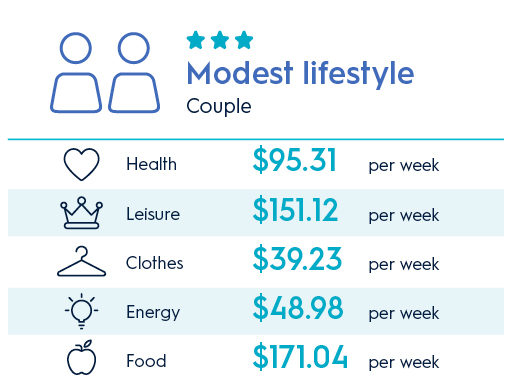
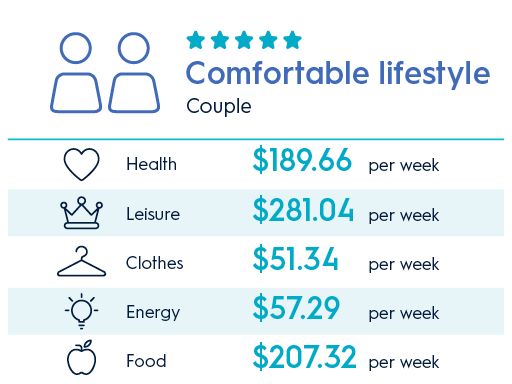
The Association of Superannuation Funds of Australia (ASFA) estimates that Australians aged around 65 who own their own home and are in relatively good health, will need the following amount of money each week and year in retirement1:
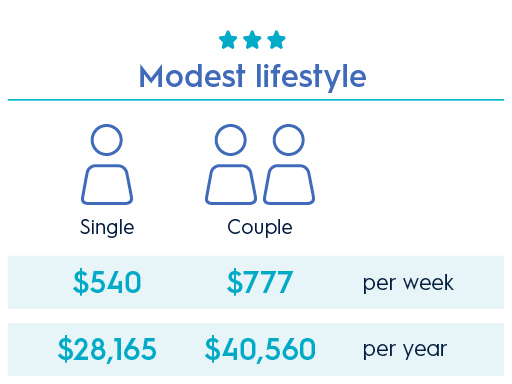
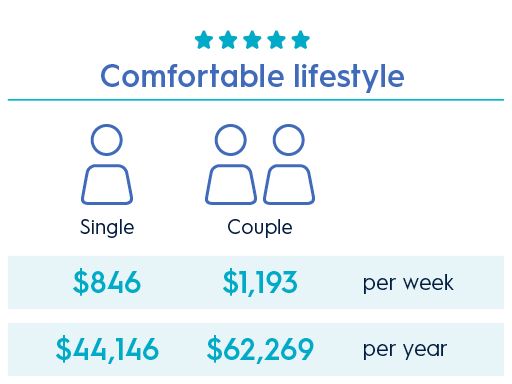
 

A modest lifestyle is considered better than living on the age pension, while a comfortable lifestyle means someone can afford a good standard of living, be involved in a broad range of leisure and recreational activities and travel domestically and occasionally internationally2.

For Australians on above-average incomes, another rule of thumb to estimate how much money you’ll need in retirement is to assume you will require 67% (two-thirds) of your pre-retirement income to maintain the same standard of living3.

What are your retirement lifestyle expectations?

Ultimately, how much money you’ll need for your own retirement is very personal, and will depend on your own situation, wants, needs and lifestyle expectations. It may help to factor in your day-to-day spending habits, your recreational activities and hobbies and whether you’ll be entering retirement debt-free. The following figures are a guide taken from the ASFA retirement standard.4
 

How long will you work for?

The age at which you retire can have a significant impact on how much money you have and how much money you need in retirement. It can depend on factors such as your health, debts, super balance, age you can access your super, whether you have dependants, and your partner’s retirement plans (if you have one).

How long will you be retired?

Keep in mind that if you’re planning to retire at around age 65, it’s likely you’ll live for another 20 years or so. Men aged 65 can expect to live to 84.6 years, while women can expect to live to 87.3 years5.

How much money will you have in retirement?

The money you use to fund your life in retirement will likely come from a range of different sources including the following:

Superannuation

Knowing your super balance is a crucial part of planning for retirement, as it’s likely to form a substantial part of your retirement savings.

Age pension

Depending on your circumstances and assets, you could be eligible for a full or part age pension, or alternatively, may not be eligible for government assistance at all.

Investments, savings and inheritance

You may be planning to downsize your house, sell shares or an investment property, or use money you’ve saved in a savings account or term deposit to contribute to your retirement. Or perhaps an inheritance or the proceeds from your family’s estate may help you out in your later years.

Meet Mac. He’s 51, married and planning to retire at age 65.

To work out how much Mac might need in retirement, he tries our retirement needs calculator. Mac is hoping for a comfortable standard of living in retirement, and our calculator estimates this will cost him $1,154.49 a week – or $60,033 a year. He’s also planning on buying a new car and doing some travelling once retired, and thinks he’ll need $40,000 for these one-off expenses. Based on a life expectancy of 81 years, our retirement needs calculator estimates he’ll need a total of $993,473 to fund his retirement.

So how much might he have in retirement, and how long is his money likely to last, based on his current and expected financial situation?

Mac currently has $172,000 in superannuation invested in a balanced investment option, an annual pre-tax salary of $82,000, shares worth $20,000, and the couple owns their family home. Based on this information, our retirement simulator calculates he’ll retire with savings of $294,944. Based on his expected expenditure in retirement outlined above, our retirement simulator estimates his money will only last until age 71, leaving him with a funding shortfall of 10 years in retirement.

While this news may seem scary, it’s not an uncommon situation. Luckily, finding out about the possible shortfall now means there may still be ways to boost his savings before retirement.

What do you do if you won’t have enough to retire?


If, like Mac, you’re facing a shortfall in retirement, there are several things you can do to get your retirement on track. You could consider boosting your super through additional contributions, delaying your retirement, adjusting your retirement lifestyle expectations, or selling other assets.

Simply by having an idea of your current and projected retirement savings, thanks to our retirement calculator and simulator, you could work to improve the situation. The earlier you start, the easier it may be for you to reach your retirement goals.

Please contact us on Phone: 07 5641 4134 if you seek further assistance on this topic .

1 Association of Superannuation Funds of Australia (ASFA) Retirement Standard December 2019.
2 Association of Superannuation Funds of Australia (ASFA) Retirement Standard.
3 ASIC Moneysmart, How much super is enough?
4 Association of Superannuation Funds of Australia (ASFA) Retirement Standard December 2019.
https://www.aihw.gov.au/reports/life-expectancy-death/deaths-in-australia/contents/life-expectancy

Source : AMP August 2020 

Important: This information is provided by AMP Life Limited. It is general information only and hasn’t taken your circumstances into account. It’s important to consider your particular circumstances and the relevant Product Disclosure Statement or Terms and Conditions, available by calling Phone: 07 5641 4134, before deciding what’s right for you.

All information in this article is subject to change without notice. Although the information is from sources considered reliable, AMP and our company do not guarantee that it is accurate or complete. You should not rely upon it and should seek professional advice before making any financial decision. Except where liability under any statute cannot be excluded, AMP and our company do not accept any liability for any resulting loss or damage of the reader or any other person. Any links have been provided for information purposes only and will take you to external websites. Note: Our company does not endorse and is not responsible for the accuracy of the contents/information contained within the linked site(s) accessible from this page.

 

With record low interest rates, a flattening housing market and repeated assertions from RBA governor Philip Lowe that a rates rise is not on the horizon, this may be the right time for first home buyers to strike. 

Following the August Reserve Bank (RBA) meeting, interest rates remain at 0.25% for August. As recently as July, RBA governor Philip Lowe reasserted that “there has been no change to the board’s view that negative interest rates in Australia are extraordinarily unlikely.”

First home buyers looking at those low interest rates as well as government stimulus incentives, and a property market whose rise has been curtailed by COVID-19, may well be thinking the time is right to enter the market. Of course, making the call on home ownership should be based on personal financial circumstances as well as market ones. Here’s what to understand about the current environment if you’re deciding whether to take the leap into the housing market.

The big picture

Right now interest rates are at a record low, and the RBA has made repeated assertions that a negative rate is off the table. It now means that for many looking to buy their first home, paying off your mortgage may look more attractive than paying rent.

House prices have decreased 2% from mid-April nationally according to the Domain House Price Report. However, experts say measures such as bank mortgage deferrals and borrowers using government stimulus, such as JobKeeper and JobSeeker, could be keeping that figure lower than expected.

Such government stimulus initiatives are scheduled to be wound back but the ongoing COVID pandemic and the length of financial recovery may put further financial pressure on those whose employment is affected.

Clearance rates are also lower in Sydney and Melbourne. They have fallen from 77% in February to 63% and 61% in those capital cities respectively – which might be an indication of buyers exiting the market.

“The low rate, low competition environment and government incentives might make for a very tempting market, but that’s only one side of the story.”

The downturn and potential for further drops points to a buyer’s market. But there’s more to a decision to buy than just house prices.

Take advantage of stimulus

The current property landscape is unique because of the many incentives designed to stimulate the economy, especially those targeted at first home buyers. Some were designed to address the impact of COVID-19, but others were introduced before the pandemic.

Across the country a range of first home buyer stamp duty concessions that existed before COVID-19 are still in place, and being expanded. In NSW, the state government recently announced a pause on stamp duty on new homes under $800,000 for first home buyers – $150,000 more than the previous threshold. Every state has different stamp duty concessions, some for building new homes, others for off-the-plan or existing homes.

There are also federal government schemes that target first home owners. The HomeBuilder program provides eligible owner-occupiers – including first home buyers – with a grant of $25,000 to build a new home or renovate an existing home this year.

Another federal scheme, the First Home Loan Deposit Scheme, lowers the amount needed for first home buyers to enter the market. Under the scheme, first home buyers may be eligible for a loan with a 5 per cent deposit. The government then lends the remaining 15 per cent, removing the need for lender’s mortgage insurance. The 2020-21 financial year allocation of 10,000 has just opened, meaning a new opportunity to take advantage of the popular scheme.

There is also the option to withdraw money from your super to go towards your deposit,  under the federal government’s first home super saver scheme provided you are over 18 and have never owned property in Australia.

Is it a (first home) buyer’s market?

The market commentary suggests the COVID-19 economic downturn has led to less investment buyers squeezing out first home buyers. Before the onset of COVID-19, first home buyers represented 19 per cent of owner-occupiers. That’s the highest that proportion has been since the start of 2012. More recently, the data shows that while loans to investors fell 0.3 per cent in May, loans to owner-occupiers – around a third of which are first home buyers – are growing, by 0.5 per cent.

We’re also entering the Spring season, which traditionally sees strong demand. Over the past 30 years, over a quarter have sold in September, October and November. 

The other side of the coin

The low rate, low competition environment and government incentives might make for a very tempting market, but that’s only looking at one side of the first home buyer story. The low interest rates and government stimulus schemes are a reaction to the increased levels of unemployment, with the current rate at 7.4 per cent, according to the ABS. That’s just shy of one million Australians out of work, and the worst rate since October 2001.

Buying a house is an expensive and long term commitment, and the losses in wages can easily offset reductions in house prices. Finder’s recent RBA Cash Rate Survey found that only 35% of experts said in July that now is the time to buy, recommending caution as the market is yet to settle.

If you’re looking to enter the property market, and have the cash on hand, now might be the right time to make your move. The first step is talking to a broker who can advise you on what’s possible.

PLease contact us on Phone: 07 5641 4134 if you seek further assistance on this topic.

Source : Your Loan Hub August 2020 

(C) Advantedge Financial Services Holdings Pty Ltd ABN 57 095 300 502. This article provides general information only and may not reflect the publisher’s opinion. None of the authors, the publisher or their employees are liable for any inaccuracies, errors or omissions in the publication or any change to information in the publication. This publication or any part of it may be reproduced only with the publisher’s prior permission. It was prepared without taking into account your objectives, financial situation or needs. Please consult your financial adviser, broker or accountant before acting on information in this publication.

Important: Any links have been provided with permission for information purposes only and will take you to external websites, which are not connected to our company in any way. Note: Our company does not endorse and is not responsible for the accuracy of the contents/information contained within the linked site(s) accessible from this page.

The Reserve Bank of Australia (RBA) had its August board meeting on Tuesday 4th, and though there were no real surprises, I think we can expect more out of the central bank in the coming months.

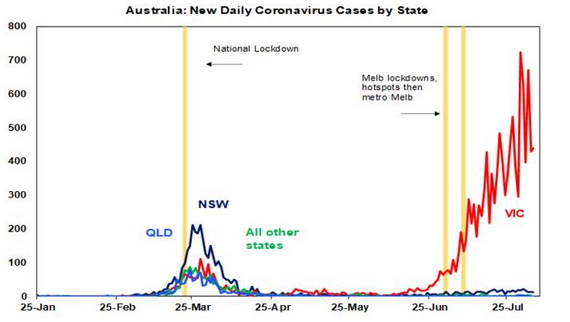
In its meeting, the RBA made mention of the situation unfolding in Victoria, which is sadly seeing COVID-19 infect more people in the state now than it did back at the pandemic’s initial outbreak in March and April. I think this is what will trigger further response from the central bank.


Source: covid19data.com.au

The stage four lockdown which has ensued in Victoria will dent Australia’s recovery, and the central bank has previously said it will do everything in in its power to support the economy through this period. As a result, I think we can expect more broad-based quantitative easing from the RBA.

The central bank has said it doesn’t want negative interest rates, though there is a possibility it could cut rates to 0.1%. It’s questionable whether this would really have much impact, but it remains a possibility. The RBA has also said it doesn’t want to directly finance government spending, or intervene in the foreign exchange market.

In addition to this, there will be more pressure on the federal government for stimulus, as growth takes more of a hit than forecast in the current quarter from the situation in Victoria. As such, we can expect more support measures from Canberra in the months ahead.


Author: Dr Shane Oliver, Head of Investment Strategy and Economics and Chief Economist, AMP Capital Sydney, Australia

Source: AMP Capital 6 August 2020

Reproduced with the permission of the AMP Capital. This article was originally published at AMP Capital

Important notes: While every care has been taken in the preparation of these articles, AMP Capital Investors Limited (ABN 59 001 777 591, AFSL 232497) makes no representation or warranty as to the accuracy or completeness of any statement in them including, without limitation, any forecasts. Past performance is not a reliable indicator of future performance. Performance goals are merely goals. There is no guarantee that the strategy will achieve that level of performance. The information in this document contains statements that are the author’s beliefs and/or opinions. Any beliefs and/or opinions shared are as at the date shown and are subject to change without notice. These articles have been prepared for the purpose of providing general information, without taking account of any particular investor’s objectives, financial situation or needs. They should not be construed as investment advice or investment recommendations. An investor should, before making any investment decisions, consider the appropriateness of the information in this document, and seek professional advice, having regard to the investor’s objectives, financial situation and needs.

This document is solely for the use of the party to whom it is provided and must not be provided to any other person or entity without the express written consent of AMP Capital.

Not sure what to do with your tax refund? Strategic financial decisions for your tax return begin with a strong plan.

Whether you breeze through tax time or dread the extra admin, receiving a tax refund makes the effort worthwhile. For many of us, getting a financial boost will be even more welcome this year, and you might be looking around for the best ways to use it.

These simple actions can help you figure out how to make a plan for your tax return. And if you’re looking for inspiration for how to spend it, we suggest some ideas to consider, too.

Plan to succeed

Never underestimate the power of a well-crafted plan – it’s easy to watch funds dwindle when you haven’t given them a clear direction. Recent research has revealed that 81% of us admit to splurging an average of $1,430 annually as a result of comfort spending1  and that one in six Australians struggles with credit card debt2.

Like any goal, your ambitions for this year’s tax return can be more easily realised if you have a concrete plan in place. In fact, studies have found that taking the time to write down your goals and plans can actually improve your chances of making them happen3.

Once you’ve lodged your tax return, you should have a decent idea about the amount of your refund. Use the time before you receive the money to give yourself a financial check-up and decide exactly where you plan to put your tax refund to avoid excitement spending once it lands in your account. This includes any money you’re hoping to use for a holiday or other splurge – work it into your financial plan to avoid spending beyond your means.

Anticipate your upcoming living expenses

When making your plan, you might want to consider your upcoming living expenses, particularly any large, irregular bills such as car insurance and registration costs, utility bills and general home maintenance.

Putting aside some of your tax return as a cushion for upcoming expenses or in an emergency fund helps you avoid reaching for other financial support – such as personal loans and credit cards – when the bills start to build up.

Reduce outstanding debt

If you have some debt to pay down, you’re not alone: the average Australian household debt-to-income ratio is around 190%, meaning we owe almost twice as much as we earn each year4. Putting your tax return towards any outstanding debts, including mortgage repayments, personal loans and any credit card debt may help reduce any interest charges. Please contact us on Phone: 07 5641 4134 if you seek advice to paying off debt for more ideas on where to start and how to tackle it.

According to the research…

  • 81% of Australians admit to splurging an average of $1,430 annually on comfort spending

  • 1 in 6 Australians struggles with credit card debt   1

  • 90% the debt-to-income ratio for the average Australian household

Invest in growing your wealth

If you don’t need the money for immediate expenses, paying off debt (or the occasional luxury), you might be looking to make a long-term investment with the extra money. You might consider contributing some or all of your refund to boost your super, or add it to a term deposit or savings account.

The Australian Government’s new HomeBuilder grant means that home renovations are on many people’s minds. If you’re thinking about home improvements that will add value to a property, experts say that repainting rooms, updating the kitchen and adding a bathroom are among the most profitable upgrades and home improvements5.

Make tax-deductible purchases

If you’ve been holding off buying specific equipment for work, such as a new laptop or desk, now could be a good time to make the purchase. For purchases over $300, tax deductions are calculated on the depreciation of the ‘effective life’ of the item6. If you purchase them at the beginning of a financial year, the item has almost a full year to depreciate before you do your next tax return.

Donate to a charity

Although this has been one of the most difficult years in living memory, Australians have shown extraordinary generosity by donating to bushfire appeals and other charities. If you plan to support a charity or not-for-profit organisation, don’t forget that any donations over $2 to eligible organisations in Australia are tax deductible7. Just remember to keep a receipt for when you start preparing next year’s tax return.

For further tips on managing money, please contact us on Phone: 07 5641 4134


1. Mozo: Mozo’s Comfort Spending Report – 2019
2. ASIC: 18-201MR ASIC’s review of credit cards reveals more than one in six consumers struggling with credit card debt
3. Forbes: Neuroscience explains why you need to write down your goals if you actually want to achieve them
4. Reserve Bank of Australia: Property, Debt and Financial Stability
5. Domain: Which renovations offer the best return when you sell?
6. Australian Taxation Office: Decline in value of depreciating assets – individuals
7. Australian Taxation Office: Gifts and Donations

Source : AMP July 2020 

Important: This information is provided by AMP Life Limited. It is general information only and hasn’t taken your circumstances into account. It’s important to consider your particular circumstances and the relevant Product Disclosure Statement or Terms and Conditions, available by calling Phone: 07 5641 4134, before deciding what’s right for you.

All information in this article is subject to change without notice. Although the information is from sources considered reliable, AMP and our company do not guarantee that it is accurate or complete. You should not rely upon it and should seek professional advice before making any financial decision. Except where liability under any statute cannot be excluded, AMP and our company do not accept any liability for any resulting loss or damage of the reader or any other person. Any links have been provided for information purposes only and will take you to external websites. Note: Our company does not endorse and is not responsible for the accuracy of the contents/information contained within the linked site(s) accessible from this page.

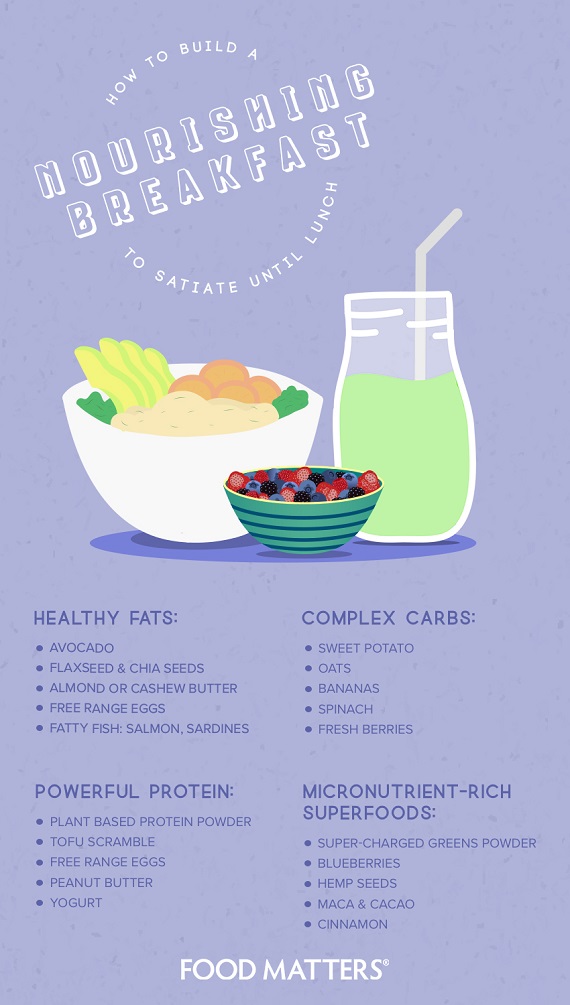
Your parents weren’t kidding when they said breakfast is the most important meal of the day. Whether you enjoy it sweet or savory, hot or cold, earlier or later, there are a few non-negotiables you should be including. But the first step is eating your food mindfully. Mornings can be busy; getting the kids ready for school, rushing off to work, trying to fit in a workout and a quick load of washing – but taking an extra 5 minutes to sit down and eat your breakfast is one of the best things you can do to aid digestion of your meal.

Our good friend Dr. Libby even believes that this might just be the most important meal of the day. It doesn’t matter if you’re an early riser or an intermittent faster, fuelling your body with the right kinds of foods from the get-go is so important. And if you’re including good-quality, slow-burning foods, this meal will see you all the way till lunchtime – without the heavy snacking.

If you’re building a smoothie bowl or a hearty plate of whole foods, there’s a formula that we love to follow. It involves a balance of macronutrients (we’re talking healthy fats, complex carbohydrates, and good sources of protein), coupled with some micronutrient-rich superfoods. Your macro balance will be unique to your body’s needs, so if you have specific dietary goals in mind we recommend reaching out to a qualified professional. The most important thing is to reach for healthy, good-quality sources. We’re not interested in ruling out any food groups unless there’s a specific intolerance. In fact, having a breakfast that is largely made up of proteins, healthy fats, and micronutrient-rich complex carbohydrates (while limiting your intake of refined carbohydrates) can aid in both brain function and weight loss. Tucking into a delicious, balanced breakfast is also vital in balancing blood sugar levels for both managing and preventing diabetes, and done right, it can also be a good source of dietary fiber.


Here’s why these are our four pillars of a well-built, nourishing breakfast. So read away and set yourself up for a nourishing day…

Help Yourself To Some Healthy Fats:

Fats are more than just deep-fried treats; not only are some good for us, they actually make up a vital part of our diet. Our bodies need them for brain function, long-lasting energy levels, and radiant hair, skin, and nails. Because they take longer for us to break-down, the energy they give provides for us when we’re depleted of carbohydrates. However, we only need a small portion to meet generic daily requirements. They’re that easy to throw on as an afterthought; a few of our favorites are avocados, flaxseeds and chia seeds, almond or cashew butter, free-range eggs, and fatty fishes like salmon, mackerel, and sardines. All of these foods contribute to a balanced intake of omega-3s – which is something the standard diet is often deficient in!

Cram In The Complex Carbohydrates:

Popular diets have made us a population fearful of carbohydrates, but it’s really not as simple as that. Carbohydrates come in all shapes and sizes, with the complex carbs often wearing the stigma of refined, bleached, heavily processed, and nutrient-poor carbs. Including carbs in your breakfast helps your body get the energy it needs for the beginning of the day. Vegetables, for example, are one amazing source of carbs – giving your body the much-needed glucose to carry out daily tasks, alongside an abundance of vitamins and minerals, and the all-important fiber. Fresh fruits are another wonderful source, although we recommend eating these first as many fruits shouldn’t be combined with other foods as not to impair digestion. Some of the best (in our opinion) ones to squeeze into breakfast are sweet potato, oats, bananas, spinach, and fresh berries.

Plate Up The Proteins:

Proteins give us something different from the other macronutrients; they break down to amino acids, which become the building blocks of our bodies. Many people are often living with protein deficiencies, so breakfast is another great opportunity to work it into your diet in the best possible way. And because they take longer to break down than your carbs, they’ll help to keep you feeling fuller for longer. Some of the best wholefoods sources that are perfect for breakfast are free-range eggs, peanut butter, yogurt, tofu scramble, or a good plant-based protein powder.

Make Sure You Have Micronutrient-Rich Superfoods:

We know a healthy, whole foods diet is more than balancing your macros. Vitamins and minerals are just as (if not more) important for your overall health and wellbeing, so it’s important to make sure you’re getting a dose with each meal. Some of the best ones you can include as a last-minute addition to your breakfast are blueberries, hemp seeds, maca & cacao blend, cinnamon, or an easy, supercharged greens powder. You can throw them in a smoothie or scatter them on top, but they’ll promise to fill out that well-rounded breakfast bowl you just built.

Source : Foodmatters August 2020 

Reproduced with the permission of the Food Matters team. This article by TESS PATRICK was originally published at https://www.foodmatters.com/recipe/how-build-nourishing-breakfast-satiate-until-lunch

Important: Any information provided by the author detailed above is separate and external to our business and our Licensee. Neither our business nor our Licensee takes any responsibility for any action or any service provided by the author. Any links have been provided with permission for information purposes only and will take you to external websites, which are not connected to our company in any way. Note: Our company does not endorse and is not responsible for the accuracy of the contents/information contained within the linked site(s) accessible from this page.
 

A further rise in COVID-19 cases around the world is leading to questions about the need for another round of government-mandated lockdowns. Given that there are arguments for and against government lockdowns, we look at what the actual economic outcomes have been in both cases in this Econosights.

The backdrop

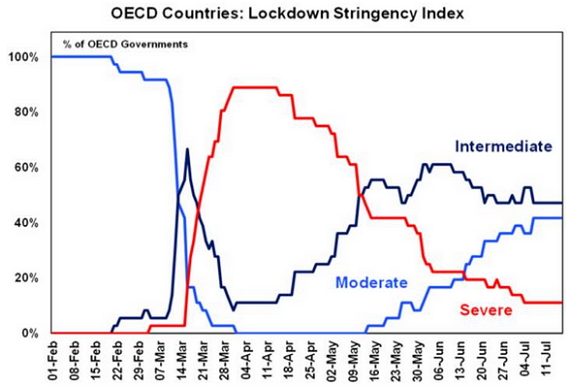
After the majority of the world went into a strict “stay at home” lockdown over late March-April, a lot of these restrictions have now been lifted. Most economies are now operating with “intermediate” lockdown stringencies (see chart below) which generally means that there are social distancing restrictions in place across public venues and on transport along with restrictions on gatherings.


Source: Oxford University, AMP Capital

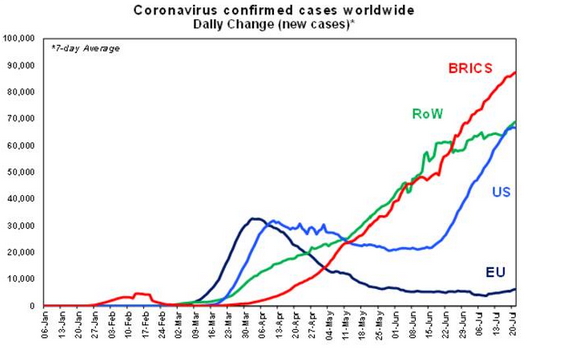
The first round of severe lockdown restrictions worked well to “flatten the curve” to reduce COVID-19 cases, to prepare the hospital system with protective equipment and testing tools and to get the contact tracing system in place. But as several countries started to open up their economies again over late May and June, COVID-19 cases started to spike again (see chart below).


Source: ourworldindata.org, AMP Capital

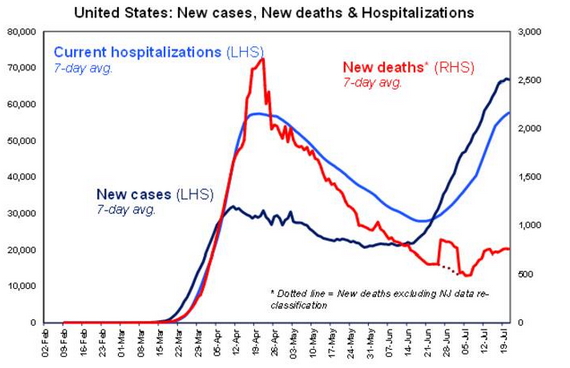
It always seemed highly improbable to completely eliminate the virus without a vaccine so it was always expected that there would be pockets of COVID-19 cases once the economy opened up again. However, the problem now is that some second waves of the virus in places like the US and Australia have higher case counts compared to the first round. While the US fatality rate is not as high this time round (see chart below), hospitals in some states like Arizona, Florida and Texas are getting overwhelmed with COVID-19 cases, and deaths will get worse from here as they tend to lag behind new cases.


Source: The Covid Tracking Project, AMP Capital

Should countries experiencing a second wave (or an extension of the first wave) re-impose lockdown restrictions again? Lockdown measures would reduce deaths and help the hospital system. On the other hand, lockdowns lead to closed businesses and higher unemployment. Both points of view are valid. However, the experience of COVID-19 around the world has demonstrated that in both cases, there is a big fall in consumption as households self-regulate their behaviour.

Sweden’s experience

Sweden did not impose any strict “stay at home” lockdowns (restrictions including things like social distancing at public venues and banning groups larger than 50 people) at the start of the pandemic, instead opting for a “herd” immunity approach (where you need the majority of the population or ~60% to become infected before the country has some long-term immunity to the virus) and expecting that some people would decide to self-regulate their behaviour.

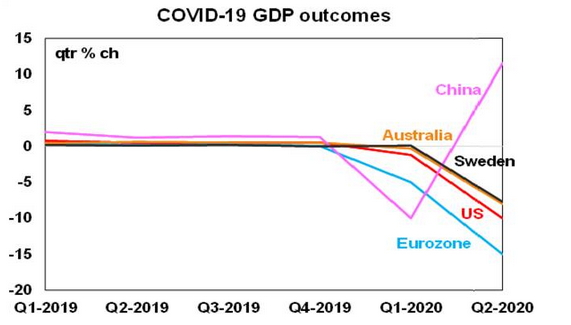
In theory, less lockdowns of businesses means better economic outcomes. But, interestingly Sweden hasn’t made a strong case for this argument. June quarter GDP growth is still expected to have a steep decline (see chart below) but it does appear to have been better than the falls in the US and Eurozone, and around the same as Australia (but Australia had a strict lockdown for around 5 weeks).


Source: Bloomberg, AMP Capital

A herd immunity approach also argues that the outlook for economy overall ends up stronger because lockdowns do not have to stop and restart cases rise and fall. But it is still unclear what achieving herd immunity actually looks like, with the main questions being what proportion of people actually need to get infected before herd immunity is achieved and how long does immunity last? Not enough is known about COVID-19 to answer these questions. And widespread accurate antibody testing to assess population immunity is still not widely available.

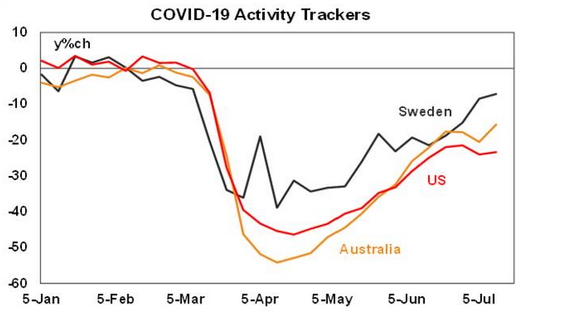
So far, the Swedish forward-looking economic indicators and high frequency data are still pointing to subdued near-term activity. High frequency indicators (like daily consumer spending transactions, hotel bookings, mobility and restaurant bookings) didn’t fall as much as the US and Australia but the bounce back has also been slow (see chart below), just like in the US and Australia.


Source: AMP Capital

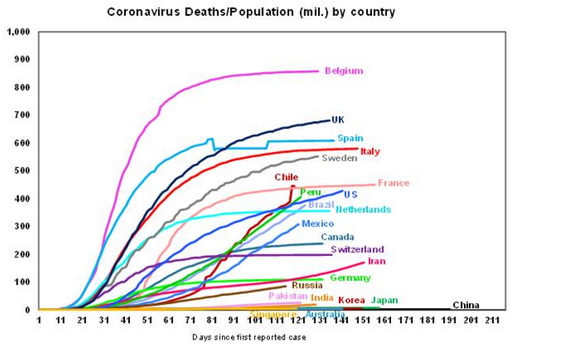
Finally, the most important factor to consider in the lockdown debate is the cost of human life, or the death toll. Sweden has had around 550 deaths per million in the population (see chart below), one of the highest in the world (US is 428 deaths/million and Australia is 5 deaths/million). So, Sweden’s experience of similarly poor economic outcomes against a high death toll doesn’t leave much to be envied.


Source: ourworldindata.org, AMP Capital

Some interesting research from Australian professors at the University of New South Wales have estimated the costs of lockdowns against the benefit of saving lives, which can actually be measured by statistical agencies – known as the cost of a “statistical life”. On these estimates, the costs of lockdowns tend to be greatly exaggerated in the media and by politicans. On their numbers, the cost of lockdown in Australia is around $90bn, but this is heavily outweighed by a much larger ($1.1tn) economic benefit in saving lives.

Household surveys have shown that on average, households do tend to support lockdown measures. In a survey of US houesholds in June (from CivicScience), around 62% of households (on average) supported returning to lockdown as a strategy to reduce rising COVID-19 cases.

Suppression or elimination of COVID-19?

Without a vaccine, there appears to be no way to completely eliminate COVID-19 while it is still circulating around in parts of the world. So suppression of the virus is the only strategy from here. But, lockdowns may still be required in localised areas if case growth becomes too unsustainble, which is what happened in Melbourne.

The economics of lockdowns show that they aren’t as disastrous for the economy as initally assumed. The pandemic will lead to a big hole in economic output with or without lockdowns. It means that more government support is required to fill this hole in economic output. While this means a build up of government debt, the low inflation environment and record low borrowing costs mean that government debt repayments are sustainable for now.


Author: Diana Mousina, Economist – Investment Strategy & Dynamic Markets, Sydney Australia

Source: AMP Capital 23 July 2020

Reproduced with the permission of the AMP Capital. This article was originally published at AMP Capital

Important notes: While every care has been taken in the preparation of this article, AMP Capital Investors Limited (ABN 59 001 777 591, AFSL 232497) and AMP Capital Funds Management Limited (ABN 15 159 557 721, AFSL 426455) (AMP Capital) makes no representations or warranties as to the accuracy or completeness of any statement in it including, without limitation, any forecasts. Past performance is not a reliable indicator of future performance. This article has been prepared for the purpose of providing general information, without taking account of any particular investor’s objectives, financial situation or needs. An investor should, before making any investment decisions, consider the appropriateness of the information in this article, and seek professional advice, having regard to the investor’s objectives, financial situation and needs. This article is solely for the use of the party to whom it is provided and must not be provided to any other person or entity without the express written consent of AMP Capital.

In recently presenting a market outlook webinar we received lots of questions about the outlook but were unable to answer them all given time limitations. Here we try and cover the main questions investors have in a simple Q&A format.

Have markets disconnected from the real economy?

Not necessarily. Share markets invariably lead the economic cycle. Shares led the coronavirus hit to the global economy when they plunged 35% into March. The rebound since then reflects the combination of government measures to minimise the economic damage, ultra-low interest rates which have made shares cheap, some slowing in new cases, positive signs for coronavirus treatments and vaccines and a rebound in a range of economic indicators (eg US GDP looks on track to rebound by around 7% this quarter). So, share markets are anticipating better conditions ahead and that economies will be able to withstand an eventual tapering of government support.

US shares are at all-time highs, what is the probability of a big move down versus a continuing rising trend?

Our base case with around 70% probability allows for a short term pullback in the next month or so then rotation away from US shares and relatively expensive technology and health care stocks into non-US shares and cyclical stocks and a continuing rising trend in shares on a 6-12 month view. This note provides our reasoning as to why the trend in shares likely remains up.

Our risk case with 30% probability is that share markets have another sharp leg down in the next few months with possible triggers being bad news regarding coronavirus, a renewed economic downturn, the US election, tensions with China or an unexpected rise in inflation/sharp rise in bond yields. Relatively expensive tech stocks could be at the centre of this.

Markets are often at all-time highs (as shares rise over time) so record levels do not necessarily mean a sharp fall is imminent.

Are technology/growth shares vulnerable to a crash?

The coronavirus shock has given US tech stocks – particularly mega cap names like Facebook, Apple, Amazon, Microsoft, Netflix and Google – and health care stocks a further boost. The tech heavy Nasdaq is up over 30% year to date and nearly 50% over 12 months. Not only have tech stocks been direct beneficiaries of the crises via stronger demand, but growth stocks with their long earnings streams benefit more from lower interest rates. This is different to the 1999/2000 tech boom as Nasdaq’s forward PE is now much lower at 32 times, tech sector earnings are now real and back then most share markets were expensive whereas that is not the case now. But there are several reasons to expect tech and growth stocks to underperform on say a 12 month horizon: their growth may slow as lockdowns ease; they are relatively expensive; interest rates may not fall much further; tech stocks are vulnerable to increased regulation and US/China tensions; and cyclical/value stocks should benefit as global growth recovers.

Will Australian shares continue to lag global shares?

Probably not. The main reason for the underperformance of Australian versus global shares in recent years is the strong outperformance by US shares. They have outperformed global and Australian shares this year and over the last few years. Eg over the last five years US shares returned 14.5%pa versus 7.5%pa for Australian shares. The US share market has a relatively higher exposure to growth stocks whereas non-US and Australian shares have a higher exposure to cyclicals (like industrials, resources & retailers) & financials. As the global economy recovers and interest rates bottom this will likely benefit cyclical sectors and financials and hence see non-US, including Australian shares, outperform. More money printing probably also helped in the US, but this will eventually slow.

How close is a vaccine? What is the market pricing?

We have seen positive news regarding vaccines (that they are safe at least initially and generate immune responses) and various treatments (eg, antivirals like Remdesivir and therapies like Dexamethasone which is a low-cost steroid). The University of Oxford/ AstraZeneca vaccine appears to be most advanced and some are already in production ahead of the completion of Phase 3 tests. However, mass deployment of a vaccine is unlikely until next year and they may not provide complete protection (more like a flu vaccine than a measles vaccine) and so may have to be combined with other treatments. The deployment of vaccines is partly but not fully factored into shares (eg, travel stocks are yet to recover much).

Are investors blind to massive levels of public debt?

Investors are well aware of the surge in public debt flowing from fiscal stimulus, but this is not necessarily as bad as it looks. First, it headed off a bigger hit to the economy and hence an even bigger blow out in public debt. Second, it makes sense for the public sector to borrow from the private sector to support the economy when the latter has cut spending. Third, public sector borrowing costs are ultra-low and often negative. Japan is an example where gross public debt in excess of 200% of GDP has not caused a major problem. It’s also conceivable that if a problem did arise, governments could simply cancel the bonds that their central banks now own (which would mean a loss for the investment in their central bank which is offset by a reduction in their debt liability – and so would have no major impact). Finally, in Australia public debt is relatively low. The real constraint to deficit financing is inflation, but its low.

Are bonds still a defensive asset to shares?

Yes. While bond yields are ultra-low and so offer very low medium-term returns, they are still a good diversifier to shares. For example, while Australian shares have lost about 8% year to date, bonds have returned around 4% and so having them in a portfolio has helped smooth out overall returns.

What tangible benefit is RBA quantitative easing?

The RBA’s use of printed money to boost liquidity in the economy by providing cheap loans to banks and buying bonds is keeping credit flowing and borrowing costs and the $A lower than otherwise. This helps indebted Australian households continue reasonable levels of consumer spending and helps businesses service their loans and employ people.

What is the risk of inflation v deflation?

Depleted inventories of some products (eg home goods & some foods) due to lockdowns and a switch in demand (from holidays & services to home goods) could boost inflation in some areas, but the main risk in the short term is low inflation or deflation due to lots of spare capacity evident in factories and in terms of unemployment keeping a lid on wages growth. This could be the case for one to three years. However, on a medium term view higher inflation is a bigger risk as the extra money being printed by central banks could at some stage be spent, central banks are now taking more risk with inflation and if the coronavirus shock to supply chains results in more production coming back onshore, particularly if protectionism increases.

Why didn’t QE after the GFC in the US boost inflation?

While narrow measures of money supply increased with QE it wasn’t lent out and post GFC fiscal austerity may also have headed off the impact on inflation. The same may happen this time, but huge fiscal stimulus is a big difference this time around so there is greater risk of inflation once spare capacity is used up, but that may be several years away.

Will the US dollar continue to fall?

Probably yes. The $US is a safe haven currency that often goes up in times of global uncertainty and declines when uncertainty abates. This reflects the relatively low cyclical exposure of the US economy. From its March coronavirus driven high the $US has fallen around 10% against major currencies and further downside is likely as the gap between US and global interest rates has collapsed, the $US is expensive, the Fed is printing more money than other central banks & a global recovery will reduce safe haven demand for the US dollar.

What does a falling $US mean for other assets?

A falling $US is a sign that global reflation is working and the global outlook is on the mend. This is positive for: commodity prices because they benefit from stronger global growth and are priced in US dollars; non-US share markets including Australian shares because they are more cyclical; and currencies like the $A. We expect the trend to remain up in the $A towards $US0.80 on a 6-12 month view helped by rising commodities and a return to a positive interest rate differential versus the US.

Should investors have gold & bitcoin?

Gold and bitcoin are expected to rise in value as the $US falls. But this is likely just another cyclical fall in the value of the $US rather than a sign of a new crisis – particularly with commodity prices rising too, which is a sign of stronger, not weaker, global growth. There may be a case for gold and bitcoin as a hedge against inflation but it makes more sense to have a well-diversified commodity exposure, neither gold or bitcoin produce any income which makes them very hard to value and there are lots of crypto currencies competing with bitcoin so their supply is unlimited. So, I am not really a gold or bitcoin bug!

What is the outlook for commercial property?

The hit to economic activity and specifically traditional bricks and mortar retail space demand and office space demand (following the surge in online retailing and working from home) and hence rents from the virus will weigh heavily on near term returns from retail and office property. Industrial property is a big beneficiary though. All will benefit from the continuation of low interest rates & the search for yield beyond the short term.

Why COVID might result in more Europe, not less?

The coronavirus shock had the potential to expose fault lines in Europe, but so far, its brought it closer together with the ECB’s latest QE program buying member nation’s bonds on the basis of need rather than some formula based on their weight in the Eurozone and agreement on a €750bn recovery fund much of which will be financed by the common issuance of bonds (which sounds like a step towards a common fiscal policy).

What impact might the US election have?

Shares tend to prefer incumbents and so with 87% accuracy since 1928 a rise in US shares in the 3 months prior to the election would point to a victory by Trump; but a fall would point to Biden. Trump’s low tax policies & antagonistic policies to China and to a lesser degree Europe and Japan would favour US over non-US shares and vice versa for a Biden victory. Historically though, US shares have performed best under a Democrat president with a divided Congress and second best under a Democrat clean sweep (see this note) and I see no reason to expect otherwise should Biden achieve the same, albeit markets may initially sell off. Of course, a contested election result would also cause short term uncertainty.

What is the risk of increased tensions with China?

Trump is trying to appear strong on China for political reasons ahead of the election as he knows there is votes in it; but does not want to go so far as to threaten the US economic recovery with say more tariffs and China is biding its time. What happens next year will depend on who wins the US election. Trump will potentially ramp conflict up in a way that could impact markets (although direct military conflict is unlikely) with trade, Taiwan and the South China Sea being the key issues to watch. Biden would likely take a more diplomatic approach.

If Australian house prices fall, what would it mean for banks?

A 10-15% fall (our expectation) is manageable and the associated rise in bad debts has already been provisioned by the banks. A 20% fall would likely mean more trouble for them.

When will the Australian economy recover?

Australia’s economy fell by -7% in the June quarter, or -6.3% over the year to June which is the biggest annual fall since the Great Depression. However, the June quarter fall was less than seen in most other comparable countries (eg, the US fell -9.1%, Japan -7.8%, Europe -12.1% and the UK -20.4%) thanks to better virus control, better policy stimulus & exposure to China. Most of Australia is already slowly recovering, but Victoria has been hard hit by its second virus wave which will likely delay a national recovery out to the December quarter.


Source: AMP Capital 03 September 2020

Important notes: While every care has been taken in the preparation of this article, AMP Capital Investors Limited (ABN 59 001 777 591, AFSL 232497) and AMP Capital Funds Management Limited (ABN 15 159 557 721, AFSL 426455) (AMP Capital) makes no representations or warranties as to the accuracy or completeness of any statement in it including, without limitation, any forecasts. Past performance is not a reliable indicator of future performance. This article has been prepared for the purpose of providing general information, without taking account of any particular investor’s objectives, financial situation or needs. An investor should, before making any investment decisions, consider the appropriateness of the information in this article, and seek professional advice, having regard to the investor’s objectives, financial situation and needs. This article is solely for the use of the party to whom it is provided and must not be provided to any other person or entity without the express written consent of AMP Capital.

At its meeting today, the Board decided to maintain the targets for the cash rate and the yield on 3-year Australian Government bonds of 25 basis points. It also decided to increase the size of the Term Funding Facility and make the facility available for longer.

Under the expanded Term Funding Facility, authorised deposit-taking institutions (ADIs) will have access to additional funding, equivalent to 2 per cent of their outstanding credit, at a fixed rate of 25 basis points for three years. ADIs will be able to draw on this extra funding up until the end of June 2021. This extension will ensure that all ADIs continue to have access to the Term Funding Facility after the end of September, when the window for drawings under the initial allowance of 3 per cent of outstanding credit closes. Additional allowances associated with an ADI’s growth of business credit will now also be available until the end of June 2021. Further details are provided in the accompanying notice.

To date, ADIs have drawn $52 billion under the Term Funding Facility and further drawings are expected over coming weeks. Today’s change brings the total amount available under this facility to around $200 billion. This will help keep interest rates low for borrowers and support the provision of credit by providing ADIs greater confidence about continued access to low-cost funding.

The Term Funding Facility and the other elements of the Bank’s mid-March package are helping to support the Australian economy. There is a very high level of liquidity in the Australian financial system and borrowing rates are at historical lows. Government bond markets are functioning normally, alongside a significant increase in issuance. Over the past month, the Bank bought a further $10 billion of Australian Government Securities (AGS) in support of its 3-year yield target of 25 basis points. Since March, the Bank has bought a total of $61 billion of government securities. Further purchases will be undertaken as necessary. The yield target will remain in place until progress is being made towards the goals for full employment and inflation.

Globally, an uneven economic recovery is under way after a very severe contraction in the first half of 2020. The future path of that recovery is highly dependent on containment of the virus. High or rising infection rates have seen a recent loss of growth momentum in some economies. By contrast, in China, economic growth has been relatively strong. In financial markets, volatility is low and the prices of many assets have risen substantially despite the high level of uncertainty about the economic outlook. Bond yields remain at historically low levels. The US dollar has depreciated against most currencies over recent months. Given this and higher commodity prices, the Australian dollar has appreciated, to be around its highest level in nearly two years.

In Australia, the economy is going through a very difficult period and is experiencing the biggest contraction since the 1930s. As difficult as this is, the downturn is not as severe as earlier expected and a recovery is now under way in most of Australia. This recovery is, however, likely to be both uneven and bumpy, with the coronavirus outbreak in Victoria having a major effect on the Victorian economy.

Employment increased in June and July, although unemployment and underemployment remain high. The virus outbreak in Victoria and subdued growth in aggregate demand more broadly mean that it is likely to be some months before a meaningful recovery in the labour market is under way. In the Bank’s central scenario, the unemployment rate rises to around 10 per cent later in 2020 and then declines gradually to be to still around 7 per cent in two years’ time.

Wage and prices pressures remain subdued and this is likely to continue for some time. Inflation is expected to average between 1 and 1½ per cent over the next couple of years.

The economy is being supported by the substantial, coordinated and unprecedented policy easing over the past six months. Fiscal policy is playing an important role. Public sector balance sheets in Australia are in good shape, which allows for continued support. Indeed, fiscal and monetary support will be required for some time given the outlook for the economy and the prospect of high unemployment. In addition, support for the recovery is being provided by Australia’s financial institutions, which also have strong balance sheets and access to high levels of liquidity.

The Board is committed to do what it can to support jobs, incomes and businesses in Australia. Its actions, including today’s extension of the Term Funding Facility, are keeping funding costs low and assisting with the supply of credit to households and businesses. The Board will maintain highly accommodative settings as long as is required and continues to consider how further monetary measures could support the recovery. It will not increase the cash rate target until progress is being made towards full employment and it is confident that inflation will be sustainably within the 2–3 per cent target band.

Source: Reserve Bank of Australia, September 2nd, 2020

Enquiries

Media and Communications
Secretary’s Department
Reserve Bank of Australia
SYDNEY

Phone: +61 2 9551 9720
Email: rbainfo@rba.gov.au

As investment market volatility continues, what does this mean for Australians’ retirement savings?

The COVID-19 (coronavirus) crisis has caused uncertainty in many areas of life, not least on investment markets. Share prices have been fluctuating wildly as investors react to unfolding global events.

From its high point in March the Australian All Ordinaries Index shed more than a third of its value before recovering some ground towards the end of June1.

And just as concerning have been the day-to-day swings. The coronavirus pandemic has created the largest daily fluctuations since the Great Depression, with the US S&P 500 Index experiencing an average daily change of 4.8% in the five weeks to 8 April 20202 —higher than both the GFC and the 1987 share market crash.
 

Why this could affect your super

You may not think of yourself as an investor in stocks and shares. But most Australian super accounts are invested in shares to some degree because of their potential to deliver strong long-term gains. So share price ups and downs are still likely to affect your finances, and many people’s super balances have taken a hit as a result of the volatility.

Many working Australians have their super in a balanced option, where your super is spread across a mix of investments – from ‘growth’ assets like shares and property, which can deliver higher potential long-term returns but with higher risk, to ‘defensive’ assets such as bonds and infrastructure, which can potentially provide some level of protection against share market downturns.

So, the good news is your super may not have been quite as affected by the COVID-19 volatility as the headline share price numbers you see in the media.

But it’s important to check with your super provider exactly how your retirement savings are being invested. Different super funds define ‘balanced’ in different ways and it’s possible up to 80% of your retirement savings could be invested in growth assets such as shares, even in a balanced fund.

When will your super bounce back?

We can’t be sure. Market movements are difficult to predict, even for experienced investors and economists.

AMP Capital Chief Economist Shane Oliver says, “Short-term sometimes violent swings in share markets are a fact of life but the longer the time horizon, the greater the chance your investments will meet their goals.

“So, in investing, time is on your side and it’s best to invest for the long term when you can.”3

Should you think about switching your investment mix?

It’s tempting to react to short-term market movements by changing your investment strategy. But it could be worth bearing in mind that if you sell out of shares when prices are low you may end up crystallising your losses and missing out on any future upturns.

As Shane Oliver says, “We’ve seen recently growth assets like shares have periods of bad short-term performance versus bonds and cash. But they provide superior long-term returns, which is essential to grow retirement savings. It makes sense for superannuation to have a high exposure to them.

“The best approach is to simply recognise that super and investing in shares is a long-term investment.”4

What’s lifecycle investing?

One option to consider could be a lifecycle investment strategy. This is where your super investment mix is automatically adjusted as you get older to reflect your changing tolerance for risk – from when you’re just starting out with plenty of years ahead of you in the workforce to when you’re approaching retirement and you have less time to play catch-up after a downturn.

Some ways we can help

If you’re concerned about the impact of COVID-19 on your super investments, there are practical ways to weather market volatility and stay focused on your long-term goals

If you’re closer to retirement it can be more difficult to think long term as you may have less time to make up any losses before you stop earning a regular income. 

It could also be a good idea to speak to a financial adviser, who can provide you with quality financial advice based on your current situation and future needs.

Please contact us on Phone: 07 5641 4134 if you require further assistance on this topic.


https://www.amp.com.au/insights/grow-my-wealth/shares-climb-a-wall-of-worry-but-is-it-sustainable
https://www.marketwatch.com/story/stock-market-investors-have-to-go-back-to-1929-to-find-daily-swings-this-wild-2020-04-07
https://www.amp.com.au/insights/grow-my-wealth/olivers-insights/five-charts-on-investing-to-keep-in-mind-in-rough-times-like-these
https://www.amp.com.au/insights/grow-my-wealth/why-super-and-growth-assets-like-shares-have-to-be-seen-as-long-term-investments

Source : AMP July 2020 

Important: This information is provided by AMP Life Limited. It is general information only and hasn’t taken your circumstances into account. It’s important to consider your particular circumstances and the relevant Product Disclosure Statement or Terms and Conditions, available by calling Phone: 07 5641 4134, before deciding what’s right for you.

All information in this article is subject to change without notice. Although the information is from sources considered reliable, AMP and our company do not guarantee that it is accurate or complete. You should not rely upon it and should seek professional advice before making any financial decision. Except where liability under any statute cannot be excluded, AMP and our company do not accept any liability for any resulting loss or damage of the reader or any other person. Any links have been provided for information purposes only and will take you to external websites. Note: Our company does not endorse and is not responsible for the accuracy of the contents/information contained within the linked site(s) accessible from this page.

Ensuring you have an up-to-date and valid will is a central tenet of good financial planning, so it’s a little surprising that almost half1 of Australians don’t have one.

But how many of those without a will know what actually happens to their investments after they pass away?

When you die without a will you are said to have died ‘intestate’, a legal term that simply means without a will. The situation where a person has died without a will is called ‘intestacy’. It’s even possible to die ‘partially’ intestate, meaning you have a will that only deals with part of your estate. In that case, the bits left over after your will has been dealt with come under intestacy laws.

Unfortunately, despite the fact our federation is more than a century old, the rules surrounding intestacy differ from state to state. But at their core, their intent has remained unchanged since ancient times—to pass on assets to successors based on an agreed hierarchy of family relationships.

Generally, the closest family relationship is the spouse and that’s where the intestacy rules look first. If the deceased has no spouse, the children inherit the assets.

If you die without a spouse or children to inherit your assets, a series of rules are followed until an heir is found. First, the administrator looks for parents, then siblings, then grandparents and then various aunts and uncles depending on the state. Finally, if no-one can be found, your assets will go to the government.2

Things get complicated when there are children from multiple relationships or more than one spouse—which is possible if the deceased is in a de facto relationship while married. In those cases, assets start getting split up according to fixed formulas.

It’s tempting to think that with one spouse and children from that relationship only, your family will get your assets when you die anyway, so why go to the trouble of making a will?

One problem is the trouble and expense of administering the estate. Leaving your spouse and children with the uncertainty of having to follow fixed statutory formulas can take time and become emotionally taxing on the family.

In more complicated families or families with adult children and grandchildren, leaving no will can lead to conflict and even fallouts between relatives.

And in some cases, you may want to leave a bequest to charity or a friend. This cannot normally be done under the intestacy rules.

Remember that while a will deals with your home, your investments and the other assets you own, it cannot deal with your superannuation, which is held in trust for your retirement and must be passed on after death in very specific ways under the law.

There is some good news amid all this complexity: unlike many countries, there are no taxes on inheritance or estates in Australia. There can be tax implications in passing on super, and capital gains tax applies as usual when an asset is sold, but Australia abolished death duties in 1979. Under Australian tax law, the people who receive your assets when you’re gone generally receive them without an immediate tax bill.

And there are some clever things that a good estate plan can achieve, including the establishment of a testamentary trust, which is a trust that can look after your assets for you after you die.3

A testamentary trust lets you hold off children getting access to assets until they are a certain age or reach a life stage like getting married or completing university. It can also protect beneficiaries that might not be capable of making good financial decisions and stop your assets being caught up in a divorce or a bankruptcy among your beneficiaries.

Going through the process of creating a valid will and keeping it up to date ensures the investment wealth you spent your life accumulating passes on to the people and charities you want to have it.

The process is not difficult although it’s best done with professional advice. But it’s a small price to pay for peace of mind.

Please contact us on Phone: 07 5641 4134 if you seek further discussion on this topic.

1. https://www.tag.nsw.gov.au/wills-faqs.
2. https://www.lawaccess.nsw.gov.au
3. https://moneysmart.gov.au/wills-and-powers-of-attorney 

Written by Robin Bowerman, Head of Corporate Affairs at Vanguard.

Source : Vanguard July 2020 

Reproduced with permission of Vanguard Investments Australia Ltd

Vanguard Investments Australia Ltd (ABN 72 072 881 086 / AFS Licence 227263) is the product issuer. We have not taken yours and your clients’ circumstances into account when preparing this material so it may not be applicable to the particular situation you are considering. You should consider your circumstances and our Product Disclosure Statement (PDS) or Prospectus before making any investment decision. You can access our PDS or Prospectus online or by calling us. This material was prepared in good faith and we accept no liability for any errors or omissions. Past performance is not an indication of future performance.

© 2020 Vanguard Investments Australia Ltd. All rights reserved.

Important: Any information provided by the author detailed above is separate and external to our business and our Licensee. Neither our business nor our Licensee takes any responsibility for any action or any service provided by the author. Any links have been provided with permission for information purposes only and will take you to external websites, which are not connected to our company in any way. Note: Our company does not endorse and is not responsible for the accuracy of the contents/information contained within the linked site(s) accessible from this page.