When you start a job, you can usually either choose a super fund or let your employer choose for you.

Understanding the basics can help you work out what kind of account you get and whether it’s right for you.

If you want to choose your own — or change your account — there are lots of options.

Most funds offer a simple, low-fee option, called a MySuper account. This is the default account your employer will use.

Types of super funds

There are two types of super funds: defined benefit funds and accumulation funds. Most super funds are accumulation funds.

Accumulation funds

In an accumulation fund, your money grows or ‘accumulates’ over time.

The value of your super depends on the money that you and your employers put in (known as super contributions), and on the investment return generated by the fund.

Defined benefit funds

In a defined benefit fund, your retirement benefit is determined by a formula instead of being based on investment return.

Most defined benefit funds are corporate or public sector funds. Many are now closed to new members.

Typically, your benefit is calculated using:

  • the money put in by you and your employer

  • your average salary over the last few years before you retire

  • the number of years you worked for your employer

If you’re thinking about leaving a defined benefit fund, get professional advice. Some funds are very generous, so make sure you’ll be better off. If you leave, you can’t rejoin.

MySuper accounts

MySuper is a type of account you can have with a super fund.

It’s the default account that your employer will pay your super into, unless you choose a different option.

MySuper accounts typically offer:

  • lower fees

  • simple features — so you don’t pay for services you don’t need

  • either a ‘single diversified’ or a ‘lifecycle’ investment option

Even if you’ve already chosen a super investment option within your existing fund, you can choose to move to a MySuper option.

Super fund categories

Most super funds fall into one of the following categories: retail, industry, public sector or corporate.

Retail super funds

Retail funds are usually run by banks or investment companies. Anyone can join.

Main features:

  • They often have a wide range of investment options.

  • They may be recommended by financial advisers who could be getting paid fees and/or commissions.

  • Most range from medium to high cost, but many offer a low-cost or MySuper alternative.

  • The company that owns the fund aims to keep some profit.

Industry super funds

Anyone can join the bigger industry funds. Smaller funds may only be open to people working in a certain industry, for example, health.

Main features:

  • Most industry funds are accumulation funds. A few older funds still have defined benefit members.

  • They generally range from low to medium cost, and most offer MySuper accounts.

  • They are not-for-profit funds, which means profits are put back into the fund.

Public sector super funds

Public sector funds are for government employees.

Main features:

  • Some employers contribute more than the 9.5% minimum.

  • They usually have a modest range of investment choices.

  • Newer members are usually in an accumulation fund. Many long-term members have defined benefits.

  • They generally have very low fees and some offer MySuper accounts.

  • Profits are put back into the fund.

Corporate super funds

A corporate fund is arranged by an employer for their employees.

Some large companies operate a corporate fund under a board of trustees who they appoint. Other corporate funds are operated by a retail or industry fund, but are only available to that company’s employees.

Main features:

  • Those managed by a bigger fund may offer a wider range of investment options.

  • Some older corporate funds have defined benefit members, but most others are accumulation funds.

  • They are generally low to medium cost funds for large employers, but may be high cost for small employers.

  • Corporate funds run by the employer or an industry fund will usually return all profits to members. Those run by retail funds will keep some profits.

Self-managed super funds

To weigh up the pros and cons of managing your own super fund, see self-managed super funds.

Please contact us on Phone: 07 5641 4134 if you seek further assistance on this topic.

Source : Moneysmart.gov.au October 2020 

Reproduced with the permission of ASIC’s MoneySmart Team. This article was originally published at https://moneysmart.gov.au/how-super-works/types-of-super-funds

Important note: This provides general information and hasn’t taken your circumstances into account.  It’s important to consider your particular circumstances before deciding what’s right for you. Although the information is from sources considered reliable, we do not guarantee that it is accurate or complete. You should not rely upon it and should seek qualified advice before making any investment decision. Except where liability under any statute cannot be excluded, we do not accept any liability (whether under contract, tort or otherwise) for any resulting loss or damage of the reader or any other person.  Past performance is not a reliable guide to future returns.

Important Any information provided by the author detailed above is separate and external to our business and our Licensee. Neither our business nor our Licensee takes any responsibility for any action or any service provided by the author. Any links have been provided with permission for information purposes only and will take you to external websites, which are not connected to our company in any way. Note: Our company does not endorse and is not responsible for the accuracy of the contents/information contained within the linked site(s) accessible from this page.


As a new wave of investors enter the Australian share market, new trends begin to emerge.

ASX recently published its annual investor study which this year surveyed over 5,000 investors on their investment preferences and priorities. The study provides a fascinating insight into the evolution of our investment markets and how investor behaviour is changing over time.

One of the key findings this year is that there’s been a marked shift in who is investing. Long perceived as the domain of older folks, investing (particularly in listed investments) have seen a growing uptake from younger Australians.

Younger investors (25 and under) now account for 10 per cent of total current investors and 27 per cent of intending investors (those who plan to begin investing in the next year).

But age is not the only aspect that sets younger investors apart. Investment preferences also differ to those of older investors, notably that younger investors favour ETFs and are more inclined to seek information from a variety of sources, including social media.

ETFs

ETFs are particularly popular with younger investors who may not have as much capital as their older peers. ETFs therefore provide an easy, low-cost option that provides diversification benefits in just one trade.

The growing number of different ETF offerings on the market serves as a timely reminder for younger investors to truly understand the product before purchasing. In the world of ETFs, there is an increasing choice of “flavours” from the plain vanilla to outright exotic, many often niche and attention-grabbing.

Examples of exotic ETFs include those that have been constructed around a very specific theme, such as cryptocurrency ETFs, robotics ETFs and physical gold ETFs. While certainly topical and exciting, these exotic or thematic ETFs often come with higher risk and less diversification benefits than their vanilla counterparts, and their risks should be well researched.

Although ETFs are favoured by younger investors, they are still a very much sought-after investment product among all investors, particularly those seeking diversification. Australian Securities Exchange data shows more than $1.6 billion of new capital flowed into ASX-listed ETFs in June, bookmarking one of the strongest periods on record for the local sector and taking total assets under management to around $65.5 billion.

Herd momentum

While the internet provides instant access to a wealth of general investment advice and information, it is not always prudent to follow them all.

18 per cent of younger investors surveyed by ASX use social media as an information source, with many turning to online groups or forums for stock picking tips and investment guidance.

ASIC has warned of the potential danger in heeding unlicensed advice found online that does not take into account the investor’s risk tolerance, sophistication or product understanding. Many inexperienced retail traders are being swept up in what has been coined as ‘herd momentum’: buying into popular shares or penny stocks because everyone else is.

Penny stocks are public shares of small listed companies often outside of the ASX300 and traded at a low price. These shares are generally seen as speculative or high-risk investments because of their volatile earnings and valuations, and little guarantee for returns.

The surge in retail trading activity has shone a light on the risks of day trading, leading ASIC to caution inexperienced investors against market timing and seeking investment advice online from unlicensed sources.

Tune out the noise

Getting started with investing is a great first step in itself, but it’s worth understanding that trading is not the same as investing. Following the crowd by jumping into the market to capture short term market opportunities without a plan is highly risky. It can also mean you end up with little diversification and a collection of assets that have been accumulated over time without regard to how they fit together as a portfolio.

The key to successful investing is to set realistic goals, stick to your plan and tune out the noise, no matter what the market is doing or what your peers are saying.

Please contact us on Phone: 07 5641 4134 if you seek further discussion on this topic.

Written by Robin Bowerman, Head of Corporate Affairs at Vanguard.

Source : Vanguard September 2020 

Reproduced with permission of Vanguard Investments Australia Ltd

Vanguard Investments Australia Ltd (ABN 72 072 881 086 / AFS Licence 227263) is the product issuer. We have not taken yours and your clients’ circumstances into account when preparing this material so it may not be applicable to the particular situation you are considering. You should consider your circumstances and our Product Disclosure Statement (PDS) or Prospectus before making any investment decision. You can access our PDS or Prospectus online or by calling us. This material was prepared in good faith and we accept no liability for any errors or omissions. Past performance is not an indication of future performance.

© 2020 Vanguard Investments Australia Ltd. All rights reserved.

Important: Any information provided by the author detailed above is separate and external to our business and our Licensee. Neither our business nor our Licensee takes any responsibility for any action or any service provided by the author. Any links have been provided with permission for information purposes only and will take you to external websites, which are not connected to our company in any way. Note: Our company does not endorse and is not responsible for the accuracy of the contents/information contained within the linked site(s) accessible from this page

Transferring a super benefit from one fund to another requires the rollover of the required amount from a member’s accumulation or pension account to the new fund. Generally, if a pension is fully rolled over between funds, it is required to come to a stop with the amount being added to the member’s accumulation account prior to the rollover taking place. However, the rules operate in a slightly different way when rolling over death benefits.

It is not uncommon for a surviving spouse who becomes entitled to a death benefit lump sum or pension to roll it over to another superannuation fund. The spouse may wish to consolidate their super benefits into one fund, or they may decide not to continue with an SMSF and transfer their benefit to a larger publicly offered fund.

The relatively new death benefit transfer rules have been in place since 1 July 2017 and allow greater flexibility to move benefits between funds compared to the previous rules. The earlier rules restricted the transfer of death benefits to very limited circumstances to a surviving spouse who was in receipt of a reversionary pension and only after a ‘death benefit period’ had expired. Even after the ‘death benefit period’ had passed, the amount was credited to the member’s accumulation account and any link to the previous death benefit pension were lost. This could result in adverse tax consequences.

Since 1 July 2017, it is now possible to roll over death benefit entitlements to other funds without having to wait for the expiration of the ‘death benefit period’. Once the amount has been rolled over it continues to be recognised as a superannuation death benefit and must be used to commence an income stream from the recipient fund or immediately be cashed out as a lump sum. This allows a beneficiary, such as a surviving spouse, to rollover a death benefit pension to a fund of their choice, including an SMSF. The rollover retains the concessional tax treatment associated with a superannuation income stream death benefit. That is, any taxable death benefit pension qualifies for a tax offset equal to 15% of its taxable component.

Taxation of Death benefit pensions

If the deceased or recipient of a death benefit pension is aged 60 years old and over, the recipient, such as a surviving spouse, will receive the pension tax-free. If the deceased and the death benefit pension recipient were both under the age of 60 years, the components are taxed:

  • Tax-free component of pension – 0% tax.

  • Taxable component of pension – taxed at personal tax rates plus applicable levies, such as Medicare less a 15% tax offset.

The 15% tax offset applies only while the pension is classified as a death benefit pension.

The ability to rollover super benefits, including death benefits, allows a person greater choice and flexibility in fund selection and can allow consolidation of benefits into one fund. This can also help reduce the fees charged and increase the income potential on a person’s benefits.

By Graeme Colley

Executive Manager, SMSF Technical and Private Wealth – SuperConceptsSydney, Australia

Please contact us on Phone: 07 5641 4134 if you seek further discussion on this topic.

Source : AMP Capital November 2020 

Reproduced with the permission of the AMP Capital. This article was originally published at https://www.ampcapital.com/au/en/insights-hub/articles/2020/november/transferring-death-benefit-and-the-tax-implications

While every care has been taken in the preparation of this article, AMP Capital Investors Limited (ABN 59 001 777 591, AFSL 232497) and AMP Capital Funds Management Limited (ABN 15 159 557 721, AFSL 426455)  (AMP Capital) makes no representations or warranties as to the accuracy or completeness of any statement in it including, without limitation, any forecasts. Past performance is not a reliable indicator of future performance. This article has been prepared for the purpose of providing general information, without taking account of any particular investor’s objectives, financial situation or needs. An investor should, before making any investment decisions, consider the appropriateness of the information in this article, and seek professional advice, having regard to the investor’s objectives, financial situation and needs. This article is solely for the use of the party to whom it is provided and must not be provided to any other person or entity without the express written consent of AMP Capital.

This article is not intended for distribution or use in any jurisdiction where it would be contrary to applicable laws, regulations or directives and does not constitute a recommendation, offer, solicitation or invitation to invest.


When the COVID-19 pandemic first started to bite in Australia, we said the banking sector would hold up in relative terms, certainly better than it did during the Global Financial Crisis. I’m pleased to say, those projections are holding true.

Seven months on since the COVID-19 pandemic started impacting the global economy, Australian major banks have fared well despite weaker earnings, reflecting our early view that this recession would hurt income statements but not balance sheets.

Large fiscal stimulus and changes to the regulator’s forbearance, which are the requirements of banks classifying deferred loans as arrears and needing to hold additional capital for those assets, are the main reasons for the relatively good performance of the banks. The crucial test for the banks’ balance sheets will occur once fiscal stimulus eventually subsides, and regulators start unwinding current forbearance measures. Once the banks need to declare deferred loans as arrears, they will also need to hold more capital against these loans, which ultimately impacts their capital ratios and the banks’ asset growth prospects.

We believe that we should have greater clarity on the health of the banks’ loan portfolios by mid-2021. In the meantime, we continue to assess the banks’ deferred loans. A large portion of these loans have been taken out by customers that were unsure about the impact of COVID-19 on their personal income. We have run several sensitivity analyses assuming banks’ reduced pre-provision profits and assessed how the banks would be able to cope with the potential provisioning if we assumed 20% to 50% of the deferred loans at its peak would become impaired. Even under the worst-case scenario, we believe the Australian major banks should be able to cope with the impact over a two-year horizon.

However, since mid-2020 we have noticed that the balances and accounts of deferred loans have declined. We believe that even our previously most benign scenario is likely to prove overly cautious given borrowers have resumed repayments, allowing the banks to perform significantly better than anticipated. We remain cautious as the duration of the pandemic and regulatory forbearance time frame is likely to impact the viability of businesses, which in turn impact the major banks’ asset quality.

We believe COVID-19 will have a longer-lasting impact on the banks’ earnings profile as interest rates are likely to stay low for at least the next three years, hurting revenue generation even if credit growth were to pick up again. The Reserve Bank of Australia’s (RBA) Term Funding Facility (TFF) provides some cushion as the banks can refinance their upcoming wholesale funding maturities with this cheaper alternative. We believe that this facility is likely to stay in place unless the RBA starts raising interest rates, allowing banks to generate more attractive asset spreads on loans which would offset larger funding costs if the TFF was withdrawn.

In other words, we believe the RBA needs to be confident enough that marginally higher interest rates will not restrict credit growth – a time which is likely to coincide with the RBA gaining confidence in the timing of its next hiking cycle.

Hence, we believe major banks’ senior note supply may be disappointing. We estimate that the Australian major banks – which used to be penalised for being highly reliant on wholesale markets – may not need to issue new senior unsecured notes for at least the next 12 months. The risk is that unless the RBA is willing to see loan rates increase – most likely driven by an increase in the cash rate – the TFF is likely here to stay.

Any issuance will be opportunistic and may likely occur in the offshore markets so that the banks maintain their relevance in global markets. We foresee Australian major banks to remain active issuers in subordinated notes (Tier-2), in line with their regulatory capital requirements, but any other capital market funding will be minimal. In 2018, the Australian Prudential Regulator Authority introduced the total loss-absorbing capacity (TLAC) requirements to ensure banks had sufficient assets to absorb losses and recapitalise in the unlikely event off failure. The conditions allowed banks to meet these new capital requirements by increasing their Tier-2 capital. This led to a boost in Tier-2 issuance volumes which many considered to be significant, even scary to some.

In 2020, these estimates would be considered miniscule and any issuance is likely to be absorbed comfortably across several markets. Hence, we believe that the current pricing of outstanding Tier-2 notes are attractive even considering our expectation of weaker credit profiles over the next 12 months. In fact, even a prolonged recession and a slower recovery, which will impact banks’ credit strengths, should not have a meaningful impact on credit spread widening for Tier-2 as central banks are likely to remain supportive.

At AMP Capital, we have identified a number of these trends early and our credit funds hold a sizeable portion of these instruments which have positively contributed to the funds’ returns.


Author: Andrea Jaehne, Senior Credit Analyst – Global Fixed Income

Source: AMP Capital 16 Nov 2020

Reproduced with the permission of the AMP Capital. This article was originally published at AMP Capital

Important notes: While every care has been taken in the preparation of this article, AMP Capital Investors Limited (ABN 59 001 777 591, AFSL 232497) and AMP Capital Funds Management Limited (ABN 15 159 557 721, AFSL 426455) (AMP Capital) makes no representations or warranties as to the accuracy or completeness of any statement in it including, without limitation, any forecasts. Past performance is not a reliable indicator of future performance. This article has been prepared for the purpose of providing general information, without taking account of any particular investor’s objectives, financial situation or needs. An investor should, before making any investment decisions, consider the appropriateness of the information in this article, and seek professional advice, having regard to the investor’s objectives, financial situation and needs. This article is solely for the use of the party to whom it is provided and must not be provided to any other person or entity without the express written consent of AMP Capital.

This article is not intended for distribution or use in any jurisdiction where it would be contrary to applicable laws, regulations or directives and does not constitute a recommendation, offer, solicitation or invitation to invest.

In a massive healthcare breakthrough in the race to save and protect lives from COVID-19, Pfizer has announced some highly promising vaccine trail results. All going to plan, this should save lives, and in time, help return our societies to some form of normality.

While it’s not yet a finished product, the vaccine shows great promise and is close to the mark, with large-scale testing that hasn’t shown side effects. Extrapolating this forward, we might be able to contain the COVID-19 virus more than the flu, even if it mutates.


Why markets are watching

Markets of course are also interested in reflecting this panacea, as it could mean increased mobility and reopening for society and all the spending that entails. A vaccine could also potentially be a contributing factor to the end for deflation. Both are powerful forces that can push equity profitability higher.

In our view, it won’t be a straight line upwards, but the surge of optimism (and short covering) on Tuesday, 11 October in Australia, could show the path forward as the world emerges from a tough year.

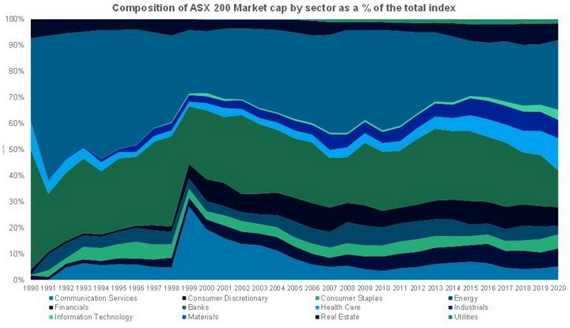
Sectors that led the vaccine rally Travel, Banks and Energy are coming off all-time lows of market cap share.


Source: AMP Capital, Bloomberg. Note travel stocks are a subset of both industrials and consumer discretionary sectors.

The winners so far

Sectors like travel, energy and banking that were at their lowest quarterly proportions of our ASX200 index at the beginning of this quarter are amongst the biggest gainers of the vaccine’s boost so far.

For background, since the pandemic hit, energy has lacked demand and had weak commodity prices across oil, gas and electricity. Banks have had low margins and credit growth, both of which have bottomed and are going higher in our market. Travel stocks of course have suffered with tourism being depleted.

These three poster child value sectors are now so cheap that they might offer high EPS (earnings per share) growth, as much lower valuations than you can get in the growth side of the market and that is why we believe they can make sustained gains as the virus is forced to retreat.

Could there be losers?

The losers from a vaccine on the market could perversely be those that have gained most this year:

  • Tech disrupters which had been gaining not on profitability but on the promise of it down the line (assuming they are not disrupted by the next wave of technology by then) after a fast transition to a digital and contactless COVID-19 world;

  • Some health care stocks which provided PPE equipment or ventilators for the outbreak; and

  • Online shopping which had enjoyed a massive boom as people shopped from their homes.

With the shift of earnings growth back into real businesses, some of these growth valuations are hard to justify and may push valuation multiples lower as the rate of change of customer adoption turns negative. The run up in valuations in tech has been overdone and there are real risks to their stock prices here if revenue trends moderate.


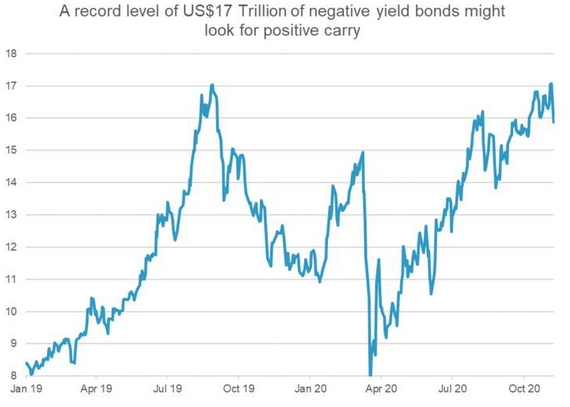
Source: AMP Capital; Bloomberg

Then of course there is the challenged alternatives-to-equities in a low-rate world. Would you believe that there are currently US$17 trillion in bonds with negative yields in the world right now? That’s 12 times the size of our Aussie equity market, or about the same market cap as all stocks currently listed on the New York Stock Exchange. This is because of zero interest rates, risk aversion and a lack of safe assets.

Importantly too, should the vaccine inoculate inflation and boost growth, we should start to see a rotation of investments out of these bonds (which are a cost to hold) and into equities that are reasonably valued and broadly recapitalised.

As we get closer to a widespread vaccination plan, we will see these trends continue and it could be a great shot in the arm for equity returns in 2021.


Author: Dermot Ryan Co-Portfolio Manager, Sydney, Australia

Source: AMP Capital 18 Nov 2020

Reproduced with the permission of the AMP Capital. This article was originally published at AMP Capital

Important notes: While every care has been taken in the preparation of this article, AMP Capital Investors Limited (ABN 59 001 777 591, AFSL 232497) and AMP Capital Funds Management Limited (ABN 15 159 557 721, AFSL 426455) (AMP Capital) makes no representations or warranties as to the accuracy or completeness of any statement in it including, without limitation, any forecasts. Past performance is not a reliable indicator of future performance. This article has been prepared for the purpose of providing general information, without taking account of any particular investor’s objectives, financial situation or needs. An investor should, before making any investment decisions, consider the appropriateness of the information in this article, and seek professional advice, having regard to the investor’s objectives, financial situation and needs. This article is solely for the use of the party to whom it is provided and must not be provided to any other person or entity without the express written consent of AMP Capital.

This article is not intended for distribution or use in any jurisdiction where it would be contrary to applicable laws, regulations or directives and does not constitute a recommendation, offer, solicitation or invitation to invest.

The tightly held office market in Australia, particularly in Sydney and Melbourne, has had a stellar run in recent years, with strong fundamentals and robust tenant demand resulting in record low levels of vacancy. The last six months, however, has seen COVID-19 containment measures resulting in a large portion of the workforce working from home rather than in a central office.

As restrictions ease and the full impacts of the pandemic come to light, businesses will need to reconsider their organisational structures, ways of working and the spaces they use to ensure a balance between the needs of individuals, teams and the business.

While it’s too soon to tell what the ‘future of office’ will be, and the impact remote working will have on office demand, the office will still play a fundamental role in how companies operate. And as the largest real estate sector, office exposure, particularly high quality and differentiated offerings, we believe will remain a key component of any diversified real estate portfolio.

Office market update

Australia’s office markets have been quick to respond to the economic slowdown resulting from COVID-19 containment measures. The combination of increased supply and a contraction in tenant demand resulted in a significant increase in vacancy levels from recent record lows, to over 10% in Australia’s two largest markets of Sydney and Melbourne at the end of the September quarter.

In line with the soft economic outlook, we expect office demand conditions to remain under pressure for the remainder of 2020 and to stabilise and improve from 2021 onwards. While the major office markets were well positioned heading into the downturn, it is our expectation that their vacancy levels will remain above historical average levels, before recovering from 2022 onwards. Secondary office markets with higher exposure to small business tenants are likely to experience the sharpest increases in vacancy, compared to the core prime markets which are anchored by more stable, corporate tenants and long lease terms.

Transaction activity has also experienced a sharp contraction since the start of the pandemic, particularly in comparison to the strong levels recorded last year. However, New South Wales and Victoria remain the most sought-after office markets in Australia and continue to attract investor interest. Whilst we saw valuers making adjustments to income assumptions early in the pandemic period, capitalisation rates have only just started to soften causing falls in value. However, we do not anticipate this to be to the same extent as during the 2008/2009 Global Financial Crisis, with real estate pricing being supported by the still attractive spread to low bond yields and investors still seeking exposure to income producing investments.

The greatest risk for office valuations going forward is in the assets facing significant vacancy and leasing risk, which is more likely to be in the secondary stock. As investors begin to price risk back in, the spread between prime and secondary asset pricing will increase and as such, we believe that prime real estate remains attractive in the context of broader investment markets.

A resilient sector

There are many factors at play which make it hard to quantify the impact a more agile workforce will have on demand for office space in the long term. What we do know however, is that between technological advances, the growing role of sustainability and wellbeing and the importance of flexibility, collaboration and community in attracting and retaining talent, the office as we once knew it is changing.

The office sector is a resilient asset class though, and as people start to get back into the office and make their choice where to work, the new post COVID-19 workplace landscape will start to take shape and the office market will inevitably evolve to meet these new requirements as it has done before.

In the meantime, whilst we are seeing tenants deferring the decision to relocate, renewing leases to secure their current space while assessing longer-term impacts on how and where their staff will work, there are also indications that the demand from global businesses for prime offices will continue.

Atlassian for example, have advised all their employees that they will be able to choose, 100% of the time into the foreseeable future, where they work. At the same time, they have recently announced they are designing and proposing a $1 billion+ state-of the-art, sustainable, hybrid timber, high-rise headquarters adjacent to Sydney’s Central station. Facebook, Amazon, Google, Apple and Twitter have made similar decisions on varying scales, citing the need to provide an attractive option of working in an office environment for their staff, as well as employee engagement and cultural reasons to maintain (and grow) their office presence.

While the office may look and feel different, it will still play a fundamental role in how companies operate. Opportunities remain for investors who are able to access quality assets that are actively managed with innovative and agile re-positioning to meet the changing needs of businesses and their workforce.

Finding quality assets and management

In times of change, investors have the opportunity to position themselves in portfolios that both minimise the short-term risks, but also position them for growth when it reappears. These portfolios will comprise assets that remain attractive to tenants throughout the market cycle. That of course, includes the office sector – the largest real estate sector and a key component of any diversified real estate portfolio.

For commercial real estate, a non-homogenous, relatively illiquid asset class, it means that bottom-up, on the ground expertise has re-established itself as a critical component of investment metrics.

Looking ahead, there is no doubt that workplace design and the way office space is used will continue to evolve and tenants will expect the support and guidance of experienced managers like AMP Capital to ensure the user experience, amenity and facilities of their accommodation continue to meet their needs as their requirements change, be it for COVID-19 related reasons or otherwise. The ability of an asset to meet these changing requirements will determine attractiveness of the building to tenants and therefore how secure the income stream is and how sustainable the asset’s investment performance will be.

Unpacking active management

Active management is the implementation of innovative and agile strategies that continue to evolve the asset to meet the needs of current and prospective tenant customers. As part of this, placemaking expertise, central to the evolution of retail assets, is becoming increasingly important in the office sector, ensuring assets remain relevant and attractive to tenants and enticing to their workforce.

Take customer experience as an example, which is a key factor for tenant customers’ decision on which office space to take up. More and more, the attraction of working in an office will be based on the user experience – businesses are looking for a sense of community, a building that reflects their brand, culture and purpose.

Amenity is high on the list of what attracts tenants to our buildings. This includes access to childcare, gyms, high quality ‘end of trip’ facilities (changerooms, bike storage and maintenance facilities), concierge services, cafes, and access to flexible working spaces to make the best use of valuable floor space.

Wellbeing and hygiene will also be front of mind for users of office assets as a result of COVID-19 and the role of technology will be significant in providing the level of comfort required for people to return to the office safely. AMP Capital is currently piloting a number of initiatives that will continue to support our tenants in their requirements, such as smart phone frictionless building access and sensors to manage occupancy and optimise operating costs.

Taking an active management approach ensures portfolios are resilient to short-term impacts of market movements and investors can continue to maximise investment returns, and minimise risks, at all stages of the market cycle.

Case Study: An example of a proactive management approach

Over the last two years, AMP Capital initiated an investment strategy to reposition Angel Place, an A Grade office asset located in the centre of Sydney’s CBD. The objective was to elevate Angel Place as one of Sydney CBD’s most iconic, tenant-centric office assets, ensuring it remains attractive to the changing needs of tenants.

The strategy included the refurbishment of the lobby to a premium standard, the introduction of market leading flexible workspaces and an enhanced user experience in the form of concierge services, improved building amenity and increased community engagement.

Completed in 2019, this asset repositioning shifted market perception of the building allowing us to take advantage of a strong leasing market and forward-solving vacancy risks in order to maximise leasing and renewal opportunities ahead of any anticipated market downturn. As a result, a high level of occupancy has been maintained and income returns maximised for investors into the future despite the current market conditions.

The fundamentals of commercial real estate remain

While it’s important for investors to consider how their short-term exposure will fair in an economic downturn, the fundamentals of investing in commercial real estate remain:

  • Seek minimal vacancy exposure/risk through long weighted average lease expiry (WALE); and 

  • Ensure assets are well located, well designed and well managed, to ensure they attract and retain high quality tenants throughout the market cycle.

Portfolios that exhibit these characteristics and continue to meet the ‘flight to quality criteria’, will be best placed to weather the short-term impacts of a market downturn while providing investors growth opportunities as markets start to recover.

Accessing prime commercial real estate is not just for institutional investors. Find out how you can access quality office assets by clicking here.


Author: Claire Talbot, Fund Manager – Real Estate Sydney, Australia

Source: AMP Capital 30 Oct 2020

Reproduced with the permission of the AMP Capital. This article was originally published at AMP Capital

Important note: Investors should consider the Product Disclosure Statement (PDS) available from AMP Capital Investors Limited (ABN 59 001 777 591, AFSL 232497) (AMP Capital) for the AMP Capital Core Property Fund (“Fund”) before making any decision regarding the Fund. The Trust Company (RE Services) Limited (ABN 45 003 278 831, AFSL 235150), a wholly owned subsidiary of The Trust Company Limited (ABN 59 004 027 749), is the responsible entity of the Fund and the issuer of units in the Fund. The PDS contains important information about investing in the Fund and it’s important investors read the PDS before making a decision about whether to acquire, continue to hold or dispose of units in the Fund. None of the responsible entity, AMP Capital or any other company in the AMP Group guarantees the repayment of capital or the performance of any product or any particular rate of return referred to in this video. Past performance is not a reliable indicator of future performance. While every care has been taken in the preparation of this video, AMP Capital makes no representation or warranty as to the accuracy or completeness of any statement in it including without limitation, any forecasts. This information has been prepared for the purpose of providing general information, without taking account of any particular investor’s objectives, financial situation or needs. Investors should, before making any investment decisions, consider the appropriateness of the information in this document, and seek professional advice, having regard to the investor’s objectives, financial situation and needs. This information is not intended for distribution or use in any jurisdiction where it would be contrary to applicable laws, regulations or directives and does not constitute a recommendation, offer, solicitation or invitation to invest.


Earlier in the year we wrote about our attraction to the mining services industry given a favourable macro backdrop, earnings growth and cheap valuations.

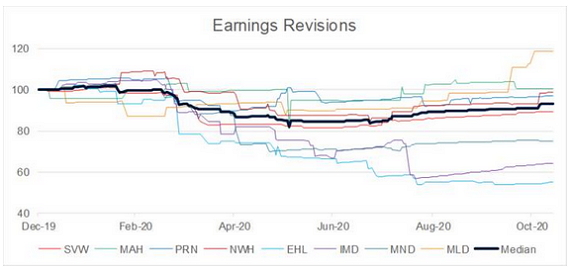
While the macro side was very shaky for a few months through the COVID-19 pandemic, we believe it has actually become even more positive given Chinese stimulus and record low interest rates, leading to even higher gold and iron ore prices. Despite some COVID-19 hiccups on the operating side, most mining services companies have sailed through in reasonable shape with the median earnings revision this year for the group down 7%, considerably less than the ~20% fall seen by the broader small cap market.


Past performance is not a reliable indicator of future performance. Stock names: Seven Group Holdings (SVW); Macmahon Holdings (MAH); Perenti Global (PRN); NRW Holdings (NWH); Emeco Holdings (EHL); IMDEX (IMD); Monadelphous Group (MND); MACA Limited (MLD) Source: AMP Capital, FactSet.

Set up for earnings growth

The COVID-19 pandemic has demonstrated the role of the mining sector in the Australian economy, with mines running largely at full capacity over the past nine months. Miners continued critical maintenance work and expansion projects, with the taps recently turned back on for exploration. Iron ore majors are pushing ahead with growth projects and need to complete them in order to offset other mine closures from depleted resources. We are also seeing a number of developers complete feasibility studies and look to finance new projects – particularly in the gold space.

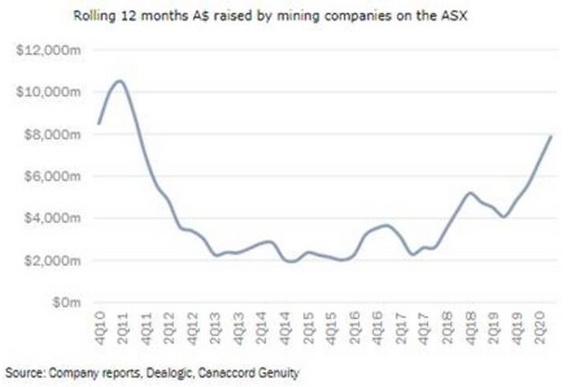
The boom in capital raisings seen over the past six months on the ASX has extended to the junior mining space, with the chart below showing fresh equity raised is up almost 4x from the bottom of the cycle in 2015, and approaching the top of the market in early 2011. We believe this is a good sign for future exploration programs, and coupled with a high gold price (gold typically makes up around 50% of global exploration spend), should set up a good period for companies providing services to the exploration industry, including drillers, tool providers and assay labs.


Past performance is not a reliable indicator of future performance

In our view, medium-term earnings for the sector should be well supported provided commodity prices hold up. An increase in exploration spend should flow through to new deposits being discovered, which is expected to lead to new mines being developed in coming years. Development projects which were parked a few years ago due to low prices are now being restarted, which benefits earthmovers, construction companies, equipment providers and contract miners. Financing projects is becoming easier given lower interest rates and supportive equity markets, while the risks lie in potential cost inflation and labour constraints given border closures.

Coal worries

The coal market has been the main overhang on the sector, with factors such as lower power demand due to the COVID-19 outbreak and Chinese import restrictions leading to low prices across the coal complex. Longer term, the potential for an acceleration of the move away from coal and towards renewable fuel sources through ‘green stimulus’ programs could cause further structural change within the industry. This provides a challenging backdrop for service providers in the coal market. However, we believe that existing contracts will be honoured and provide enough time for providers to shift their business further towards other industries and commodities. Service providers exposed to production are also better positioned as ‘take or pay’ obligations with rail and port providers means it is often more economic for mine owners to operate at a small loss rather than mothball production and pay rail and port fees. Capital markets are also open to provide additional liquidity to operators, with Coronado Coal recently conducting a $250 million equity raising.

Valuation support

Despite the positivity of high commodity prices, increasing capex programs from miners, and earnings which have far exceeded the market average, this bucket of stocks has underperformed the index since the start of the COVID-19 pandemic by 16%, and is trading on an average P/E multiple of just 10x for FY21, compared to 20x for the index. We are under no illusions that this is a cyclical sector that goes through boom and bust periods and deserves to trade at a discount to the market due to this volatility and the capital-intensive nature of the business models. However, we believe the current discount is excessive, especially considering the growth outlook and positive free cashflow being generated by the sector. In our opinion, the market is ignoring the sector in favour of re-open trades, tech stocks and the miners themselves. Nonetheless, we believe that earnings drives share prices and continued delivery on this front will see investors take notice of the sector and see it outperform the market.

We are invested across the sector, and we believe that Seven Group and Macmahon are extremely well-run businesses with a good level of earnings predictability, NRW should benefit from public infrastructure and iron ore work while trading on a free cashflow yield of over 10%, and IMDEX offers leverage to the coming exploration boom in gold.


Author: Matt Griffin, Co-portfolio Manager, Small Caps Sydney, Australia

Source: AMP Capital 17 Nov 2020

Reproduced with the permission of the AMP Capital. This article was originally published at AMP Capital

Important notes: While every care has been taken in the preparation of this article, AMP Capital Investors Limited (ABN 59 001 777 591, AFSL 232497) and AMP Capital Funds Management Limited (ABN 15 159 557 721, AFSL 426455) (AMP Capital) makes no representations or warranties as to the accuracy or completeness of any statement in it including, without limitation, any forecasts. Past performance is not a reliable indicator of future performance. This article has been prepared for the purpose of providing general information, without taking account of any particular investor’s objectives, financial situation or needs. An investor should, before making any investment decisions, consider the appropriateness of the information in this article, and seek professional advice, having regard to the investor’s objectives, financial situation and needs. This article is solely for the use of the party to whom it is provided and must not be provided to any other person or entity without the express written consent of AMP Capital.

This article is not intended for distribution or use in any jurisdiction where it would be contrary to applicable laws, regulations or directives and does not constitute a recommendation, offer, solicitation or invitation to invest.

In May, in a note called The Lucky Country, I argued that due to Australia’s far better control of coronavirus relative to many comparable countries, a stronger economic policy support response to shutdowns, and exposure to China which was well into economic recovery Australia was likely to come through this period of global misery relatively well compared to many other countries – and this may ultimately support Australian shares and other assets relative to other comparable countries’ assets. In the interim, the coronavirus resurgence in Victoria got in the way and we are still not out of the woods as periodic problems in NSW and a cluster in South Australia highlight.

But the basic points remain valid and I continue to thank god I live in The Lucky Country. This note provides an update and looks at five reasons why the Australian economy is well placed for a solid recovery in 2021 and why Australian shares are likely to be relative outperformers versus global shares.

First, better virus control

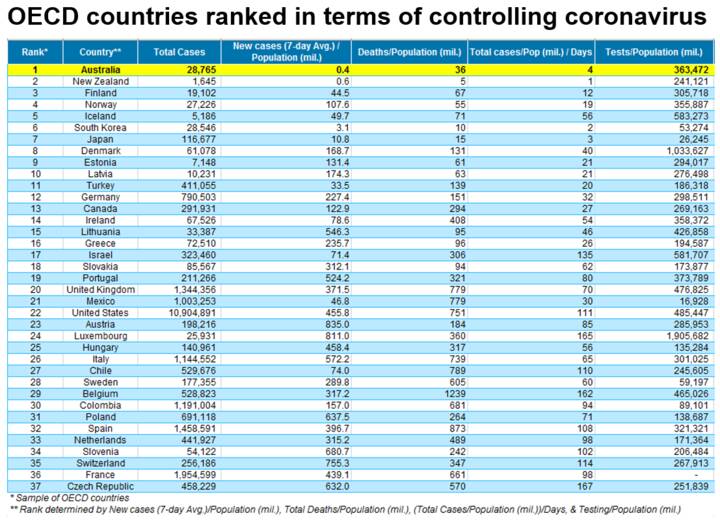
Australia’s success in “controlling” coronavirus continues to stand out globally (touch wood). Comparing OECD countries in how they are managing the coronavirus outbreak (based on new cases per capita, deaths per capita, total cases per capita and testing per capita) Australia ranks first, with NZ 2nd (this has been flipping around) compared to the US at 22nd, Sweden at 28th, Spain at 32nd and France at 36th. See the next table.

Less congested living, better weather, a younger population and luck may have all played a role, but the big driver looks to have been a public health response based on expert medical advice as opposed to bravado and crackpot theories. This has been characterised by rigorous contact tracing, quarantining and timely and targeted distancing and containment measures. Our institutions have been working well together across various levels of government – in contrast to the US where President Trump has contradicted and weakened the message. And the overwhelming majority of Australians have done the right thing.

click to enlarge

Daily new cases per million people are running at around 0.4 compared to over 400 in the US and deaths are around 36 per million compared to around 700 or more per million in many other major countries. If we had the same deaths per capita as the US, we would have lost an extra 18,000 people to the virus.

Recent news regarding a vaccine is very good with two vaccines (Pfizer and Moderna) showing efficacy of 90% or more in preliminary testing. But there is still a way to go yet – more information regarding efficacy & safety is required & assuming these are positive, it will probably take at least till mid-next year for broad enough coverage to achieve herd immunity (and longer for the whole world). In the meantime, better virus control provides more scope to continue cautiously reopening the economy and confidence for Australians to participate in it.

Second, better economic policy response

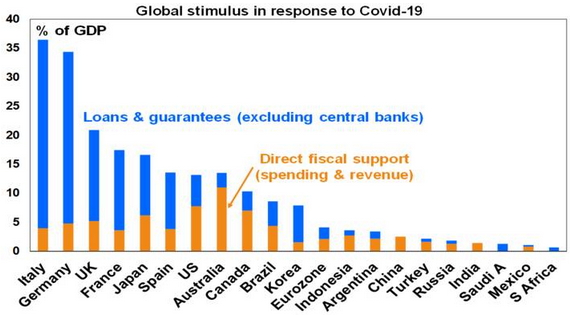
The global government policy response to the economic threat posed by coronavirus has been huge. See the next chart.


Source: IMF, AMP Capital

But in terms of direct fiscal support, Australia has stood out with the biggest stimulus at nearly 11% of GDP for 2020 in comparison to other major countries. And it’s been well targeted (with the JobKeeper wage subsidy protecting businesses, jobs and incomes) and with stimulus extended in the October Budget into the years ahead with a bring forward of tax cuts and tax write-offs for investment having the effect of muting much feared fiscal cliffs. RBA monetary easing arguably lagged relative to other countries but has now largely caught up, with a full blown bond buying program.

Third, trade exposure to China/Asia

We are benefitting from our biggest export market – China – having now fully recovered and most of our Asian trading partners similarly doing a better job of controlling coronavirus and hence being better placed to recover. This supports demand for our exports and partly explains why prices for our key exports – notably iron ore – are holding up relatively well.

Fourth, the drag from the mining bust is over

The slump in mining investment from around 2013 that has been a key drag on the Australian economy (detracting around 1.5 percentage points per annum from GDP between 2012-13 and 2018-19) is now over and mining investment is now starting to improve. The ABS’ most recent capital spending survey points to growth in mining investment of between 1% to 8% for this financial year. This partly explains the relative strength of WA economic data recently after years of weakness.

Finally, the relatively cyclical Aust economy and share market should benefit from global recovery in 2021

The Australian economy and share market with their relatively high exposure to resources and financials are relatively cyclical in contrast to the US that has a higher exposure to “growth” sectors like IT and healthcare. Consequently, the US share market and the $US tend to outperform in downturns and underperform in upturns. So if the combination of a vaccine and global stimulus drives a strong global economic recovery in 2021 (mainly in the second half) then the Australian economy, shares and $A are likely to be relative beneficiaries.

Implications for the Australian economy

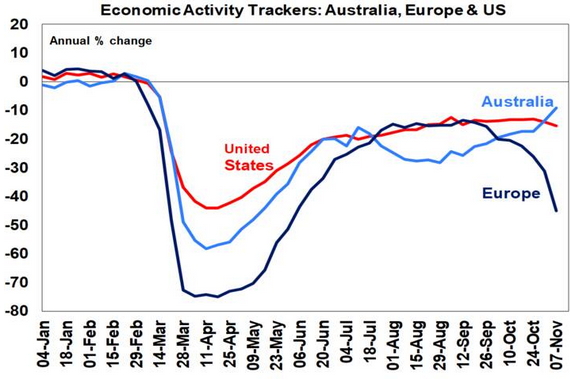
The combination of better virus control, a superior policy response, exposure to faster recovering China and Asia, the shift in mining investment from being a drag to being a boost to the economy and leverage to a cyclical recovery globally should result in a stronger more assured recovery in the Australian economy relative to comparable countries in the year ahead. This is partly evident in our Economic Activity Trackers which are based on weekly data for things like credit card sales, restaurant bookings, job openings, confidence and mobility. While the Victorian lockdown saw Australia’s Economic Activity Tracker fall back around August, it has recently started to accelerate again & is looking stronger than the US and Europe.


Source AMP Capital

Implications for investors

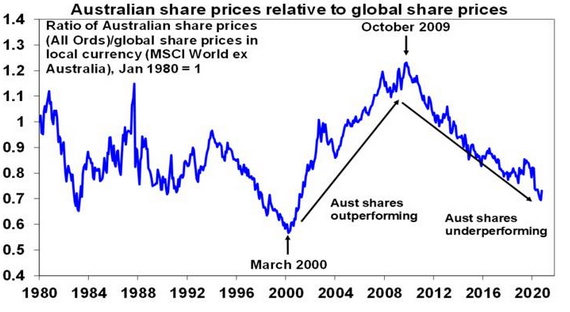
A relatively stronger recovery for the Australian economy should benefit Australian assets relative to global assets. This could continue to come via an appreciation of the $A and we continue to see the $A rising to around $0.80 over the next year or so. However, it’s also likely the relative underperformance of the Australian share market since October 2009 has run its course. The next chart shows the ratio of Australian share prices to global share prices in local currency terms. Over the last 30 years, the relative performance of Australian shares has seen three distinct waves – underperforming through the tech boom until March 2000, outperforming through the resources boom of the 2000s, but underperforming since October 2009 as the mining boom went bust and coronavirus hit cyclical stocks.


Source: Thomson Reuters, AMP Capital

However, there is now good reason to believe that this relative underperformance will start to reverse in the year ahead if the Australian economy recovers faster, cyclical sectors like resources and financials come back into favour over growth stocks like IT and healthcare and as commodity prices continue to drift up. As a result, it’s hard to maintain a strong case against Australian shares in favour of global shares. We expect Australian shares to provide solid returns next year.

Risks to watch

There are five main risks or potential threats to this.

First – vaccines could prove ineffective leaving all economies vulnerable to waves of coronavirus. However, if Australia remains better at controlling it, it should fare relatively better.

Second – tensions between Australia and China could continue to escalate. So far only a small proportion of exports to China amounting to less than 0.5% of GDP are at risk but if it were to affect iron ore the impact would be greater. A Biden Presidency with a focus on diplomatic solutions to issues with China could provide an off ramp for Australia though.

Third – inflation and bond yields could rise. Initially this would be a good problem as higher inflation would help boost share market earnings. But if bond yields rose too fast it would be a problem for shares and other assets.

Fourth – fiscal support could be withdrawn too quickly. But the Government has shown sensitivity to this & keeps extending it.

Fifth – many fret that the ban on international travel means Australia can’t recover. But this is not really true. The bulk of the 7.3% hit to the economy in the first half came via the shutdowns and impact on confidence with the net impact of the travel ban on tourism & education maybe accounting for a 1% hit to GDP at most. So, while the travel ban will prevent a full recovery if it remains, most economic activity can return. The absence of immigration will slow Australia’s long-term growth rate by around 1% pa if it’s sustained and will weigh on the property and construction sector, but it won’t prevent economic recovery.


Source: AMP Capital 18 Nov 2020

Important notes: While every care has been taken in the preparation of this article, AMP Capital Investors Limited (ABN 59 001 777 591, AFSL 232497) and AMP Capital Funds Management Limited (ABN 15 159 557 721, AFSL 426455) (AMP Capital) makes no representations or warranties as to the accuracy or completeness of any statement in it including, without limitation, any forecasts. Past performance is not a reliable indicator of future performance. This article has been prepared for the purpose of providing general information, without taking account of any particular investor’s objectives, financial situation or needs. An investor should, before making any investment decisions, consider the appropriateness of the information in this article, and seek professional advice, having regard to the investor’s objectives, financial situation and needs. This article is solely for the use of the party to whom it is provided and must not be provided to any other person or entity without the express written consent of AMP Capital.

This article is not intended for distribution or use in any jurisdiction where it would be contrary to applicable laws, regulations or directives and does not constitute a recommendation, offer, solicitation or invitation to invest.

Before you can step onto the property ladder and buy your first home, you’ll likely have to do some serious saving to build up a deposit. Here are some things to consider that can help get you started, and on the road to home ownership sooner. 


Work out your current situation 

It might sound obvious, but it’s easier to reach a savings goal when you know where you’re starting from. Understanding your current financial situation – what your income and expenses are – will help you set a budget. You can then track your spending and save a set amount each week, fortnight or month towards your deposit. You can do it in as little as three steps.

Find out how much you can borrow

Knowing how much you might be able borrow can help you figure out how much home loan deposit you’ll need to save. . Remember though, the amount calculated is only an estimate based on the income and expenses you put in. It’s likely to differ from the amount a lender formally approves you for when the time comes.

It’s also important to remember that interest rates do change, so think about building a buffer into the repayment amount so that you’d still be able to cover your loan repayments if interest rates rise.

Figure out how much deposit you need

Once you know roughly how much you might be able to borrow, compare this with the cost of your ideal property and it can give you a good ballpark figure to aim for. The size of the deposit you need for a home loan is typically 20%. Although in some circumstances it may be possible for home buyers to have as little as a 5% deposit.

Understanding the loan to value ratio and whether you’ll need to pay lenders mortgage insurance can also help you work out how much you can afford to spend when buying a property.

When you’re closer to reaching your house deposit goal, you can speak to a lender about conditional approval for a home loan.

Don’t forget the other upfront costs associated with buying a home such as legal fees, building and pest inspection fees, stamp duty, moving costs and insurances.

Know how long you’ll be saving for

Of course, this all depends on how much you can afford to save each month. But every dollar you can put towards your savings plan means growing a bigger deposit or saving money for less time.

As an example:

Purchase Price

20% deposit

Amount saved each month

Number of months to reach deposit goal

$300,000

$60,000

$2,000

30

$500,000

$100,000

$2,500

40

$700,000

$140,000

$3,000

47

$1,000,000

$200,000

$3,500

57

Depending on your financial circumstances, a separate savings account for your home loan deposit may be an option you want to consider. It can pay to shop around and find an account that’s right for you, whether it be a regular savings account or a term deposit.

Find out if you’re eligible for first home buyer help

If you’re a first home buyer, you might be eligible for the First Home Owner Grant (FHOG). It’s an Australian state and territory-based scheme that aims to help first home buyers with the cost of purchasing a residential property. 

Tips to save a deposit faster

  • If it’s an option, you might consider temporarily moving back home with your parents, so you can save on rent. 

  • Free up extra cash by cutting down on unnecessary spending – takeaways, another pair of sunglasses, or monthly subscriptions you don’t use are a good place to start.

  • Make additional income by selling things you no longer use or earning money through a side hustle.

  • Cut back on food waste and plan your meals so you spend less on groceries.

  • Review your utility providers to make sure you have the best deal.

  • Defer any big purchases or upgrades like cars or appliances.

 Please contact us on Phone: 07 5641 4134 if you seek further discussion on this topic.

Source : AMP October 2020 

Important: This information is provided by AMP Life Limited. It is general information only and hasn’t taken your circumstances into account. It’s important to consider your particular circumstances and the relevant Product Disclosure Statement or Terms and Conditions, available by calling Phone: 07 5641 4134, before deciding what’s right for you.

All information in this article is subject to change without notice. Although the information is from sources considered reliable, AMP and our company do not guarantee that it is accurate or complete. You should not rely upon it and should seek professional advice before making any financial decision. Except where liability under any statute cannot be excluded, AMP and our company do not accept any liability for any resulting loss or damage of the reader or any other person. Any links have been provided for information purposes only and will take you to external websites. Note: Our company does not endorse and is not responsible for the accuracy of the contents/information contained within the linked site(s) accessible from this page.

Life insurance can help protect you and your loved ones financially if something unexpected happens.

What life insurance covers

Different life insurance products are designed to protect you from different events that can occur:

What to check before you buy life insurance

Before buying, renewing or switching insurance, check if the policy will cover you for claims associated with COVID-19.

Before you buy life insurance, by law an insurer must give you a Product disclosure statement (PDS). Check the PDS for:

  • what’s covered and what’s excluded under the policy

  • what information you’ll need to give an insurer

  • information on premiums and how they change over time

  • waiting periods before you make a claim

  • how to make a claim

  • how to complain about the claims process or decision

Also check whether you already have life insurance through your super. Make sure you’re not paying for insurance twice.

Please contact us on Phone: 07 5641 4134 if you seek further assistance on this topic.

Source : Moneysmart.gov.au October 2020 

Reproduced with the permission of ASIC’s MoneySmart Team. This article was originally published at https://moneysmart.gov.au/how-life-insurance-works

Important note: This provides general information and hasn’t taken your circumstances into account.  It’s important to consider your particular circumstances before deciding what’s right for you. Although the information is from sources considered reliable, we do not guarantee that it is accurate or complete. You should not rely upon it and should seek qualified advice before making any investment decision. Except where liability under any statute cannot be excluded, we do not accept any liability (whether under contract, tort or otherwise) for any resulting loss or damage of the reader or any other person.  Past performance is not a reliable guide to future returns.


Important Any information provided by the author detailed above is separate and external to our business and our Licensee. Neither our business nor our Licensee takes any responsibility for any action or any service provided by the author. Any links have been provided with permission for information purposes only and will take you to external websites, which are not connected to our company in any way. Note: Our company does not endorse and is not responsible for the accuracy of the contents/information contained within the linked site(s) accessible from this page.