
How much tax you pay on your super contributions and withdrawals depends on:

  • your total super amount

  • your age

  • the type of contribution or withdrawal you make

If you inherit someone’s super after they die, the person’s super fund pays you a super death benefit. You may have to pay tax on some of this benefit.

Because everyone’s situation is different, it’s always best to get advice about tax matters. Contact the Australian Taxation Office (ATO) or call us on Phone: 07 5641 4134. 

How super contributions are taxed

Money paid into your super account by your employer is taxed at 15%. So are salary-sacrificed contributions, also known as concessional contributions .

There are some exceptions to this rule:

  • If you earn $37,000 or less, the tax is paid back into your super account through the low-income super tax offset (LISTO) .

  • If your income and super contributions combined are more than $250,000, you pay Division 293 tax , an extra 15%.

If you make contributions from your after-tax income — known as non- concessional contributions – you don’t pay any contributions tax.

See tax on contributions on the ATO website for more information about how much tax you’ll pay on super contributions.

To avoid paying extra tax on your super, make sure you give your super fund your tax file number

 How super withdrawals are taxed

The amount of tax you pay depends on whether you withdraw your super as:

  • a super income stream, or

  • a lump sum

Everyone’s financial situation is unique, especially when it comes to tax. Make an informed decision. We recommend you get financial advice before you decide to withdraw your super.

Super income stream

A super income stream is when you withdraw your money as small regular payments over a long period of time.

If you’re aged 60 or over, this income is usually tax-free.

If you’re under 60, you may pay tax on your super income stream.

See retirement income tax.

Lump sum withdrawals

If you’re aged 60 or over and withdraw a lump sum:

  • You don’t pay any tax when you withdraw from a taxed super fund.

  • You may pay tax if you withdraw from an untaxed super fund, such as a public sector fund.

If you’re under age 60 and withdraw a lump sum:

  • You don’t pay tax if you withdraw up to the ‘low rate threshold’, currently $205,000.

  • If you withdraw an amount above the low rate threshold, you pay 17% tax (including the Medicare levy) or your marginal tax rate, whichever is lower.

If you have not yet reached your preservation age You pay 22% (including the Medicare levy) or your marginal tax rate, whichever is lower.

See the super lump sum tax table on the ATO website for more detailed information.

When someone dies

When someone dies, their super is usually paid to their beneficiary .This is called a super death benefit.

If you’re a beneficiary, the amount of tax you pay on a death benefit depends on:

  • the tax-free and taxable components of the super

  • whether you’re a dependent for tax purposes

  • whether you take the benefit as an income stream or a lump sum

See super death benefits on the ATO website for detailed information.

Please contact us on Phone: 07 5641 4134 if you seek further assistance on this topic.

Source : Moneysmart.gov.au December 2020

Reproduced with the permission of ASIC’s MoneySmart Team. This article was originally published at https://moneysmart.gov.au/how-super-works/tax-and-super

Important note: This provides general information and hasn’t taken your circumstances into account.  It’s important to consider your particular circumstances before deciding what’s right for you. Although the information is from sources considered reliable, we do not guarantee that it is accurate or complete. You should not rely upon it and should seek qualified advice before making any investment decision. Except where liability under any statute cannot be excluded, we do not accept any liability (whether under contract, tort or otherwise) for any resulting loss or damage of the reader or any other person.  Past performance is not a reliable guide to future returns.

Important Any information provided by the author detailed above is separate and external to our business and our Licensee. Neither our business nor our Licensee takes any responsibility for any action or any service provided by the author. Any links have been provided with permission for information purposes only and will take you to external websites, which are not connected to our company in any way. Note: Our company does not endorse and is not responsible for the accuracy of the contents/information contained within the linked site(s) accessible from this page. 

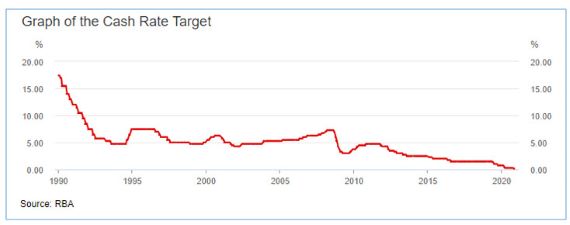
The Reserve Bank’s decision this month to cut the official interest rate to a record low 0.1 per cent was another wake-up call for Australians heavily reliant on income from savings, especially many retirees.

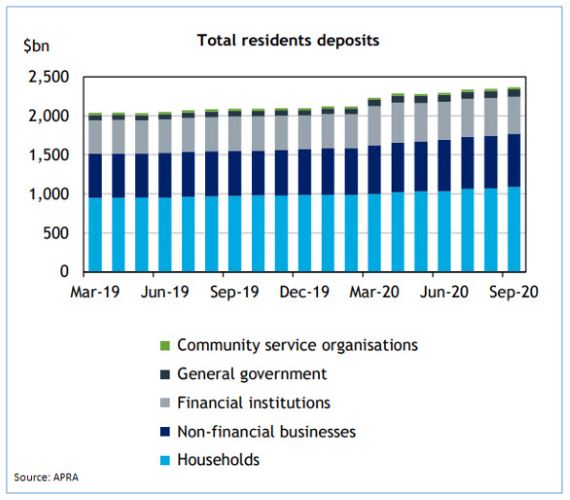
A look at the latest domestic monthly banking statistics shows that at the end of October Australian households collectively had $1.1 trillion deposited in savings account products. Household deposits have been increasing steadily over time.


The four largest banks – ANZ, Commonwealth Bank, NAB and Westpac – hold more than $800 billion of total household cash.

The bulk of these accounts are paying no interest at all, although some products are offering new accountholders promotional bonus rates of around 1 per cent that expire after a few months.

To get a higher savings interest rate one needs to open a term deposit account. Currently it’s possible to lock in a fixed rate of around 1.5 per cent on a three-year term, with four and five-year terms slightly lower at around 1.3 per cent.

However, there are other alternatives to savings accounts and term deposits.

Managed cash funds

Cash is essentially the lowest-risk asset class, and typically suits investors with shorter investment time frames needing quick access to funds.

Investors wanting an income return and a relatively stable capital value also could consider a managed cash fund.

Managed cash funds provide the potential to earn higher returns than bank accounts and term deposits and invest in a range of high-quality, short-term money market investments (that usually mature in 12 months or less).

A key advantage over term deposit accounts is that cash funds provide full liquidity, so funds can be accessed within a few days instead of being locked away for a set period of time.

By investing in a diversified portfolio of securities, cash funds also are less exposed to the performance fluctuations of individual securities.

Managed bond funds

Bonds are securities that can provide a steady and reliable income stream and usually offer a higher interest rate, or yield, than cash.

Total bond returns can include income from interest payments and growth from bond price fluctuations.

When you invest in bonds, you’re effectively lending your money to the bond issuer for a set period of time, in return for interest paid over the term of your investment. Your investment, or capital, is then paid back to you in full at the end of the investment term.

Alternatively, individual bonds can be traded at any time, meaning you can access your capital before a bond’s maturity date.

Bonds can be invested in directly, however a growing number of investors are gaining exposure to bonds through managed bond funds.

Managed bond funds provide a cost-effective way of accessing a diversified portfolio of bonds, which can include a large mix of Australian and international government bonds as well as bonds issued by companies.

Bonds are a low- to medium-risk investment suitable for investors with a timeframe of three years or more.

In addition to providing a regular income stream – an important feature for many investors – bonds may provide a stabilising effect during periods of share market volatility.

Lower for longer

In announcing the latest official interest rate cut, the Reserve Bank said it expects the cash rate to remain at its current level (close to zero per cent) for at least three years.

That, of course, means ultra-low savings and term deposit account returns for an extended period of time.


Households have continued to pay off housing loans and increase balances in offset and redraw accounts at a faster rate than in early 2020, at the same time as lower interest rates have reduced interest payments.

For investors, there are alternatives to savings accounts paying zero per cent interest or term deposit accounts paying low rates that require capital to be locked away for three to five years.

Managed cash funds are also an option in the cash asset class, while managed bond funds are an option in the fixed interest asset class. Both provide broad diversification.

The bigger investment picture

Importantly, all investment options should always be well researched and considered as part of your overall investment goals, risk tolerance and time frame.

A sound investment strategy starts with an asset allocation suitable for your objectives that should be built upon reasonable expectations for risk and returns.

Because all investments involve some degree of risk, managing the balance between risk and potential reward is key.

 By Tony Kaye, Senior Personal Finance Writer at Vanguard Australia.

Please contact us on Phone: 07 5641 4134 if you seek further assistance on this topic.

Source : Vanguard November 2020

Reproduced with permission of Vanguard Investments Australia Ltd

Vanguard Investments Australia Ltd (ABN 72 072 881 086 / AFS Licence 227263) is the product issuer. We have not taken yours and your clients’ circumstances into account when preparing this material so it may not be applicable to the particular situation you are considering. You should consider your circumstances and our Product Disclosure Statement (PDS) or Prospectus before making any investment decision. You can access our PDS or Prospectus online or by calling us. This material was prepared in good faith and we accept no liability for any errors or omissions. Past performance is not an indication of future performance.

© 2020 Vanguard Investments Australia Ltd. All rights reserved.

Important: Any information provided by the author detailed above is separate and external to our business and our Licensee. Neither our business nor our Licensee takes any responsibility for any action or any service provided by the author. Any links have been provided with permission for information purposes only and will take you to external websites, which are not connected to our company in any way. Note: Our company does not endorse and is not responsible for the accuracy of the contents/information contained within the linked site(s) accessible from this page.  


Financial advisers are professionals who can help you plan and manage bigger financial decisions. Know what to expect when you get advice and how to stay on top of your financial plan.

Helping you set and achieve your goals

A financial adviser can help you set financial goals so you feel confident that your future plans are achievable. If you’re not on track to achieving your goals, an adviser can help you put the right strategies in place, or set more realistic goals.

Financial advice can be useful at turning points in your life, like when you’re starting a family, being retrenched, planning for retirement or managing an inheritance.

When you meet with an adviser for the first time, it’s important to work out what you want to get from the advice. An adviser should take the time to discuss what’s important to you and ask about your short and long term goals before they make any recommendations.

Prepare to see an adviser

Giving an adviser accurate information about your situation allows them to tailor the advice to best meet your needs.

An adviser will need information about your:

  • personal situation, such as your age, where you work and whether you’re in a relationship

  • assets, such as your home, savings, super, car, shares and other investments

  • debts, including mortgages, loans and credit card debt

  • income from all sources, including pay, investments and government benefits

  • expenses (every week or month) — our budget planner can help you make a list

  • insurance policies and how much you’re insured for

  • estate plans, such as a will or power of attorney

  • lawyer and accountant

Know what your adviser is offering

At the first meeting make sure you discuss:

  • the scope of the advice (what is and isn’t included)

  • the cost and your options for paying

  • what information they’ll give you and how often

  • when they’ll consult you and when they’ll need your permission

  • the level of authority you’re giving them to manage your investments and to access your money

  • how often you’ll meet to review your financial plan’s progress

An adviser will also ask you to complete a questionnaire to work out how much risk you’re prepared to accept to reach your goals. This will help them recommend suitable investments for you.

Check your financial plan

Once you’ve agreed to go ahead, your financial adviser will prepare a financial plan for you. This is given to you at another meeting in a document called a Statement of Advice (SOA)

Ask the adviser to explain anything you don’t understand. You should always feel comfortable with your adviser and their advice.

Check that your Statement of Advice:

  • addresses your financial goals and personal situation

  • lists accurate financial details, such as your assets, debts, income and expenses

  • has a level of risk you’re comfortable with

  • explains what the advice covers (and doesn’t cover)

  • explains how the recommended strategy fits your financial goals, risk profile, time frame, and financial situation

  • explains how investments will be managed — for example, through an investment platform 

  • details how any recommended products fit into the plan

  • explains the pros and cons of switching to another financial product (for example, another super fund)

  • clearly shows all the fees you’ll pay, how they’re paid, and who they’re paid to

Don’t feel pressured to accept an adviser’s recommendations. Don’t sign anything unless you understand and agree with what you’re signing.

Know what’s happening with your money

Cash management account

If you set up a cash management account to manage your investments, decide how much access to give your adviser. The access you give your adviser could be:

  • view access – your adviser can see the account transactions but cannot operate the account

  • withdrawal access – your adviser can make transactions, including withdrawals

  • complete access – your adviser can do all the things you can do with the account, including changing contact details, changing or adding authorised signatories or closing the account.

Giving your adviser access to your account places a lot of trust in them. Insist that you are notified of all transactions, and that you receive all correspondence related to the account.

Managed discretionary account

Your adviser may suggest a managed discretionary account (MDA) as a way of managing your investments. This involves signing an agreement (MDA contract) so they can buy or sell investments without having to check with you. Together, you agree on an investment program and your adviser must make investment decisions in line with this.

Before you invest in an MDA, compare the benefits to the costs and risks.

Protect your money

To protect your money:

  • Don’t give your adviser power of attorney.

  • Never sign a blank document.

  • Put a time limit on any authority you give to buy and sell investments on your behalf.

  • Insist all correspondence about your investments are sent to you, not just your adviser

  • Keep all your paperwork and electronic files in one place. For more tips, see keep track of your investments.

  • For investments, write cheques or transfers payable to the product provider (not your adviser).

  • Regularly check transactions if you have an investment account or use an investment platform 

Giving a financial adviser complete access to your account increases risk. If you see anything that doesn’t look right, there are steps you can take. See problems with a financial adviser.

Review the advice

If you’re paying an ongoing advice fee, your adviser should review your financial situation and meet with you at least once a year.

At this meeting, make sure you discuss:

  • any changes to your goals, situation or finances (including changes to your income, expenses or assets)

  • whether the level of risk you’re comfortable with has changed

  • whether your current personal insurance cover is right

  • how you’re tracking against your goals

  • whether any changes to laws or financial products could affect you

  • whether you’ve received everything they promised in your agreement with them

  • whether you need any adjustments to your plan

Ending an agreement with an adviser

If you decide that you no longer want ongoing financial advice, find out if there are selling and buying costs or any tax or government assistance implications.

Details about how to end your relationship with your adviser should be in your SOA. If you’re moving to a new adviser, you’ll need to arrange to transfer your financial records to them.

Please contact us on Phone: 07 5641 4134 if you seek further assistance on this topic.

Source : Moneysmart .gov.au November 2020

Reproduced with the permission of ASIC’s MoneySmart Team. This article was originally published at https://moneysmart.gov.au/financial-advice/working-with-a-financial-adviser

Important note: This provides general information and hasn’t taken your circumstances into account.  It’s important to consider your particular circumstances before deciding what’s right for you. Although the information is from sources considered reliable, we do not guarantee that it is accurate or complete. You should not rely upon it and should seek qualified advice before making any investment decision. Except where liability under any statute cannot be excluded, we do not accept any liability (whether under contract, tort or otherwise) for any resulting loss or damage of the reader or any other person.  Past performance is not a reliable guide to future returns.

Important Any information provided by the author detailed above is separate and external to our business and our Licensee. Neither our business nor our Licensee takes any responsibility for any action or any service provided by the author. Any links have been provided with permission for information purposes only and will take you to external websites, which are not connected to our company in any way. Note: Our company does not endorse and is not responsible for the accuracy of the contents/information contained within the linked site(s) accessible from this page.
Contents insurance covers your household items and personal belongings if they’re damaged, lost or stolen.

This can include your furniture, clothes, computer, fridge, television, tools and jewellery.

If you own your home, you can bundle your contents insurance with your home insurance. This is usually cheaper than having separate policies.

Getting the right contents insurance

When choosing contents insurance, think about the value of your belongings. Ask yourself what you could afford to replace or lose if something went wrong.

If you’re struggling to pay your home insurance premiums or excess, contact your insurer straight away. Explain your situation and tell them you would like to apply for financial hardship. They may provide assistance to meet your excess if you need to make a claim.

Cover the cost of replacing your belongings

Most contents insurance offers the replacement value of your belongings, sometimes called ‘new for old’ cover. It covers the full cost of replacing your belongings with new ones, which often cost more. Replacement value gives you the best cover, but it’s more expensive.

Some policies offer the value of your lost or damaged belongings. This covers what they are worth at the time they’re insured. For example, your fridge might be currently valued at $500, so you get $500 from the insurer. It may cost more to buy a new one of similar quality. This value is likely to depreciate (go down) each year.

When you claim, insurers may repair or replace the damaged items, or pay you the amount it would cost to repair or replace them.

Calculate the value of your belongings

Work out what your belongings are worth to see how much cover you need. It will also help you identify what items are worth insuring.

Start by listing all your belongings and how much each item would cost to replace (at today’s prices). Include as many details as possible. For example, serial numbers, receipts, warranties, photos, condition and the date of purchase.

To help, Good Shepherd Microfinance has a list of common household items and their average value. See the insure it, it’s worth it toolkit. Or use the contents insurance calculator on the Insurance Council of Australia’s website.

Consider accidental damage cover

Most contents insurance doesn’t include cover for accidental damage. It may be worth adding this if you want cover for mishaps, such as staining your couch or smashing a vase.

Also check what isn’t covered, for example, damage to clothing or computers.

Check the exclusions

Contents insurance covers loss and damage caused by defined or insured events. These can include fire, storm, theft and vandalism.

It’s worth checking what isn’t included. For example, damage caused by floods, intentional or criminal damage, or theft if you leave windows or doors unlocked.

Also check what items aren’t covered and decide if you want to add something. For example, portable items like your handbag, glasses, camera, bicycle, mobile phone, tablet or laptop. Or valuable items like jewellery and special collections, such as artwork, stamps, rare books or memorabilia.

Consider renters insurance

If you rent your home, renters insurance could be a good option. This type of contents insurance is usually cheaper. It may cover accidental damage to the house, and legal costs if someone injures themselves on the property. However, it has more exclusions and limits than regular contents insurance.

Check limits for certain items

Most policies have maximum amounts on how much you claim for certain items. For example, suppose $1000 is the limit for electrical appliances. If fire destroys your $2000 television, you’ll end up having to pay the difference to replace it.

Adjust your excess

Most insurers allow you to adjust your excess. Weigh up the difference between having a high premium and low excess, versus the opposite. You may be able to save on your premium by increasing your excess.

Take advantage of discounts and benefits

You may pay a lower premium if you bundle your contents insurance with your home insurance, pay annually or apply online.

You could get a discount if you have deadlocks, fire extinguishers, smoke alarms or a security system.

Some insurers offer extra benefits. These could include replacing locks and keys after a break-in, or cover for your belongings when you move house.

If you’re on a low income, Good Shepherd Microfinance offers cheaper and simpler contents insurance, with flexible payment options. See Good Insurance.

Comparing contents insurance

Get quotes from more than one insurer to find the best value and a policy that suits your needs. Compare the Key Fact Sheets of different policies. If you want more detail, read the 

Comparison websites can be useful, but they are businesses and may make money through promoted links. They may not cover all your options. See what to keep in mind when using comparison websites.

Compare these features:

Premium

  • cost for the same type of cover

Excess

  • amount you pay to make a claim

  • option to lower your premium by paying a higher excess

Cover limits

  • maximum limit on how much you can claim for certain items

Value of your belongings

  • value or replacement value of your belongings

Settlement

  • options for how your belongings are repaired or replaced, for example, the insurer replaces them or you’re given cash to replace them

Renewing your contents insurance

When it’s time to renew your policy, update your policy to reflect any changes. For example, add cover for special items or add new items.

Get quotes from a few other insurers to check you’re getting the best deal. You may end up paying more if you stay with your current insurer.

Case study 

Tiana and Simon are burgled

Tiana and Simon moved into a small apartment near the city. They decided to get contents insurance even though their building had a security system.

Two months later, their apartment was burgled. The thief stole Tiana’s laptop and some expensive camera equipment.

Although they were very upset, Tiana and Simon were glad they took the time to get the right cover. Tiana has a new laptop, and they have insurance money to replace the camera equipment.


Source : Moneysmart.gov.au December 2020 

 Reproduced with the permission of ASIC’s MoneySmart Team. This article was originally published at https://moneysmart.gov.au/home-insurance/contents-insurance

Important note: This provides general information and hasn’t taken your circumstances into account.  It’s important to consider your particular circumstances before deciding what’s right for you. Although the information is from sources considered reliable, we do not guarantee that it is accurate or complete. You should not rely upon it and should seek qualified advice before making any investment decision. Except where liability under any statute cannot be excluded, we do not accept any liability (whether under contract, tort or otherwise) for any resulting loss or damage of the reader or any other person.  Past performance is not a reliable guide to future returns.

Important Any information provided by the author detailed above is separate and external to our business and our Licensee. Neither our business nor our Licensee takes any responsibility for any action or any service provided by the author. Any links have been provided with permission for information purposes only and will take you to external websites, which are not connected to our company in any way. Note: Our company does not endorse and is not responsible for the accuracy of the contents/information contained within the linked site(s) accessible from this page.

 

More than most, small business owners are responsible for ‘knowing their numbers’. But what happens when financial literacy is variable across the board?

For many small business owners their day can be as colourful as a rainbow, juggling anything from products, to suppliers, marketing, and customer service.

They’re expected to be the jack of all trades, learning and adapting as they grow — the success of the business reliant on the knowledge of the owner; even more so if you’re a sole trader.

It follows then that small business owners are also expected to know finance and have a knack for numbers.

While some owners will be talented wordsmiths, able to spin a yarn for a Facebook advert, others will shy away from putting their services out there. The same can be said for owners with no financial background expected to do taxes, accounting, forecasts and revenue projections.

The difference being that you don’t get to choose the latter, and finance is key to your continued success as a business owner.

Financial literacy is a crucial part of your learning as an owner and a vital ingredient in your recipe for growth — healthy numbers reduce overheads, provide security, reduce stress, and is one less thing to worry about when you’re already beginning to feel like an octopus.

Let’s explore ways to make the numbers add up.


1. Join the dots


Budgeting is simple and you can start with something as simple as detailing your projected spending with your actual spending.

Approach this process with positivity and consider it a regular health check to adjust your projections as you progress.


2. Back to skool


Your homework this week is finding an hour to learn and absorb any resources you can on business and finance – you may even begin to enjoy it.

Listen to relevant podcasts, (I’m a big fan of Daily Mind Medicine, by Taylor Welch) and highly recommend Forbes and Business Insider to get you started.

Read the finance and business sections in media outlets — digest a little everyday and it’ll soon begin to make sense. Your regional news outlet will also cover business and give you a great sense of the local market.


3. Now for the real homework


Due diligence is something you’ll hear a lot when you start your business, and it’s important homework to hand in.

Research is your friend when it comes down to choosing your bank, loans, credit cards, suppliers, and even software.

Look at the reviews, further your understanding of interest rates and lending criteria. Your systems and software need to be in good shape — your tech stack is vital to the smooth running of the day to day, choose wisely and consider your options.


4. Keep it real


Late invoices are the thorn in the side of almost every small business, and it pays to be upfront about payment terms. You’re providing a valuable service and you should command the price you deserve — ensure you’re exploring every payment option to meet the demands of your business and provide a contingency.

Understanding your cash flow goes a long way towards achieving basic financial literacy for a small business operator, giving you a snapshot of what’s coming in and out, and what an average week or month might look like.


5. Tidy business


Remember, the healthier your business, the happier you’ll be. Invest time in yourself and your business will reap the benefits; it will also help you sleep better at night knowing you’re completely across everything and prepare for the unexpected.

During these uncertain times, the phrase ‘not all superheros wear capes’ has been frequently used, and I say this to the small business owners I meet. They’re providing food for the table, have the courage to march confidently in the direction of the dreams, have learnt to adapt and survive during a pandemic, and truly are the backbone of our economy.

I am in awe of the many owners I meet and am always left humbled by their vision, their motivation and desire to make their way in the world.

Source : MYOB November 2020 

Reproduced with the permission of MYOB. This article by Mel Power was originally published at https://www.myob.com/au/blog/improving-financial-literacy-for-business-owners/

Important: This provides general information and hasn’t taken your circumstances into account. It’s important to consider your particular circumstances before deciding what’s right for you. Although the information is from sources considered reliable, we do not guarantee that it is accurate or complete. You should not rely upon it and should seek qualified advice before making any investment decision. Except where liability under any statute cannot be excluded, we do not accept any liability (whether under contract, tort or otherwise) for any resulting loss or damage of the reader or any other person.

Any information provided by the author detailed above is separate and external to our business and our Licensee. Neither our business nor our Licensee takes any responsibility for any action or any service provided by the author. Any links have been provided with permission for information purposes only and will take you to external websites, which are not connected to our company in any way. Note: Our company does not endorse and is not responsible for the accuracy of the contents/information contained within the linked site(s) accessible from this page.

You can get your super when you retire and reach your ‘preservation age’ — between 55 and 60, depending on when you were born.

There are special circumstances where you can access your super early.

Scam alert! Watch out for cold-call offers to help you get early access to your super

The only way to apply to withdraw your super if you are eligible under the COVID-19 early release scheme is free and through my.gov.au

Protect your personal information. Don’t share your myGov account details with anyone.

When you can get your super

You can get your super when you reach your ‘preservation age’. Your preservation age depends on when you were born.

Your date of birth

Age you can access your super (preservation age)

Before 1 July 1960

55

1 July 1960 — 30 June 1961

56

1 July 1961 — 30 June 1962

57

1 July 1962 — 30 June 1963

58

1 July 1963 — 30 June 1964

59

After 1 July 1964

60

If you haven’t permanently retired

If you have reached your preservation age but haven’t permanently retired, you can still access part of your super via a transition to retirement pension.

If you’re in a defined benefit fund

You may be able to access a defined benefit pension from age 55, regardless of when you were born. Check with your fund. Eligibility requirements are different for each fund.

Getting your super early

In some circumstances, you can access your super before you reach your preservation age:

  • Incapacity — if you’re unable to work or need to work fewer hours because of a medical condition.

  • Severe financial hardship — if you can’t meet your living expenses and have been receiving Commonwealth benefits for 26 weeks.

  • Compassionate grounds — to pay for unpaid expenses. These could include medical treatment, modifying your home or vehicle because of a severe disability, funeral expenses, or a loan repayment to prevent you losing your home.

  • Terminal medical condition — if you have a terminal illness or injury.

If you need to access your super for any of these reasons, a financial counsellor can help with:

  • understanding your options

  • how to apply

  • other expenses you’re struggling to manage, such as housing and bills

See early access to your super on the Australian Taxation Office (ATO) website for more information.

There are heavy penalties for breaking the rules around accessing your super early.

COVID-19 and early access to super

You can apply to access up to $10,000 of your super if you have been financially affected by the coronavirus until 31 December 2020.

Your super is your retirement savings. Before you apply to access your super consider all your options.

Using super to buy your first home

If you’re buying your first home, you may be able to access super contributions under the First Home Super Saver Scheme (FHSSS).

The scheme allows you to make voluntary super contributions to your super account to save for your first home. You can then apply to access those contributions and their earnings to buy your first home.

Eligibility criteria and savings limits apply.

See first home super saver scheme on the ATO website for details.

Please contact us on Phone: 07 5641 4134 if you seek further assistance on this topic.

Source : Moneysmart.gov.au December 2020 

Reproduced with the permission of ASIC’s MoneySmart Team. This article was originally published at https://moneysmart.gov.au/how-super-works/getting-your-super

Important note: This provides general information and hasn’t taken your circumstances into account.  It’s important to consider your particular circumstances before deciding what’s right for you. Although the information is from sources considered reliable, we do not guarantee that it is accurate or complete. You should not rely upon it and should seek qualified advice before making any investment decision. Except where liability under any statute cannot be excluded, we do not accept any liability (whether under contract, tort or otherwise) for any resulting loss or damage of the reader or any other person.  Past performance is not a reliable guide to future returns.

Important Any information provided by the author detailed above is separate and external to our business and our Licensee. Neither our business nor our Licensee takes any responsibility for any action or any service provided by the author. Any links have been provided with permission for information purposes only and will take you to external websites, which are not connected to our company in any way. Note: Our company does not endorse and is not responsible for the accuracy of the contents/information contained within the linked site(s) accessible from this page.

 

Many of us spend a great deal of time planning for our retirement but understandably, often do not put the same degree of effort into planning for our deaths. It is not always a pleasant topic to think about, nor is it a commonly understood process. It is however a way of caring for your loved ones even after you pass, and one that will ensure your assets go where you want them to.

Good planning can also help your heirs minimise trouble when administering your estate—and may even reduce taxes and costs.

For most people, estate planning involves simply creating a will. While this is an important first step, sometimes having just a will is not enough when it comes to your investments. Many overlook the role of superannuation in the estate planning process.

Unlike your home and car and the money in your savings account, the investments held in your superannuation fund do not form part of your estate when you pass. That means that they cannot be dealt with by your will.

The reason for this is that, from a legal point of view, your super fund is a trust set up to fund your retirement. You don’t actually own the assets held in that trust, so in most circumstances, you can’t pass them on in your will.

Instead, super left behind after death must be dealt with in very specific ways. For starters, super can only be paid after your passing to an eligible beneficiary, usually your spouse or children, but also anyone financially dependent on you or your estate.

Handling this poorly can lead to undesirable outcomes. In the absence of suitable planning, the trustee of a super fund has discretion on which beneficiaries may inherit the super. In one famous legal case, a trustee paid everything from her father’s super fund to herself, leaving nothing for her brother.

There are two main ways to handle your super after death and both must be arranged before you pass.

The first is called a Binding Death Benefit Nomination. This important document sets out instructions to the trustee of your super fund saying how you want your death benefits (a rather macabre term that basically means the value of your remaining super) to be distributed. Provided the nomination is valid—and there are series of rules about validity including setting out precisely how it should be written, signed and dated—the trustee must follow the instructions.

The second main way to control who inherits your super after you pass is called a reversionary pension. This is an estate planning technique available to people who receive, or are about to receive, a pension from their super fund. Simply put, it is an instruction to the trustee to keep on paying your super pension to someone else after you are gone, usually your spouse.

Where it can get complicated is the interplay with the recent introduction of a $1.6 million cap on the amount of super that can be transferred to retirement phase, when earnings become tax free.

Inherited super can put your beneficiaries over the limit, forcing them to hastily rearrange their affairs. For a reversionary pension, the law allows a 12-month window after death to rearrange affairs to get back below the $1.6 million cap where required. No such time window is available otherwise.

If you bequeath your super to your estate it can then be distributed as you please, to other people in your life, according to your will. However, there are tax consequences to doing this.

Superannuation is complex at the best of times so it is always worth seeking professional advice from a licensed adviser. When combined with the intricacies of estate planning and wills, there is plenty of scope for the inexperienced to be inadvertently trapped.

By Robin Bowerman, Head of Corporate Affairs at Vanguard Australia.

Please contact us on Phone: 07 5641 4134 if you seek further assistance on this topic. 

 Source : Vanguard July 2020 


Reproduced with permission of Vanguard Investments Australia Ltd

Vanguard Investments Australia Ltd (ABN 72 072 881 086 / AFS Licence 227263) is the product issuer. We have not taken yours and your clients’ circumstances into account when preparing this material so it may not be applicable to the particular situation you are considering. You should consider your circumstances and our Product Disclosure Statement (PDS) or Prospectus before making any investment decision. You can access our PDS or Prospectus online or by calling us. This material was prepared in good faith and we accept no liability for any errors or omissions. Past performance is not an indication of future performance.


© 2020 Vanguard Investments Australia Ltd. All rights reserved.


Important: Any information provided by the author detailed above is separate and external to our business and our Licensee. Neither our business nor our Licensee takes any responsibility for any action or any service provided by the author. Any links have been provided with permission for information purposes only and will take you to external websites, which are not connected to our company in any way. Note: Our company does not endorse and is not responsible for the accuracy of the contents/information contained within the linked site(s) accessible from this page.



The students of 2020 are graduating to the adult world in one of the most uncertain times in recent history amid recession, pandemic and global political tensions.

The prospect of working, saving and investing is a daunting prospect – and the hope of home ownership must seem an eternity away.

In times like these, knowing the basics of how to get started down the road to prosperity is more important than ever.

Here are five tips for the class of 2020 to keep in mind as they navigate their financial futures.

Budgeting

Charles Dickens wrote a famous argument in favour of financial prudence when he said the difference between happiness and misery was spending a mere sixpence less – or a sixpence more – than you earn.

Budgeting effectively is the first and most critical financial lesson. Knowing how much is coming in and going out is critical to building good money habits.

Next, the trick is to regularly put something away into savings.

Some call it an emergency fund, others say they are saving for a rainy day. The result is the same – a lost job or an unexpected bill can be financially devastating and having funds to protect from the unknown is critical.

Only once that emergency buffer is stashed away in a bank account should new investors consider moving future savings into higher return investments like the share market.

Understanding debt

The rise of buy now pay later services would have you believe that younger generations have turned their back on bank loans forever, but traditional forms of lending will still play an important role in their financial lives.

The trick is to distinguish between debts that help build a better future and those that simply fuel lifestyle.

Student debt for university is generally one of the good debts, setting up a higher income earning future through better education. A mortgage puts a roof overhead and builds equity in an important asset. Carefully borrowing to invest is also a strategy many use successfully.

But credit card debt can be a threat to personal financial stability, as are personal debts like car loans.

It is important young adults tread carefully when borrowing and carefully consider what kind of debt they are taking on.

Super

Retirement must feel very distant, but superannuation remains the single most attractive way for most people to save and invest.

The tax advantages of super are well documented – contributions and earnings are taxed at just 15 per cent. Low-income earners like many school leavers can even qualify for top-up contributions and tax offsets from the government.

It is important to stay on top of super, know where contributions are going, ensure the asset allocation is appropriate and watch out for high fees.

Expect volatility

As young adults start to build an investment portfolio, saving for a car, home or retirement, one of the first lessons they learn is that from time to time, investments have a tough year. Ups and downs are to be expected.

And while accessing the share market is easier than ever with the rise of cheap brokerage accounts, sensible investing is not about collecting shares in brand name companies in a phone app.

Instead, the key to success is found in diversification and deliberate top-down portfolio construction. Top-down portfolio construction means establishing your asset allocation settings to match your personal risk profile.

Being diversified means the chance of any one failed investment hurting your overall returns is minimised.

Managed funds and ETFs allow investors to own thousands of different investments in different countries, different industries and across multiple asset classes.

Understand compounding

Finally, young investors should spend some time wrapping their minds around the power of compounding.

The concept of something growing faster the bigger it gets is strange to comprehend but that’s exactly what investments do.

Over the past hundred years, it was not uncommon for a portfolio to double in value about every 10 years. That means that after the tenth year, the accumulated returns are bigger than the amount originally invested and from year 10 onwards, the investment returns alone produce more gains than the original investment itself.

Understanding this helps young investors realise that their small investments today will drive outsized returns if given enough time.

After all, time is the biggest asset that the young possess.

By Robin Bowerman, Head of Corporate Affairs at Vanguard Australia.

Please contact us on Phone: 07 5641 4134 if you seek further assistance on this topic.

Source : Vanguard November 2020

Reproduced with permission of Vanguard Investments Australia Ltd

Vanguard Investments Australia Ltd (ABN 72 072 881 086 / AFS Licence 227263) is the product issuer. We have not taken yours and your clients’ circumstances into account when preparing this material so it may not be applicable to the particular situation you are considering. You should consider your circumstances and our Product Disclosure Statement (PDS) or Prospectus before making any investment decision. You can access our PDS or Prospectus online or by calling us. This material was prepared in good faith and we accept no liability for any errors or omissions. Past performance is not an indication of future performance.

© 2020 Vanguard Investments Australia Ltd. All rights reserved.

Important: Any information provided by the author detailed above is separate and external to our business and our Licensee. Neither our business nor our Licensee takes any responsibility for any action or any service provided by the author. Any links have been provided with permission for information purposes only and will take you to external websites, which are not connected to our company in any way. Note: Our company does not endorse and is not responsible for the accuracy of the contents/information contained within the linked site(s) accessible from this page.   

 

Finding it hard to save money or stick to a budget? Working out a realistic budget is a great way to take control of your finances. Although it may seem like a chore, it’s an important part of managing your money.

The benefits of budgeting

A budget shows you how much money you’re earning, how much you’re spending, and how much you’re saving.

While it can be tempting to put it off, creating a realistic budget can help you hit your savings goals faster.

How to work out your income

For most of us, this is a matter of checking our payslip or salary credit and seeing what we get (after tax and super).

It’s trickier if you’re a contractor or self-employed, or if your income varies wildly from month to month. Use your last tax return and work out your weekly net income (after business expenses, GST and PAYG).

Do you have any other sources of income – interest from investments, government contributions or child support payments? Work out what they average week to week, then add this in too. 

Like to budget but think you’re too young?

It’s never too soon to start budgeting and saving, no matter what stage of life you’re at. Good savings habits formed young are a great way to set you up for later in life and setting up a bank account is an important first step to keep you on track. 

Your budget checklist

It can be easy to underestimate how much you spend on a day-to-day basis. But to create a realistic budget, it’s important to find out how much you’re spending, and on what.

Firstly, take a good hard look at your bank statements. Go back over the past two or three months and make a note of everything you’ve paid for.

Remember there are some big costs that only come up every year, or less, like car insurance and registration.

It’s helpful if you group things into categories. Let’s start with the basics: food, clothing, housing, transport, communication and insurance. 

Housing expenses

The biggest expense you’ll face is probably your rent or mortgage. If you own your own place, you’ll also be hit up for home maintenance (repairs), home and contents insurance, rates, and utilities (e.g. gas, electricity, water).

Food and drink

This includes your groceries, but also your takeaway lunches and evening feasts out. Don’t forget those coffees and other incidental snacks – it all adds up.

Clothing

You might want to divide this category into your work clothes and your fun clothes to sort out what’s necessary and what’s not. If shoes are your thing, you’ll need to account for these too.

Transport

The costs of running a car can easily add up. Fuel’s just the start—there’s parking, repairs, general maintenance and insurance.

A good budget also considers future expenses like replacing your car at some point.

Public transport’s often cheaper, and this also should be factored in.

Communication

Consider the bills for your mobile, internet and (if you still have one) landline charges.

Insurance

If you have any sort of insurance – health, life, car, travel, home or perhaps income – you’ll be paying premiums. They may be yearly or monthly, but make sure they’re factored into your final budget.

Health and wellbeing

Although these costs might be occasional, your budget should take into account things like medical costs such as going to the doctor or dentist or optometrist.

In this section you can also include lifestyle costs like gym membership and sports club fees.

Life and leisure

Think about all those incidental costs that pop up over the year: magazine and TV streaming subscriptions, weekends away, movies, Christmas and birthday gifts.

Replacement costs

Every now and then, you’ll unfortunately have to replace items like the fridge, washing machine, TV, or lounge suite.

Replacing these can make a significant dent in your savings if you don’t have a plan in place to prepare for them ahead of time.

Debts

These include personal loans, credit cards, store cards and other loans, and the interest that comes with them.

Miscellaneous

This is where you’ll budget for everything else that doesn’t fit within the categories you’ve laid out. These might include pet costs, uni or office fees, childcare, and beauty costs.

A budget planner will do a lot of the sums for you – and average out those tricky occasional costs to a weekly number.

The government’s MoneySmart website also has a comprehensive section on budgeting that’s worth a look.

Now to the fun part

Once you’ve created a solid budget, the job’s only half done. Now it’s time to keep it together. We have some other handy tips that will help you stick to your budget.

Please contact us on Phone: 07 5641 4134 if you need further assistance on this topic.

Source : NAB November 2020 

Reproduced with permission of National Australia Bank (‘NAB’). This article was original published at https://www.nab.com.au/personal/life-moments/manage-money/budget-saving/budgeting-101

National Australia Bank Limited. ABN 12 004 044 937 AFSL and Australian Credit Licence 230686. The information contained in this article is intended to be of a general nature only. Any advice contained in this article has been prepared without taking into account your objectives, financial situation or needs. Before acting on any advice on this website, NAB recommends that you consider whether it is appropriate for your circumstances.

© 2020 National Australia Bank Limited (“NAB”). All rights reserved.

Important: Any information provided by the author detailed above is separate and external to our business and our Licensee. Neither our business nor our Licensee takes any responsibility for any action or any service provided by the author. Any links have been provided with permission for information purposes only and will take you to external websites, which are not connected to our company in any way. Note: Our company does not endorse and is not responsible for the accuracy of the contents/information contained within the linked site(s) accessible from this page.

 

A ‘transition to retirement’ (TTR) strategy lets you access some of your super and keep working.

Setting this up can be complicated, so contact your super fund or financial adviser for advice.

How transition to retirement works

If you’re aged 55 to 60 and still working, you can use a TTR strategy to:

  • supplement your income if you reduce your work hours, or

  • boost your super and save on tax while you keep working full time

Starting a TTR pension

You can start a TTR pension by transferring some of your super to an account-based pension.

You need to keep some money in your super account to continue to receive your employer’s compulsory contributions. Or any voluntary contributions you make.

Government benefits and TTR

Starting a TTR pension may impact your or your partner’s government benefits. Speak to a Services Australia Financial Information Service (FIS) officer for more information.

Life insurance and TTR

You may have life insurance with your super. Check if your cover reduces or stops if you start a TTR pension.

Using TTR to reduce work hours

If you want to reduce your work hours, a TTR strategy can top up your income.

Pros

  • Continue to receive super contributions — This helps to replace the money you take out.

  • Pay less tax — If you are 60 or older, your TTR pension payments are tax free. If you are 55 to 59, your pension is taxed at your marginal tax rate, but you get a 15% tax offset.

  • Ease into retirement — You can start planning what you’ll do with your leisure time before you retire completely.

Cons

  • Affects retirement income — If you start drawing down your super early, you’ll have less money when you retire.

Case Study 

Alisha reduces her work hours

Alisha has just turned 60 and currently earns $50,000 a year before tax. She decides to ease into retirement by reducing her work to three days a week. This means her income will drop to $30,000. Alisha transfers $155,000 of her super to a transition to retirement pension and withdraws $9,000 each year, tax-free. This replaces some of her lost pay.

Using TTR to save on tax

You can use a TTR pension to grow your super and pay less tax in the lead up to retirement.

This strategy works best if you are 60 or older and a mid to upper income earner.

Pros

  • Boost your super — A TTR pension can be used with salary sacrificing to top up your super as you approach retirement.

  • Save tax — You pay 15% tax on salary sacrificed contributions. This is likely to be lower than your marginal tax rate.

  • Pay less tax on income — If you are age 60 or older, your TTR pension payments are tax free. If you are 55 to 59 you are taxed at your marginal tax rate, but you get a 15% tax offset.

Cons

  • Complexity — You may need to pay for financial advice to understand if this strategy is for you.


Case Study 

Kyle reduces his tax

Kyle is 60 and earns $100,000 a year. He intends to keep working full-time for at least another five years. Kyle transfers $200,000 from his super to an account-based pension so he can start a TTR strategy.

He salary sacrifices into his super. This will reduce his income tax, but also his take-home pay. He tops up his income by withdrawing up to 10% of his TTR pension balance each year.

Please contact us on Phone: 07 5641 4134 if you seek further assistance on this topic.

Source : Moneysmart .gov.au December 2020 

Reproduced with the permission of ASIC’s MoneySmart Team. This article was originally published at https://moneysmart.gov.au/retirement-income/transition-to-retirement

Important note: This provides general information and hasn’t taken your circumstances into account.  It’s important to consider your particular circumstances before deciding what’s right for you. Although the information is from sources considered reliable, we do not guarantee that it is accurate or complete. You should not rely upon it and should seek qualified advice before making any investment decision. Except where liability under any statute cannot be excluded, we do not accept any liability (whether under contract, tort or otherwise) for any resulting loss or damage of the reader or any other person.  Past performance is not a reliable guide to future returns.

Important Any information provided by the author detailed above is separate and external to our business and our Licensee. Neither our business nor our Licensee takes any responsibility for any action or any service provided by the author. Any links have been provided with permission for information purposes only and will take you to external websites, which are not connected to our company in any way. Note: Our company does not endorse and is not responsible for the accuracy of the contents/information contained within the linked site(s) accessible from this page.