With financial stress impacting one in five Aussie workers, see what steps you could take to improve your financial wellbeing.

Some days you might feel confident you can meet your needs within the boundaries of your current income, whereas other days you may feel like you don’t have nearly enough funds in order to do so.

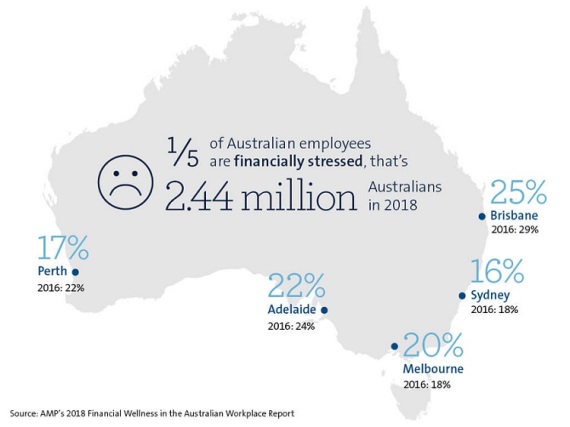
The truth is, you’re not alone. Nearly 2.5 million Aussies say they feel moderately to severely financially stressed, even though financial stress has been decreasing year-on-year in Australia1.

If you’re interested to know more, we take a look at some of the findings that came out of AMP’s 2018 Financial Wellness in the Australian Workplace Report, in addition to what steps you could put in place to potentially improve your financial position and wellbeing.
Findings from the 2018 financial wellness report

Some of the figures that came out of the report revealed the following2:

  • The number of Aussie employees feeling financially stressed across the board in 2018 was 19%, down from 22% in 2016.

  • In comparison to 2014 research, Aussies also indicated they had greater disposable income than in years gone by and were spending more money.

  • Research participants in 2018 also said they felt more confident in dealing with financial matters and with their own levels of financial understanding.

  • Compared to two years ago, fewer people said they were engaging in negative financial behaviours, such as making late repayments on bills and credit cards. At the same time however, there was a decline in positive financial behaviours, such as people making additional repayments on mortgages and putting aside savings for a rainy day.

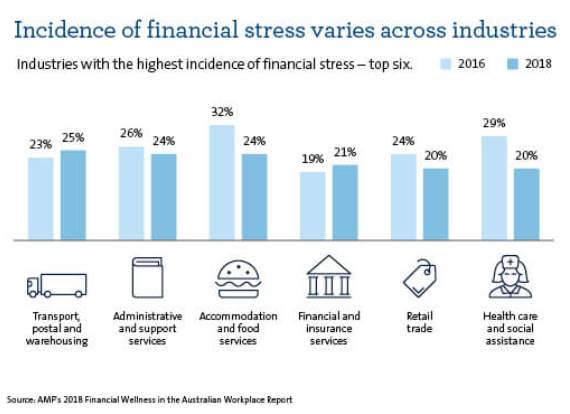
  • Of those working Aussies that did indicate that they were financially stressed, this was being felt across all industries, income levels and roles.
Actions that could improve your financial wellbeing

On a positive note, research identified that those who have been financially stressed in the past were often able to recover through changes to their behaviour and mindset3.

Here are some suggestions of things you could do (if you aren’t already) which may help you to improve how you feel financially.

1. Create a budget that works for you

When it comes to creating a budget, try jotting down into three categories – what money is coming in, what cash is required for the mandatory stuff (such as bills), and what dough might be left over (which you may want to put toward existing debts, savings or your social life).

Writing up a budget may take an afternoon out of your diary, but it will help you to more easily identify where there’s room for movement. For instance, could you reduce what you’re spending on luxury items, subscription or streaming services, eating out or clothing?

2. Consider rolling your debts into one

If all the small debts you once had, have multiplied and grown into bigger debts – you could look to roll them into a single loan, and reduce what you pay in fees and interest.

This could help you to save a significant amount of money (depending on what you owe) and make it easier to manage your repayments, as you’ll potentially only need to make one monthly repayment rather than having to juggle several.

The main thing to ensure is you are paying less than what you are currently when it comes to interest rates, fees and charges, and that you’re disciplined about making your repayments.

3. Try to save a bit of money regularly

Even a small amount of cash deposited on a frequent basis could go a long way toward your savings goals, with a separate research report indicating the average savings target for Aussies is a bit over $11,0004.

Some tips people said helped them along the way was transferring spare funds into an actual savings account, setting up automatic transfers to their savings account (so they didn’t have to move money manually) and putting funds into an account which they couldn’t touch5.

4. Set aside some emergency cash

With research showing that an emergency fund of between $4,000 and $5,000 is generally enough to cushion most working Aussies when it comes to unexpected expenses, it’s probably worth some thought6.

An emergency stash of cash could give you peace of mind and reduce the need to apply for high-interest borrowing options should you be faced with a busted phone, car tyre, or bad landlord or lover leaving you financially stranded.

5. Be open to talking money with your partner

One in two Aussie couples admit to arguing about money7, so if you haven’t already, it might be worth sitting down to ensure you’re on the same page and that both parties’ goals are being considered.

Understandably, it may not be the easiest topic to broach, so if you’re looking for some tips, check out our article – 10 money conversations to have with your other half.

6. See if you can get a better deal with your providers

You more than likely have several product and service providers, and figures show you could save more than a grand annually on energy alone just by switching from the highest priced plan to the most competitive on the market8.

Again, this may take a couple of hours out of your day, but the savings you could potentially make may make a real difference to what you cough up throughout the year.

7. Don’t be afraid to seek financial assistance

If you are struggling to make repayments, you may be able to seek assistance from your providers by claiming financial hardship.

All providers must consider reasonable requests to change their terms in instances where you may be suffering genuine financial difficulties and feel help would enable you to meet your repayments, possibly over a longer period.

Please contact us on Phone: 07 5641 4134 if you seek futher assistance on this topic.

Source : AMP January 2019

1, 2, 3, 6 AMP’s 2018 Financial Wellness in the Australian Workplace Report, pages 7, 8, 14
4, 5 MoneySmart – How Australians save money infographic
7 Finder – Heated conversations: 1 in 2 Aussie couples argue about finances paragraph 1
8 Mozo – Sick of high energy bills? Aussies willing to change providers could be saving over $1,000 a year paragraph 2 

 Important information:This information is provided by AMP Life Limited. It is general information only and hasn’t taken your circumstances into account. It’s important to consider your particular circumstances and the relevant Product Disclosure Statement or Terms and Conditions, available by calling 13 30 30, before deciding what’s right for you. Read our Financial Services Guide for information about our services, including the fees and other benefits that AMP companies and their representatives may receive in relation to products and services provided to you. All information on this website is subject to change without notice. Although the information is from sources considered reliable, AMP does not guarantee that it is accurate or complete. You should not rely upon it and should seek professional advice before making any financial decision. Except where liability under any statute cannot be excluded, AMP does not accept any liability for any resulting loss or damage of the reader or any other person

Prior to the 1960s most share investors were long-term investors who bought stocks for their dividend income. Investors then started to focus more on capital growth as bond yields rose relative to dividend yields on the back of rising inflation. However, thanks to an increased focus on investment income as baby boomers retire, interest in dividends has returned. This is a good thing because dividends are good for investors in more ways than just the income they provide.

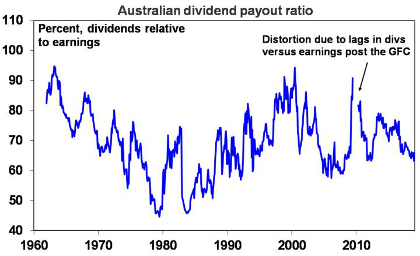
Australian companies pay out a high proportion of earnings as dividends. This is currently around 65% compared to around 45% for global shares. However, some argue that dividends don’t matter – as investors should be indifferent as to whether a company pays a dividend or retains earnings that are reinvested to drive growth. Or worse still, some argue that high dividend pay outs are a sign of poor long-term growth prospects, that they are distraction from business investment or that they are often not sustainable. And of course, some just see dividends as boring relative to speculating on moves in share values. My assessment is far more favourable.

Seven reasons why dividends are cool

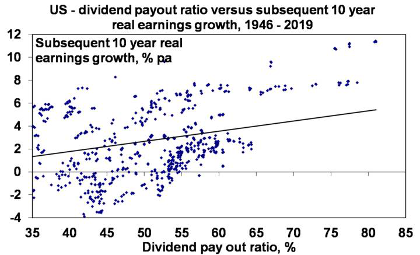
First, dividends do matter in terms of returns from shares. For the US share market, it has been found that higher dividend payouts lead to higher earnings growth1. This is illustrated in the next chart, which shows that for the period since 1946 when US companies paid out a high proportion of earnings as dividends (the horizontal axis) this has tended to be associated with higher growth in profits (after inflation) over the subsequent 10 years (vertical axis). And higher profit growth drives higher returns from shares. So dividends do matter and the higher the better (within reason). There are several reasons why this is the case: when companies retain a high proportion of earnings there is a tendency for poor hubris driven investments; high dividend payouts are indicative of corporate confidence about future earnings; and high payouts indicate earnings are real.


Source: Global Financial Data, Thomson Reuters, AMP Capital

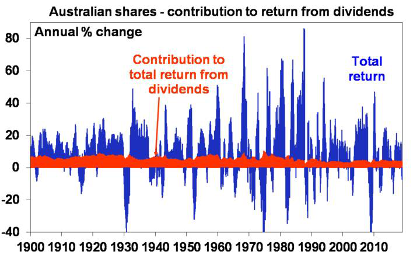
Second, dividends provide a stable contribution to the total return from shares, compared to the year-to-year volatility in capital gains. Of the 11.7% pa total return from Australian shares since 1900, just over half has been from dividends.


Source: Global Financial Data, AMP Capital Investors

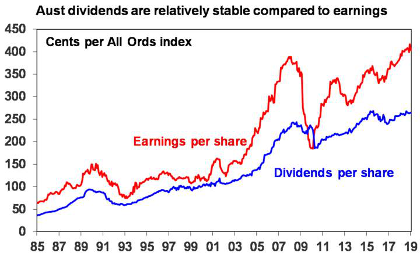
Third, the flow of dividend income from a well-diversified pool of companies is relatively smooth. As can be seen below, dividends move in line with earnings but are smoother.


Source: Thomson Reuters, RBA, AMP Capital

Companies like to manage dividend expectations smoothly. They rarely raise the level of dividends if they think it will be unsustainable. Sure, some companies do cut their dividends at times, but the key is to have a well-diversified portfolio of sustainable and decent dividend paying shares.

Fourth, investor demand for stocks paying decent dividends will be supported as the ranks of retirees swell.

Fifth, with the scope for capital growth from shares diminished thanks to relatively high price to earnings ratios compared to say 40 years ago, dividends will comprise a much higher proportion of total equity returns. More than half of the total medium-term return from Australian shares is likely to come from dividends, once allowance is made for franking credits.

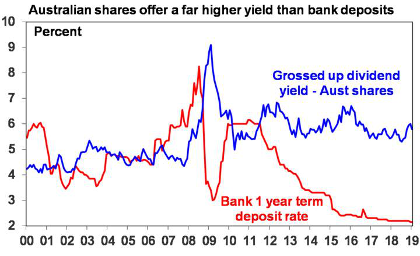
Sixth, dividends provide good income. Grossed up for franking credits the annual income flow from dividends on Australian shares is around 5.7%. That’s $5700 a year on a $100,000 investment in shares compared to $2150 a year in term deposits (assuming a term deposit rate of 2.15%).


Source: Bloomberg, RBA, AMP Capital

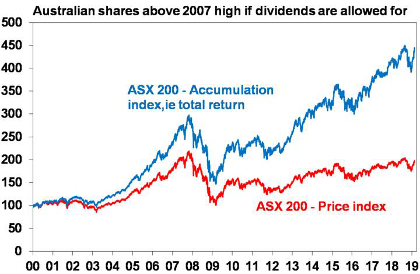
Finally, while Australian shares are still 10% below their 2007 high, once reinvested dividends are allowed for (ie looking at the ASX 200 accumulation index) the market is well above it.


Source: Bloomberg, AMP Capital

Another way to look at dividend income

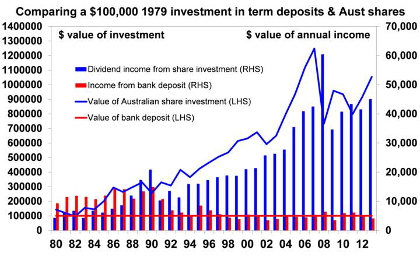
How powerful investing for dividend income can be relative to investing for income from interest is illustrated in the next chart. It compares initial $100,000 investments in Australian shares and one-year term deposits in December 1979.


Source: RBA, Bloomberg, AMP Capital

The term deposit would still be worth $100,000 (red line) and last year would have paid $2,200 in interest (red bars). By contrast the $100,000 invested in shares would have grown to $1,111,435 as at December last year (blue line) and would have paid $47,792 in dividends last year (blue bars). Or around $62,240 if franking credits are allowed for. Over time an investment in shares can rise but a term deposit is fixed.

But don’t dividends crimp capex?

This issue has been wheeled out repeatedly since the GFC. But it’s ridiculous. First the rise in dividends this decade has mainly come from cashed up miners and it’s hard to argue they should invest more after the mining investment boom. Second the dividend payout ratio is not high historically. Third the reasons for poor business investment lie in: business sector caution after the GFC & the rise in the $A above parity, which squeezed competitiveness; the fall back to more normal levels in mining investment; and the shift to a capital lite economy based around IT and services. Don’t blame dividends for poor capex.


Source: Thomson Reuters, RBA, AMP Capital

Why dividend imputation is so important

Dividend imputation was introduced in the 1980s and allows Australians to claim a credit against their tax liability for tax already paid on their dividends in the hands of companies as profits and boosts the effective dividend yield on Australian shares by around 1.3 percentage points. However, over the years it has been subject to claims that it creates a bias to invest in domestic equities, that it biases companies to pay dividends and not invest and that it benefits the rich. This is all nonsensical as dividend imputation simply corrects a bias by removing the double taxation of company earnings – once in the hands of companies and again in the hands of investors. The removal of dividend imputation would not only reintroduce a bias against equities but would also substantially cut into the retirement savings and income of Australians, discourage savings and lead to lower returns from Australian shares.

Labor’s proposal to make franking credits in excess of a taxpayer’s tax liability non-refundable could be argued to remove an anomaly in the tax system as dividend imputation was designed to prevent the double taxation of dividends, not to stop them being taxed at all. But a problem is that many Australians have planned their retirement around receiving such refunds. This is a subject for another note. But it is worth noting that Labor’s proposal does not affect at least 92% of taxpayers who will continue receiving franking credits as they have a sufficient income tax liability (as will pensioners who will be exempted). If it sets off a broader wind back of franking credits, then it would be a bigger concern.

Concluding comments

Dividends provide a great contribution to returns, a degree of protection during bear markets and a great income flow. For investors needing income the trick is to have a well-diversified portfolio of companies paying high sustainable dividends.


1See R.D.Arnott and C.S.Asness, “Surprise! Higher Dividends = Higher Earnings Growth”, Financial Analysts Journal, Jan/Feb 2003. Of course, it’s a bit complicated in the US as the tax system encourages buy backs.


Source: AMP Capital 27 Feb 2019

Important notes: While every care has been taken in the preparation of this article, AMP Capital Investors Limited (ABN 59 001 777 591, AFSL 232497) and AMP Capital Funds Management Limited (ABN 15 159 557 721, AFSL 426455) (AMP Capital) makes no representations or warranties as to the accuracy or completeness of any statement in it including, without limitation, any forecasts. Past performance is not a reliable indicator of future performance. This article has been prepared for the purpose of providing general information, without taking account of any particular investor’s objectives, financial situation or needs. An investor should, before making any investment decisions, consider the appropriateness of the information in this article, and seek professional advice, having regard to the investor’s objectives, financial situation and needs. This article is solely for the use of the party to whom it is provided and must not be provided to any other person or entity without the express written consent of AMP Capital.

Are you among the investors asking themselves: Is a radically new investment strategy warranted to deal with the challenging investment mix of continuing low interest rates, higher market volatility and subdued returns from diversified portfolios?

To the contrary, Vanguard’s economic and market outlook for 2019 and beyond emphasises that disciplined, diversified and patient investors who concentrate on factors within their control are likely to be rewarded over the long term.

In other words, the case for adhering to sound investment practices is compelling and a radical new approach is not needed.

Vanguard’s latest outlook warns that investors making short-term tilts to their portfolios’ asset allocations in an attempt to boost returns are unlikely to “escape the strong gravity of low-return forces in play as they ignore the benefits of diversification”.

In short, take a total-portfolio approach to investing rather than looking at different asset classes in isolation.

Further, the report suggests that a series of factors under investors’ long-term control are likely to “far outweigh” ad-hoc, short-term tilts to a portfolio.

Such under-your-control factors include:

  • Save more: The straightforward strategy of saving more when possible can have one of the biggest impacts on the likelihood of our investment success. For many of us, this may begin with increasing our salary-sacrificed super contributions.

  • Spend less: Our ability to reduce spending much depends, of course, on our personal circumstances. Yet many of us can keep a better control on our spending. And minimising investment costs should be a key focus of investors.

  • Work longer before retiring: A longer working life, if feasible, provides a chance to save more for what will be a shorter and, therefore, less-costly retirement. And the continuing income from working past traditional retirement ages should help investors cope with a low-interest, subdued-return and more volatile investment outlook.

The adage that investors should concentrate on what they can control – not on what they can’t – makes even more sense when investment conditions are more challenging. A shiny new approach to investing is not required.

Please contact us on Phone: 07 5641 4134 if you require further discussion on this topic .

Source : Vanguard January 2019 

By Robin Bowerman, Head of Corporate Affairs at Vanguard

Reproduced with permission of Vanguard Investments Australia Ltd

Vanguard Investments Australia Ltd (ABN 72 072 881 086 / AFS Licence 227263) is the product issuer. We have not taken yours and your clients’ circumstances into account when preparing this material so it may not be applicable to the particular situation you are considering. You should consider your circumstances and our Product Disclosure Statement (PDS) or Prospectus before making any investment decision. You can access our PDS or Prospectus online or by calling us. This material was prepared in good faith and we accept no liability for any errors or omissions. Past performance is not an indication of future performance.

© 2019 Vanguard Investments Australia Ltd. All rights reserved.

Important:
Any information provided by the author detailed above is separate and external to our business and our Licensee. Neither our business, nor our Licensee take any responsibility for any action or any service provided by the author.

Any links have been provided with permission for information purposes only and will take you to external websites, which are not connected to our company in any way. Note: Our company does not endorse and is not responsible for the accuracy of the contents/information contained within the linked site(s) accessible from this page .

A pie and sauce washed down with soft drink from a roadhouse. Or maybe a burger and fries at a fast-food joint. Do these sound like your go-to options when on a road trip?

It might seem like a hassle to eat healthy food when you’re on the road, but it’s actually a breeze. Simply check out our list of healthy road-trip snacks and you can start your journey off on the right foot (or wheel).

These goodies are simple to prepare, or to grab on the go, and won’t hammer the holiday budget. Enjoy!

 It’s true – popcorn can be a healthy road-trip snack.

1. Popcorn

Yes, you read correctly. Popcorn can be a healthy road-trip snack. There is a catch, though. The Heart Foundation states that ‘plain popcorn, popped without added salt or butter’ earns a nod of approval. So as long as you don’t pile on the butter or salt or opt for the coloured variety, you’ve got yourself a cheap, easy, and relatively mess-free snack to take with you on the road.

Tip: Add garlic powder or olive oil for more flavour without compromising on healthiness.

 Like Torvill and Dean, cheese and crackers are a winning combo.

2. Wholegrain crackers with cheddar cheese

This versatile and tasty option is a certain road-trip winner. Sure, this combo would be better accompanied by a glass of wine, but save that for when you’re sitting on the balcony of your BIG4 cabin. Just watch for crumbs.

On the right trail: DJ Healthy recommends putting out this mix. 

3. Trail mix

Whether you make your own or grab a bag from the supermarket, trail mixes are a great road-trip snack. With their combination of nuts, cereals, sunflower seeds, dried fruits, and more, they offer the palate plenty of variety. These ingredients have many health benefits, including being packed with protein that helps to keep you full. Better still, trail mixes have the ability to ‘keep’ for those longer journeys.

Warning: This snack is best kept away from small children when on a road trip, as they may make their own trail all over the backseat.

4. Rice crackers and dip

Not all rice crackers are made equal, and a bit of investigating will reveal that some brands are passable as a healthy option while others are not (note and compare sugar and salt levels). Once found, pair these crackers with a healthy yet delicious dip and you have a road-trip snack that’s sure to keep everyone happy.

Tip: Avoid consumption when driving over speed bumps or potholes.

Road-trip tip: if you simply can’t resist packing chips for your next road-trip adventure, compare brands when shopping and opt for a healthier product.


Fruit salad is loaded with goodness as well as deliciousness. 

5. Fruit salad

Quick and easy to prepare and bursting with flavours, a fruit salad makes a wonderful road-trip snack. Simply throw in your favourite fruits and mix up a masterpiece within minutes. As well as containing a host of vitamins and minerals, a fruit salad has the added benefit of helping to keep you hydrated.

6. Wholemeal pita wraps

Versatile, filling, tasty, easy to prepare – what more could you want in a road-trip snack? Suggested fillings include tuna or shredded chicken alongside a bunch of veggies; then wrap in alfoil to avoid mess.

 Ginger biscuits are ideal for those who suffer from travel sickness.

7. Cookies

Who doesn’t love cookies? We know what you’re thinking: cookies are full of sugar. Well put down that cup of judgement and keep reading – cookies can be both healthy and tasty, especially the likes of oatmeal and ginger varieties. There are many low or sugar-free recipes available that will help you whip up these cookies with relative ease.

Note: Ginger has the added benefit of minimising motion sickness.

 Carrot and celery sticks combined with a healthy dip make a great snack when on the road.

8. Carrot and celery sticks

Cheap to buy. Tick. Healthy. Tick. Easy to prepare. Tick. Tasty. Tick. Boring? Maybe. If you need to liven up this healthy road-trip snack, serve with hummus, salsa, or guacamole or combine with low-fat cheese. These additions mean you have a snack with plenty of flavour while retaining abundant goodness.

Other items to pack on your road trip…

  • Bottled water

  • Hand sanitiser

  • Ice packs and/or a small Esky

  • Antibacterial wipes

  • Plastic cutlery

Source : BIG4 Holiday Parks

Reproduced with the permission of BIG4 Holiday Parks. This article first appeared on BIG4.com.au https://www.big4.com.au/articles/8-healthy-road-trip-snacks and was republished with permission.

Important:
Any information provided by the author detailed above is separate and external to our business and our Licensee. Neither our business, nor our Licensee take any responsibility for any action or any service provided by the author.

Any links have been provided with permission for information purposes only and will take you to external websites, which are not connected to our company in any way. Note: Our company does not endorse and is not responsible for the accuracy of the contents/information contained within the linked site(s) accessible from this page.

If you want to ensure you’re getting the right amount of super and not paying more in tax than you have to, this list is for you.

I’m yet to hear anyone say they get a thrill from filling out forms or love reading long documents full of financial mumbo jumbo, but there’s likely to be a bit of that when you land your first full-time job.

To get you up to speed with some of the important money-related stuff, here are some important tips, which – good news – we’re going to give you in plain English.

What you need to know

1. Your bank account details and tax file number

You’ll need to give your bank account details to your employer if you want to get paid, so this’ll no doubt be high on your list of things to do.

On top of that, you’ll need to provide your tax file number as well, because if you don’t, you may end up paying a lot more tax on the income you earn1.

If you need a tax file number, contact the Australian Taxation Office (ATO) about applying for one.

2. Whether you can choose your super fund

Super is money set aside during your working life to support you in retirement.

You’ll generally be able to choose your own super fund but check with your employer or the ATO. If you can choose, you’ll typically have a choice between your employer’s fund or a fund you select.

There are things you’ll want to consider though, such as what fees you might pay, how the fund performs and your investment preferences, which could see you earn more or less money.

In addition, super funds generally offer a few types of insurance cover as well, which you could pay for using your super money, so it’s worth looking into whether this is something you want.

3. What tax you’re going to pay on the income you earn

You mightn’t be pleased, but you’ll have to pay income tax on every dollar over $18,200 you earn. And, on top of that, many taxpayers are also charged a Medicare levy of 2%.

The amount of tax you pay will depend on how much you earn. If you’re not sure how much you’ll fork out, the below table includes income tax rates for the 2018/19 financial year2.

Taxable income

Tax they’ll pay on this income

0 – $18,200

No tax

$18,201 – $37,000

19c for each $1 over $18,200

$37,001 – $90,000

$3,572 plus 32.5c for each $1 over $37,000

$90,001 – $180,000

$20,797 plus 37c for each $1 over $90,000

$180,001 and over

$54,097 plus 45c for each $1 over $180,000


Meanwhile, if you’re lucky enough to receive an annual bonus, you’ll also pay tax on this (I hear you, life isn’t fair).

4. What tax you can claim back when tax time rolls around

If you spend some of your own money on work-related expenses (uniforms, safety equipment, or education), there is some good news. At the end of the financial year, you may be able to claim some of this money back when you do your tax return (which yes, you have to do).

You will however need to have a record of these expenses, such as receipts, but in some instances if the total amount you’re claiming is $300 or less, you may not need receipts.

Meanwhile, if your expenses are for both work and personal use, you’ll only be able to claim a deduction for the work-related portion. Check out the myDeductions tool in the ATO app to save records throughout the year, so you don’t have a bag full of receipts to go through.

Meanwhile, if you’re lodging your own tax return, you have until 31 October each year to lodge it, or maybe longer if you use a tax agent.

5. What’s in your contract and what you’re entitled to

An employment contract is an agreement between you and your employer that sets out the terms and conditions of your employment. It’s a good idea to know what’s in your contract should questions ever arise around what you’re actually entitled to.

Regardless of whether you sign something or not, your contract cannot provide for less than the legal minimum, set out in Australia’s National Employment Standards, which covers things such as3:

  • Maximum weekly hours of work

  • Requests for flexible working arrangements

  • Parental leave and related entitlements

  • Annual leave

  • Personal/carer’s leave and compassionate leave

  • Community service leave

  • Long service leave

  • Public holidays

  • Notice of termination and redundancy pay.

While National Employment Standards apply to all employees covered by the national workplace relations system, only certain entitlements will apply to casual employees. For more information, check out the Australian Government Fair Work Ombudsman website.

6. How to read your payslip so you’re across potential errors

Payslips have to cover details of your pay for each pay period. Below is a list of what a pay slip typically includes:

  • Your before-tax pay (also known as gross pay)

  • Your after-tax or take-home pay (also known as net pay)

  • What amount of money you’ve paid in tax

  • The amount of super your employer has put into your super fund

  • HELP/HECS debt repayments (if you have an education loan).

Meanwhile, mistakes can happen, so if anything doesn’t look right, chat to your employer and if you’ve raised an issue you’re not satisfied with, you can also contact the Fair Work Ombudsman.

7. How much super is coming out of your pay package and if it’s correct

If you’re earning over $450 (before tax) a month, no less than 9.5% of your before-tax salary should generally be going into your super under the Superannuation Guarantee scheme.

If you’re under 18 and work a minimum of 30 hours per week, you may still be owed super. For this reason, it’s important you check your payslip and if something doesn’t look right, that you speak to your boss as soon as possible, or contact the ATO.

Another thing to note is if you do change jobs, this is when super accounts can start to multiply. It might not sound like a big deal, but multiple accounts can often mean multiple sets of fees, which means less money in your pocket, so you may want to ensure you only have one account, not many.

8. How to budget and save so you can get what you want in life

Budgeting may sound boring as, but jotting down into three categories – what money is coming in, what cash is required for the mandatory stuff and how much cash might be left over for your social life (or saving), could make a massive difference to what you do in life.

If you’re paying off debts, or on a more exciting note, want to buy a car or go on a holiday, getting a grip on your cash habits early on could see you have a lot more fun!

If you seek further assistance please contact us on Phone: 07 5641 4134

Source : AMP January 2019 

 Important information:This information is provided by AMP Life Limited. It is general information only and hasn’t taken your circumstances into account. It’s important to consider your particular circumstances and the relevant Product Disclosure Statement or Terms and Conditions, available by calling 13 30 30, before deciding what’s right for you. Read our Financial Services Guide for information about our services, including the fees and other benefits that AMP companies and their representatives may receive in relation to products and services provided to you. All information on this website is subject to change without notice. Although the information is from sources considered reliable, AMP does not guarantee that it is accurate or complete. You should not rely upon it and should seek professional advice before making any financial decision. Except where liability under any statute cannot be excluded, AMP does not accept any liability for any resulting loss or damage of the reader or any other person
 

Investors around the world take environment, social and governance (ESG) issues into account when deciding where to invest, how to invest and how to measure returns.The ESG issues most likely to come under the microscope this year include some old favourites and a few new ones.

1. Climate change

Three years after the Paris Agreement promised to cap global temperature rises to below two degrees celsius, there is little agreement among governments on how or what to do to lower carbon emissions

Nevertheless, businesses have started investing for a lower carbon economy and investors are calculating how exposed their investments are to changes in global temperatures. The investment risks can be grouped into four key categories:

Physical risks  Indirect risks  Policy risks  Transition risks

Damage due to physical impact of volatile and extreme weather.

 Secondary financial impacts of extreme weather, such as lower crop yields.

 The financial impact of regulators altering

climate change policies.

 The changing of the value of a business as

economies transition to renewables.

These risks are not clear-cut or easy to measure but investors in 2019 are asking companies to set goals around a transition to a renewables economy.


2. Regaining community trust

Following the Financial Services Royal Commission, investors are focusing more on issues at the core of the Commission: culture, remuneration and enforcement activities by the regulators.

Investors will consider processes and culture, especially where sales and profit targets rank against customers’ best interests. Attention is placed on regulators enforcing breaches of the law through the courts, which may impact companies’ profits and potentially their business activities.

3. The ethics of investing in social media

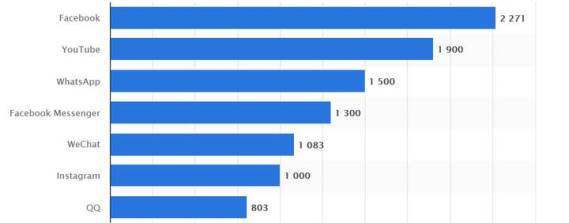
Social media users are typically happy to provide their personal information in exchange for free use of a platform. They provide this information assuming it will be handled and used in ways they expect. Trust is key. If user data is sold, stolen or mishandled, consumers question the safety of their information, undermining the social media companies’ business models.

The way social media companies respond in 2019 to laws and regulations being passed by governments to deal with privacy and the protection of users’ data will be critical to the success of the companies.  

Most popular social networks, January 2019, ranked by number of active users (in millions).


4. Access to medicine

Most Australians have access to affordable medicine, thanks to the pharmaceutical benefits scheme. Residents of many other countries, both rich and poor, are not so fortunate.
Some investors have been supporting a right of access to medicine for many years. AMP Capital signed the Investor Statement on Access to Medicine in 2016, an initiative that ranks global pharmaceutical companies on their efforts to balance profit with purpose, acknowledging the tension between affordable access to medicine, the need to cover expensive research and development costs, and a financial return to shareholders.

5. Investing for impact

Impact investing, whereby an investor looks for a social return as well as a financial return, is growing rapidly in Australia. The size of the local market more than quadrupled between June 2015 and December 2017, mostly in green bonds. 

The global market for impact investing is now worth around US$228 billion in assets under management. The majority is invested in food and agriculture, financial services and energy.

Many projects are in emerging markets including Asia and Africa. But there are a growing number closer to home. The next frontier in Australia is set to include affordable housing. 

6. Palm oil and deforestation


Palm oil is the most commonly used vegetable oil in the world because it has a long shelf life, can be used in everything from detergent to chocolate, and is higher yielding than most other oils. It is also the most controversial because it is produced in tropical rainforests and has led to some significant rainforest and biodiversity destruction in Asia.

Deforestation has led to a range of negative environmental impacts: carbon dioxide emissions, loss of pristine forests, soil erosion, air pollution, loss of habitat for animals including the orangutan, elephants, rhinos and tigers.
While some global initiatives have been put in place, challenges remain and investors are responding. They have started calling for better auditing and tracing of palm oil right back to the plantation.

7. The war on plastic


In 2018, waste became a key environmental issue for Australians. China stopped taking our recycling leading to huge stockpiles in warehouses all over the country. Around the same time, our largest supermarkets – Woolworths and Coles – banned single-use plastic bags.

At current rates of urbanisation and population growth, global waste is estimated to rise to 2.2 billion tonnes per year by 2025, which translates into 1.42 kilograms of waste per person per day. Australians generate 53 million metric tonnes of waste every year, or about four kilograms per person per day.

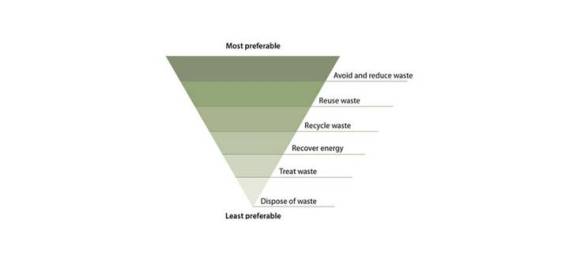
Waste management hierarchy


Source: Waste Management Association of Australia, “Never waste a crisis: the waste and recycling industry in Australia”, Senate Environment and Communications References Committee, June 2018.

In response, businesses and investors are now talking about the circular economy – that is, a system without waste and pollution where materials are used and reused.

There have been some exciting initiatives. In 2017, Apple issued a green bond to fund the research and development of recyclable material for its iPhones. Coca Cola has committed to collecting and recycling the equivalent of all its packaging by 2030 and McDonald’s claims that all of its packaging will come from sustainable sources by 2025.

8. Modern slavery and supply chains


Six years ago, the treatment of workers in clothing factories in Asia was exposed when a factory in Bangladesh burned down, killing 1,100 garment workers. Encouraging progress has been made on worker rights and safety in the country since then, partly as a result of investor engagement. But there is much more work to be done.

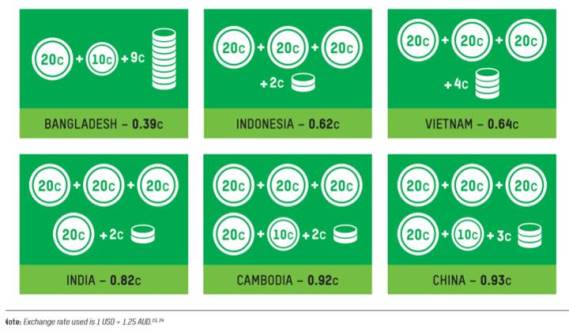
Workers are still not paid enough to live above the poverty line and there are many barriers to union representation and collective bargaining.

Minimum wage in A$/hour 

Source: Oxfam Australia, “What She Makes. Power and Poverty in the Fashion Industry.” October 2017.

The Australian government took an important step last year by introducing a Modern Slavery Act which effectively forces large Australian businesses to understand the risk of slavery in their operations and supply chains. We expect even more attention on the treatment of the world’s factory workers in 2019.

9. Child labour in cocoa

Cocoa production is labour intensive. Farm wages are low and the use of child labour is widespread. More than two million children are estimated to work on farms in West African countries Côte d’Ivoire and Ghana, the two countries that account for almost 70% of cocoa production worldwide.
Chocolate producers first started committing to take steps to combat child labour in 2001 and in 2010 committed to reduce the worst forms of child labour by 70 per cent by 20209.
Our Responsible Investment Leaders funds have joined a global investor initiative, alongside investors that have been working with Nestlé, Mondelez, Hershey’s, Lindt & Sprungeli, and Cargill to identify and remediate cases of child labour.

10. Antibiotics in our food supply

This year, antibiotic resistance is estimated to claim about 50,000 lives in the US and another 50,000 lives in Europe. The numbers are much higher in developing countries with high rates of malaria, HIV or tuberculosis.
By 2050, it is estimated that 10 million people globally may die every year because of antibiotic resistance. This exceeds the number of people who currently die from cancer every year.
The potential health and economic impacts are enormous and likely to be key public health issues and a focus for ESG investors in 2019. We expect investors will increase their levels of engagement with companies in the food and agricultural industries, calling for better disclosure and the reduction, or in some cases abolition, of antibiotics use in farming and food production.

Conclusion

The relevance of ESG issues has never been greater. Investors want data on, and progress around, some of the biggest ESG challenges. Get ready to hear much more about it throughout 2019.


https://www.independent.co.uk/life-style/palm-oil-health-impact-environment-animals-deforestation-heart-a8505521.html
https://www.abc.net.au/news/2018-02-08/the-demise-of-kerb-side-recycling/9407650
3 Senate Environment & Communications References Committee June 2018
https://www.greenpeace.org.au/blog/trash-selfie/
https://s22.q4cdn.com/396847794/files/doc_downloads/Apple_GreenBond_Report_Feb2018.pdf
https://www.coca-colacompany.com/stories/world-without-waste
https://corporate.mcdonalds.com/corpmcd/scale-for-good/packaging-and-recycling.html#goals
8 United States Department of Labor, Bureau of International Labor Affairs:https://www.dol.gov/agencies/ilab/child-labor-cocoa
9 Framework of Action to Support Implementation of the Harkin-Engel Protocol athttps://cocoainitiative.org/wp-content/uploads/2016/10/Cocoa_Framework_of_Action_9-12-10_Final-1-1.pdf


Author: Kristen Le Mesurier – Portfolio Manager, Multi Asset GroupSydney, Australia

Source: AMP Capital February 2019 

Important note: AMP Capital Funds Management Limited (ABN 15 159 557 721, AFSL 426455) (AMPCFM) is the responsible entity of the Responsible Investment Leaders Fund (Fund) and the issuer of the units in the Fund. To invest in the Fund, investors will need to obtain the current Product Disclosure Statement (PDS) from AMP Capital Investors Limited (ABN 59 001 777 591, AFSL 232 497) (AMP Capital). The PDS contains important information about investing in the Fund and it is important that investors read the PDS before making a decision about whether to acquire or continue to hold or dispose of units in the Fund. Neither AMP Capital, AMPCFM nor any other company in the AMP Group guarantees the repayment of capital or the performance of any product or any particular rate of return referred to in this document. Past performance is not a reliable indicator of future performance. 

Right now, investors are focused on corporate profits. Australian companies are forecast to show earnings growth of between four and five per cent this results season, which is a modest result compared to recent years. This decline is in large part due to the deteriorating performance of the resources sector compared to recent results seasons.

But many indicators suggest that broader economic conditions are also deteriorating, on the back of the softer earnings season. Consequently, we expect interest rates to drop, but not until after the federal election, which is expected to take place in May.

Growth slows

The slowdown in earnings growth in Australia reflects a broader set of economic numbers that show business activity has slowed. The disappointing run of numbers has included a downtrend in business confidence over the past year.

On a seasonally-adjusted basis, building approvals figures also tumbled by 22.5 per cent year-on-year for the year to December 20181. House price data is also lacklustre, with the combined capital cities down 6.9 per cent for the year to January 31, and 1.2 per cent in month of January alone2.

Consumer sentiment has also been hurting, with the Westpac Bank Consumer Sentiment Index ending 2018 at its lowest point since September 2017, though it has recovered somewhat in early 2019. Retail spending is also down, with retail trade numbers down by 0.4 per cent month-on-month in December 20183.

Monetary policy to react

In combination, these numbers suggest that the Australian economy is likely to underperform in 2019. We believe gross domestic product (GDP) growth will be around 2.5 per cent, which is below average and under the Reserve Bank of Australia’s (RBA) forecast of 2.75 per cent.

As a consequence, inflation is likely to remain low this year. Importantly, this also means the RBA is likely to cut interest rates, because economic growth and inflation will underperform its expectations. We think the central bank will cut rates twice this year, but not until after the federal election is over, which makes rate cuts a story for the second half of the year

Overall, we expect the cash rate to end the year at about one per cent as a consequence of the softening economy.

https://vimeo.com/316935422


1 Australian Bureau of Statistics, Building Approvals, December 2018. 
2 Core Logic, Hedonic home value index, February 2019.
3 Trading Economics, Australian retail sales month on month.

Author: Diana Mousina, Economist – Investment Strategy and Dynamic Markets Sydney Australia

Source: AMP Capital February 2019

Important notes: While every care has been taken in the preparation of this article, AMP Capital Investors Limited (ABN 59 001 777 591, AFSL 232497) and AMP Capital Funds Management Limited (ABN 15 159 557 721, AFSL 426455) makes no representations or warranties as to the accuracy or completeness of any statement in it including, without limitation, any forecasts. Past performance is not a reliable indicator of future performance. This article has been prepared for the purpose of providing general information, without taking account of any particular investor’s objectives, financial situation or needs. An investor should, before making any investment decisions, consider the appropriateness of the information in this article, and seek professional advice, having regard to the investor’s objectives, financial situation and needs. This article is solely for the use of the party to whom it is provided.

Since the 1970s governments have spent relatively less on vital infrastructure. With the aftermath of the global financial crisis constraining government finances, that underinvestment has continued.

The private sector is stepping up to meet a surge in demand for new infrastructure – across water, energy, transport and communications — and that is creating opportunities for investors in global listed infrastructure.

Infrastructure is vital to economic growth. It creates a virtuous, never-ending cycle: investment in infrastructure helps stimulate sustainable long-term economic growth which then creates a further need for infrastructure.

The World Economic Forum estimates that every dollar spent on infrastructure generates an economic return of between 5 to 25 percent.

But since the 1970s, real public infrastructure investment in advanced economies has been falling as a percentage of Gross Domestic Product (GDP).

This has left many infrastructure projects deferred or even abandoned, ultimately magnifying an infrastructure gap that is only expected to widen going forward.

The need for infrastructure investment is dominated by the core industry sectors –

  1. Water: Demand is expected to exceed supply;

  2. Energy: Investments in energy efficiency will be important;

  3. Transport: Many forms of transport are set to double or triple in demand; and

  4. Communication: According to Cisco, global mobile data is expected to surge more than 6-fold from 2017 to 2022.

An infrastructure shortfall

Governments have traditionally funded a nation’s infrastructure investment, usually through a combination of tax revenues and tax revenue-backed debt.

But the ability of governments to maintain their role as the primary provider of infrastructure is weakening. Government finances have come under considerable stress since the global financial crisis because of lower tax revenues and rising spending, and many have turned to austerity measures to cut spending. Governments in developed countries face other structural pressures on finances including ageing populations.

The OECD estimates that governments need to invest some US$70 trillion in infrastructure. But with governments investing less, the Business20 Infrastructure and Investment Taskforce says only US$45 trillion will be spent, including a sizeable participation from the private sector, creating a US$25 million shortfall by 2030.

That shortfall means that further involvement of the private sector in the provision of infrastructure is inevitable.

Portfolio enhancement

The good news is the private sector’s greater involvement will create more opportunities for investors.

Investors have been increasingly recognising the benefits of global listed infrastructure and its stable, reliable and growing cash flows.

Global listed infrastructure also complements other asset classes in a balanced portfolio. It can play the role of a low-risk bedrock within a global equities allocation; or be an alternative to fixed income investments due to its attractive income component.

With such unique investment characteristics, built on the stable, reliable and growing cash flows, global listed infrastructure can play a number of roles in a balanced portfolio and we believe it should be a key consideration for every investor.

Ongoing opportunities

Infrastructure is the backbone for economies to develop and remain competitive. The future growth in infrastructure will not only be driven by the need for new infrastructure, particularly in developing economies, but also the replacement of existing ageing infrastructure, perhaps first constructed decades ago in developed economies.

With governments’ ability to fund infrastructure constrained, the private sector will increasingly need to step up and drive investment, which will continue to open up opportunities for investors in global listed infrastructure.


Author: Joseph Titmus – Portfolio Manager/Analyst, Global Listed InfrastructureSydney, Australia

Source : AMP Capital January 2019 

Important notes: While every care has been taken in the preparation of this article, AMP Capital Investors Limited (ABN 59 001 777 591, AFSL 232497) and AMP Capital Funds Management Limited (ABN 15 159 557 721, AFSL 426455) makes no representations or warranties as to the accuracy or completeness of any statement in it including, without limitation, any forecasts. Past performance is not a reliable indicator of future performance. This article has been prepared for the purpose of providing general information, without taking account of any particular investor’s objectives, financial situation or needs. An investor should, before making any investment decisions, consider the appropriateness of the information in this article, and seek professional advice, having regard to the investor’s objectives, financial situation and needs. This article is solely for the use of the party to whom it is provided.

You might remember that late last year markets fell sharply because investors were worried the US central bank, the Federal Reserve, wasn’t ‘dovish’ enough.

Investors fretted that the Fed would keep raising rates through 2019 in the face of financial market volatility and signs of slowing global growth.

The sell-off was exacerbated by the US Government shutdown, instability surrounding Donald Trump, and ongoing fears over the impact of the US/China trade war.

https://vimeo.com/310495795

The Fed is listening

But it’s since become quite clear the Fed is actually quite dovish. (A ‘dovish’ Fed favours looser, more stimulatory monetary policy and lower interest rates; while a ‘hawkish’ Fed is looking to raise rates to cool the economy.)

It’s clear the Fed is sensitive to volatility in financial markets; it is aware of some of the slowdown in growth indicators around the world; and it is continuing to focus on inflation, which remains relatively low in the US.

Below I outline the two key reasons I think US interest rates are set to go on hold:

1. Dovish messages

A dovish message has been coming from various Fed officials, including Chairman Jerome Powell.

Powell, for example, recently told the Economic Club in Washington DC that with inflation low and under control the Fed can afford to be patient.

“We’re in a place where we can be patient and flexible and wait and see what does evolve, and I think for the meantime we’re waiting and watching,” Powell said. “You should anticipate that we’re going to be patient and watching and waiting and seeing.”

Powell has also indicated the Fed is listening to the message that markets have been sending through increased volatility.

2. Not a clear-cut decision

The recently released minutes from the Fed’s December meeting also indicated that the Fed is more dovish than first thought when it last raised rates.

The Fed hiked rates in December last year by a quarter of a percentage point – the fourth increase for the year.

But minutes from their meeting showed it wasn’t a clear-cut decision, and some of the officials were opposed to the rise. They were particularly worried about financial market volatility and concerned about the outlook for global growth.

Rates on hold

The bottom line is that the Fed is not going to be overly aggressive in raising rates as it doesn’t want to crunch growth.

The Fed is likely to do something like it did back in 2016 when we saw share markets come down quite sharply in the early part of the year and the Fed went on an extended pause.

I think it is again heading to pause US interest rates – at least through the first part of this year.


Author: Dr Shane Oliver – Head of Investment Strategy and Economics and Chief Economist, AMP CapitalSydney, Australia

Source: AMP Capital January 2019 

Important notes: While every care has been taken in the preparation of this article, AMP Capital Investors Limited (ABN 59 001 777 591, AFSL 232497) and AMP Capital Funds Management Limited (ABN 15 159 557 721, AFSL 426455) makes no representations or warranties as to the accuracy or completeness of any statement in it including, without limitation, any forecasts. Past performance is not a reliable indicator of future performance. This article has been prepared for the purpose of providing general information, without taking account of any particular investor’s objectives, financial situation or needs. An investor should, before making any investment decisions, consider the appropriateness of the information in this article, and seek professional advice, having regard to the investor’s objectives, financial situation and needs. This article is solely for the use of the party to whom it is provided.

I first ran through a set of five charts to keep an eye on regarding the global economy last September. Since then share markets plunged into December and have since rebounded. The rebound has been great, but we have seen such rebounds before only to see weakness resume so on its own it does not prove we are out of the woods. It’s rare for US shares to have a deep V recovery after a 20% or so fall as seen last year. And with share markets having run hard from their December lows and technically overbought some sort of short-term pull back is a high risk. But will it be the resumption of the downturn in shares that began last year or just a pullback setting the scene for the next leg higher? Our view is that it will more likely be the latter. We don’t see an imminent US, global or Australian recession. And the swing now underway towards more dovish/stimulatory global economic policy along with declining trade war risks will likely drive stronger global economic growth in the second half of the year. As a result this year is expected to ultimately provide decent returns for shares.

Of course, no one really knows for sure so this note revisits the five charts we see as critical to which way it will ultimately go and adds a table on US recession risks to monitor.

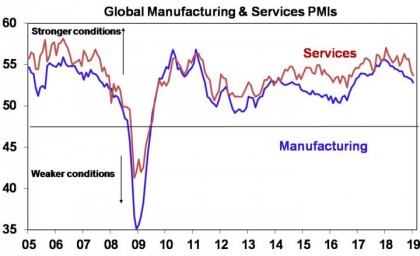
Chart 1 – Global business conditions PMIs

Global Purchasing Managers Indexes (PMIs) – surveys of purchasing managers at businesses in most major countries – are an excellent and timely guide to the state of the global economy. These remain high but they have been falling over the last year indicating slowing growth (as occurred into 2012 and 2016). There are some signs of stabilisation in the US, but they will need to improve more broadly to be consistent with our view that growth will pick up in the second half of the year. At least they are a long way from recessionary readings.


Source: Bloomberg, AMP Capital

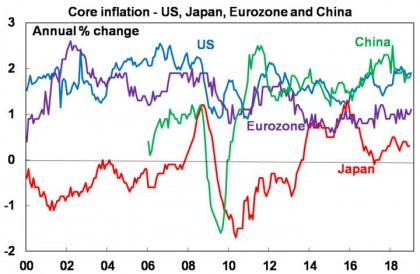
Chart 2 – Global inflation

Major economic downturns are invariably preceded by a rise in inflation to above central bank targets causing central banks to slam the brakes on. At present, core inflation in major global economies is benign. In the US core inflation is just below the Fed’s 2% inflation target, which along with headwinds to growth has enabled the Fed to pause its interest rate hikes. Inflation in China has been falling and is well below the Government’s 3% target/forecast. And inflation in the Eurozone and Japan, is well below target and provides no constraint to ongoing policy stimulus with the ECB likely to soon announce another round of cheap funding for banks. A clear upswing in core inflation would be a warning sign of aggressive monetary tightening being on the way, but this keeps getting delayed by events like last year’s global growth slowdown and oil price collapse.


Source: Bloomberg, AMP Capital

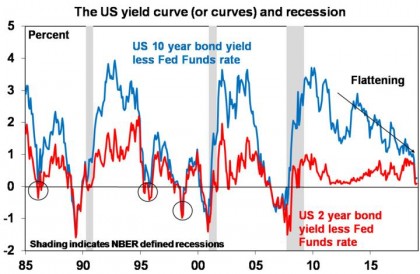
Chart 3 – The US yield curve

The yield curve is a guide to the stance of monetary policy. When short-term interest rates are low relative to long-term rates businesses can borrow short and lend (or invest) long and this grows the economy. But it’s not so good when short rates are above long rates. An inverted US yield curve has preceded US recessions. So, when it’s heading in this direction some worry. And it has been lately, with both the gap between the 10-year bond yield and the Fed Funds rate and the gap between the 2- year bond yield and the Fed Funds rate flattening lately.


Source: NBER, Bloomberg, AMP Capital

But there are several things to allow for. First, the yield curve can give false signals (circled on the chart) and the lags from an inverted curve to a recession can be around 15 months. So even if it inverted now recession may not arrive till mid next year and historically the share market has peaked 3-6 months before recessions, so it would be too far away for markets to anticipate.

Second, various factors may be flattening the yield curve which are unrelated to economic growth including near zero German and Japanese bond yields holding down US yields and high investor demand for bonds post the GFC as they have proven to be a good diversifier – rallying every time shares have a major fall.

Third, other indicators suggest that US monetary policy is far from tight – the real Fed Fund rate is barely positive, and the nominal Fed Funds rate is well below nominal GDP growth and both are far from levels that in the past have preceded US recessions.

So the yield curve is worth keeping an eye on – particularly now it’s flashing amber – but its short comings need to be allowed for.

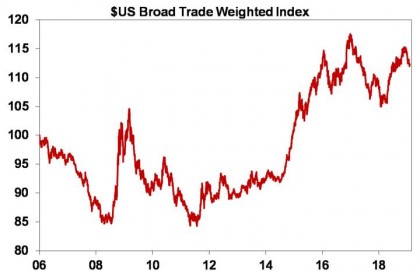
Chart 4 – The US dollar

Unlike moves in most individual currencies, which are only of relevance to the country they belong to, moves in the $US are of broad global significance. This is because of its reserve currency status and that a lot of global debt is denominated in US dollars particularly in emerging countries. So when the $US goes up like in 2015 and last year it makes it tough for emerging countries. It also depresses US company profits with a lag.


Source: Bloomberg, AMP Capital

A continuing upswing would cause further damage for emerging markets and so pose a threat to global growth (as the emerging world is around 60% of global GDP). Since late last year the $US has come of its recent highs though – if it remains more benign as we expect it will help emerging market shares and US profits.

Chart 5 – World trade growth

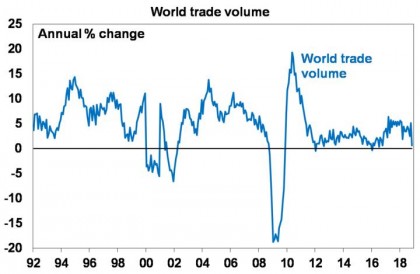
Growth in world trade may be expected to slow over time as services become an ever-greater share of economic activity and manufacturing becomes less labour dependent. But last year it was under threat from slowing global growth and the protectionist threat from President Trump in the US. This saw trade volume growth stall and trade war talk dent business confidence. So far US average import tariffs have been increased by less than 2% so it’s early days. But more has been threatened. Fortunately, the trade war is in a truce at present with positive signs regarding US/ China talks and slowing growth (and Trump’s desire to get re-elected next year) providing an incentive to reach a deal which we expect. But if the truce and trade talks with China, the EU and Japan fail and it’s back to escalating tariffs threatening a decline in world trade then it would be a bad sign.


Source: CPB World Trade Volume Index, Thomson Reuters, AMP Capital

US recession still a way away

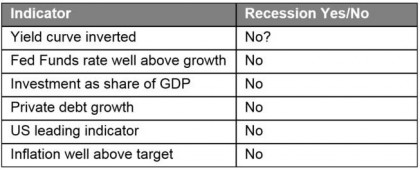
The historical experience tells us that what happens in the US is critical to how deep share market falls get. Deep (“grizzly”) bear markets like the 50% plus fall seen in the GFC are invariably associated with US recession. So, whether a recession is imminent in the US, and more broadly globally, is critically important in terms of whether a major bear market commenced last year or is on the way. The next table summarises the key indicators we are watching in this regard.

US recession signposts


Source: AMP Capital

These indicators are not foreshadowing an imminent recession in the US. The yield curve is most at risk (hence the question mark) but even it is not there yet. Meanwhile, other measures of monetary policy in the US are not tight and we have not seen the sort of excesses that normally precede recessions – there has been no overinvestment in capital goods or housing, private debt growth has not been excessive, the US leading indicator is far from recessionary levels and inflation is benign. Maybe it could happen from mid-next year or it could be driven by an external shock like an intensified trade war but at this stage its not imminent, so our view remains that last year’s share market falls are unlikely to be the start of a deep bear market.

Concluding comments

On balance these indicators still suggest the outlook remains okay. But to be consistent with our view that this year will see decent returns from shares we need (and expect) to see global growth indicators such as PMIs stabilise and head higher in the months ahead, inflation to remain benign, the $US to be relatively constrained and the trade threat continue to recede.


Source: AMP Capital 21 Feb 2019

Important notes

While every care has been taken in the preparation of this article, AMP Capital Investors Limited (ABN 59 001 777 591, AFSL 232497) and AMP Capital Funds Management Limited (ABN 15 159 557 721, AFSL 426455) makes no representations or warranties as to the accuracy or completeness of any statement in it including, without limitation, any forecasts. Past performance is not a reliable indicator of future performance. This article has been prepared for the purpose of providing general information, without taking account of any particular investor’s objectives, financial situation or needs. An investor should, before making any investment decisions, consider the appropriateness of the information in this article, and seek professional advice, having regard to the investor’s objectives, financial situation and needs. This article is solely for the use of the party to whom it is provided.