At its meeting today, the Board decided to leave the cash rate unchanged at 1.00 per cent.

The outlook for the global economy remains reasonable. However, the increased uncertainty generated by the trade and technology disputes is affecting investment and means that the risks to the global economy remain tilted to the downside. In most advanced economies, unemployment rates are low and wages growth has picked up, although inflation remains low. The slowdown in global trade has contributed to slower growth in Asia. In China, the authorities have taken steps to support the economy, while continuing to address risks in the financial system.

Global financial conditions remain accommodative. The persistent downside risks to the global economy combined with subdued inflation have led a number of central banks to reduce interest rates this year and further monetary easing is widely expected. Long-term government bond yields have declined further and are at record lows in many countries, including Australia. Borrowing rates for both businesses and households are also at historically low levels. The Australian dollar is at its lowest level of recent times.

Economic growth in Australia over the first half of this year has been lower than earlier expected, with household consumption weighed down by a protracted period of low income growth and declining housing prices. Looking forward, growth in Australia is expected to strengthen gradually from here. The central scenario is for the Australian economy to grow by around 2½ per cent over 2019 and 2¾ per cent over 2020. The outlook is being supported by the low level of interest rates, recent tax cuts, ongoing spending on infrastructure, signs of stabilisation in some housing markets and a brighter outlook for the resources sector. The main domestic uncertainty continues to be the outlook for consumption, although a pick-up in growth in household disposable income and a stabilisation of the housing market are expected to support spending.

Employment has grown strongly over recent years and labour force participation is at a record high. There has, however, been little inroad into the spare capacity in the labour market recently, with the unemployment rate having risen slightly to 5.2 per cent. The unemployment rate is expected to decline over the next couple of years to around 5 per cent. Wages growth remains subdued and there is little upward pressure at present, with strong labour demand being met by more supply. Caps on wages growth are also affecting public-sector pay outcomes across the country. A further gradual lift in wages growth would be a welcome development. Taken together, recent labour market outcomes suggest that the Australian economy can sustain lower rates of unemployment and underemployment.

The recent inflation data were broadly as expected and confirmed that inflation pressures remain subdued across much of the economy. Over the year to the June quarter, inflation was 1.6 per cent in both headline and underlying terms. The central scenario remains for inflation to increase gradually, but it is likely to take longer than earlier expected for inflation to return to 2 per cent. In both headline and underlying terms, inflation is expected to be a little under 2 per cent over 2020 and a little above 2 per cent over 2021.

Conditions in most housing markets remain soft, although there are some signs of a turnaround, especially in Sydney and Melbourne. Growth in housing credit remains low. Demand for credit by investors continues to be subdued and credit conditions, especially for small and medium-sized businesses, remain tight. Mortgage rates are at record lows and there is strong competition for borrowers of high credit quality.

It is reasonable to expect that an extended period of low interest rates will be required in Australia to make progress in reducing unemployment and achieve more assured progress towards the inflation target. The Board will continue to monitor developments in the labour market closely and ease monetary policy further if needed to support sustainable growth in the economy and the achievement of the inflation target over time.


Source: Reserve Bank of Australia, August 6th, 2019

Enquiries

Media and Communications
Secretary’s Department
Reserve Bank of Australia
SYDNEY

Phone: +61 2 9551 9720
Fax: +61 2 9551 8033

Email: rbainfo@rba.gov.au

Being a new parent inevitably comes with a variety of challenges. One challenge that new parents shouldn’t have to face is an unfair work culture. Is your business is taking the right approach?


The millennial workplace has taken positive steps over the last decade in order to accommodate the evolving environment that we work in.

Whether it’s larger scale issues like encouraging flexible working, or smaller nuances like the aesthetics of the workplace, we have certainly come a long way.

READ: 3 major benefits to a positive company culture

More specifically, there has been a huge improvement in company policies that relate to new parents (both pre- and post-natal).

Creating a culture within your workplace that’s genuinely ‘new-parent friendly’ is becoming an essential foundation of healthy business environments.

Thanks to the many activists and advocates who have devoted their lives to this cause, workplace policies in this area have evolved drastically.

Today, employers are becoming increasingly accommodating to people who are starting or growing their family.

An example of an Australian organisation that has been advocating for fairer ‘new-parent’ policies in the global workforce is WORK180, a female-led business that pre-screens companies to see how female-friendly their workplace policies are.

Because of the tireless work of companies like WORK180, both larger scale corporates and SMEs are adopting practices that not only tolerate those wanting to start a family but are encouraging and supporting of them throughout the process.

The poor practices of an Australian unicorn

But, every now and again, there are stories that surface about companies whose approach to those looking to start a family is dated and unfair – making the already emotional and vulnerable time of pre- and post-pregnancy unbearable.

In fact, SmartCompanyrecently reported that Australian prodigy and so-called ‘unicorn’ startup, Envato had been “drastically changing” the roles of mothers returning to work, and “denied them career development opportunities”, causing a pregnant employee to feel “unsafe” in her work environment.

Hearing such stories is a sobering reminder of how much more needs to be done to ensure that fair policies become mainstream and that no employee falls between the cracks of such poor practices.

Starting the conversation by educating managers

So now that we’ve identified how important it is that a company looks after employees who are starting or building their families, what’s next?

What kinds of things does a company, small or large, need to do to improve their practices and ensure that these employees feel safe, encouraged and supported?

To gain some insight into this subject, I reached out to Valeria Ignatieva, trailblazing co-founder of WORK180, who was happy to share some guidance for companies who are unsure whether their practices were up to scratch.

“A huge part of dealing with this issue is by educating businesses about what starting a family is all about,” Ignatieva told The Pulse.

“Many of these companies have managers or supervisors who don’t know the first thing about pregnancy.

If we continuously strive to educate ourselves and others on the topic, we will eventually get to where we need to be.”

Keep the rules gender-neutral

When talking about the idea of childbirth and family building, the spotlight tends to fall on women.

But Ignatieva outlined the importance of remaining gender neutral, keeping in mind that “primary caregiving is not gender specific” and therefore anybody involved in the care- giving process requires the understanding of their employers.

Running a HR policy ‘health-check’

One of the tools that WORK180 has developed is an HR ‘health-check’ tool, a questionnaire that’s designed to learn about a company’s policies and procedures and give a score on the standard of the company’s HR policies.

According to Ignatieva, there are three policies in particular that are indicative of a company’s standards:

1. Superannuation

Unlike regular annual leave, Ignatieva said that there is no legal requirement for super to be paid to employees on parental leave. But, if an employer includes super in their parental leave packages, it’s normally a good indication that their policies are up to scratch in this area.

2. Pre-parental leave tenure

Another important policy to look at is the amount of time an employee is required to have worked at an organisation before they are ‘eligible’ for parental leave.

According to Ignatieva, organisations that don’t require their employees to spend a certain amount of time in the job to access paid parental leave to have “exemplary standards” in this regard.

“By keeping this standard, it shows that the employer understands that having or building a family isn’t an inconvenience, but an asset to society and something to be encouraged,” Ignatieva said.

Global software giant Microsoft leads by example in this area, making parental leave an entitlement upon employment.

3. Flexible working policies (pre- and post-natal)

Finally, the flexible working policies are another key indication of high standards.

Aside from being very helpful for those involved in the emotional and physical process of both the lead up to and time after birth, Ignatieva insisted that flexible working arrangements are beneficial for the employers as well.

“If you let them work the way they work best, you’ll get better results,” said Ignatieva.

“By forcing people in the perinatal period into restrictive working environments, they are almost guaranteed to underperform.”

READ: How flexible working arrangements can improve your business

Ultimately, it all comes down to attitude.

Nurturing employees who require support throughout the childbirth process doesn’t only improve your business standards, but it also makes you an enabler of the next generation’s ability to catapult into a safe and successful future.

Source: MYOB

Reproduced with the permission of MYOB. This article by Benjamin Kluwgant was originally published at www.myob.com/au/blog/

Important:
This provides general information and hasn’t taken your circumstances into account. It’s important to consider your particular circumstances before deciding what’s right for you. Although the information is from sources considered reliable, we do not guarantee that it is accurate or complete. You should not rely upon it and should seek qualified advice before making any investment decision. Except where liability under any statute cannot be excluded, we do not accept any liability (whether under contract, tort or otherwise) for any resulting loss or damage of the reader or any other person.

Any information provided by the author detailed above is separate and external to our business and our Licensee. Neither our business nor our Licensee takes any responsibility for any action or any service provided by the author.

Any links have been provided with permission for information purposes only and will take you to external websites, which are not connected to our company in any way. Note: Our company does not endorse and is not responsible for the accuracy of the contents/information contained within the linked site(s) accessible from this page.

If you are a shareholder of a company, you may receive payments known as dividends. These payments represent your share of the company’s profits and are your reward for investing. Dividends may be a great way to boost your income and are often considered tax effective. Find out exactly how they work and how often you’ll get paid.

Why and when companies pay dividends

When a publicly listed company makes a profit, its board of directors decides whether to:

  • pay out the profit to shareholders in the form of dividends

  • retain the profit to invest in the company’s growth, or

  • a mixture of both.

Australian companies tend to pay out a high proportion of earnings as dividends compared to companies listed in other countries. This currently sits around 65% compared to around 45% for global shares1, which could make Australian shares popular with income-seeking investors.

Some Australian listed companies choose to pay dividends twice a year, known as the interim and final dividends. However, dividends are not guaranteed, and some companies don’t pay any dividends at all. In fact, a company that has previously paid dividends may decide not to, and vice versa. The size of the dividend can also vary, and often depends on how the company has performed.

Dr Shane Oliver – Head of Investment Strategy and Economics and Chief Economist, AMP Capital says companies like to manage dividend expectations smoothly. 

“They rarely raise the level of dividends if they think it will be unsustainable. Sure, some companies do cut their dividends at times, but the key is to have a well-diversified portfolio of sustainable and decent dividend paying shares.”2

Large, well-established companies with stable earnings and certain industries like banks tend to pay dividends consistently. Other companies, such as those involved in developing new technology or medical research, often choose to reinvest all their earnings for research and development and pay no dividends at all. Investors in these types of companies are typically looking for long-term growth rather than income.

How are dividends paid?

Companies generally pay dividends in cash to the bank account that you nominate or send you a cheque.

In some cases, rather than receive a cash payment, investors may be able to take advantage of a dividend reinvestment plan. This involves the company offering investors the choice to use their dividends to purchase more shares in the company, instead of receiving the cash. Often, the shares are offered at a discount to the current market price. 

It’s important to consider your particular circumstances and goals before deciding what’s right for you. For example, investors who want to increase their income may prefer to receive their dividends as cash payments. However, investors who are more focused on growing their wealth may consider a dividend reinvestment plan to help grow the number of shares they own over time. It’s a good idea to seek financial advice to help determine a strategy that suits your needs.

How are dividends taxed?

Dividends are considered income for tax purposes. Just like the income you may earn from other sources, like rent from an investment property or interest from a bank account, dividends will be taxed at your marginal tax rate. 

The current income tax rates are published on the Australian Taxation Office website.

It’s important to keep records of your dividends so you or your accountant can complete your tax return accurately. You’ll receive a statement when dividends are paid. If you take advantage of a dividend reinvestment plan, you still need to include the dividend income in your tax return, even if you didn’t actually receive the cash payment.

Details of a company’s dividend are also published both on the company’s website as well as the Australian Securities Exchange (ASX) website.

What are franked dividends?

Companies are required to pay tax on their profits, which means the money they distribute via dividends has already been taxed. To avoid double taxation of company earnings, (once in the hands of the company, and then again in the hands of the investor) these dividends come with a franking credit, also sometimes referred to as an imputation credit. The franking credit represents the amount of tax that has already been paid either partially or in full.

Full-franked dividend

30% tax has already been paid by the company before the investor receives the dividend.

Partially-franked dividend

30% tax has already been paid on part of the dividend only. The exact amount will be specified by the company as a percentage. 

Unfranked dividend

No tax has been paid.

When you do your taxes for the year, you will receive a credit for any tax the company has already paid. If your top tax rate is less than the company’s tax rate of 30%, you’ll receive a refund from the Australian Taxation Office (ATO) for the difference. That’s why franked dividends are considered tax effective.

Case study

Maryanne is focused on building her personal investment portfolio and bought some shares in the Big Div Company. Later that year, she receives a fully franked dividend of $700, with a franking credit of $300. That means the before-tax total of her dividend is $700 + $300 = $1000.

Maryanne starts completing her individual tax return. When declaring her income, Maryanne must include the $1,000 dividend she received as income from Big Div, along with all income she receives from other sources. Her marginal tax rate is 19%. Normally, she would have to pay $190 tax on the dividend (19% x $1,000). However, because the dividend was fully franked, and her marginal tax rate is below Big Div Company’s tax rate of 30%, Maryanne is entitled to a refund. She will receive $300 – $190 = $110.

Please contact us on  Phone: 07 5641 4134 we can help you make the most of dividends and create a strategy to help you reach your goals.

[1], [2] https://www.amp.com.au/personal/hub/grow-my-wealth/why-i-still-love-dividends-and-you-should-love-them-too

Source : AMP July 2019

Important:
This information is provided by AMP Life Limited. It is general information only and hasn’t taken your circumstances into account. It’s important to consider your particular circumstances and the relevant Product Disclosure Statement or Terms and Conditions, available by calling Phone: 07 5641 4134, before deciding what’s right for you.

All information in this article is subject to change without notice. Although the information is from sources considered reliable, AMP and our company do not guarantee that it is accurate or complete. You should not rely upon it and should seek professional advice before making any financial decision. Except where liability under any statute cannot be excluded, AMP and our company do not accept any liability for any resulting loss or damage of the reader or any other person. 


As widely anticipated, the US Federal Reserve has cut its key Fed Funds cash rate by 0.25% to a range of 2-2.25%. This is the Fed’s first rate cut since December 2008 and follows nine 0.25% rate hikes between December 2015 and December last year. The Fed also announced that quantitative tightening (ie the process of reversing its quantitative easing program by letting bonds on its balance sheet mature) will end immediately, which is about two months earlier than previously flagged. The Fed’s post-meeting statement left the door open to more cuts although Fed Chair Powell’s press conference confused things a bit (again!) by saying it’s a “mid-cycle adjustment” and “not the beginning of a long series of cuts” but it may not be “just one”.

Taking out some insurance

With underlying US growth still solid and the jobs market tight this should be seen as the Fed taking out some insurance given various threats to the growth outlook including from the US/China trade war, tensions with Iran and slower global growth generally and a greater willingness by the Fed to take risks with higher inflation as opposed to deflation.

So it’s a bit like the easings of 1987 after the share market crash and in 1998 during the LTCM hedge fund crisis when Russia defaulted leading LTCM to go bust, threatening the US financial system.

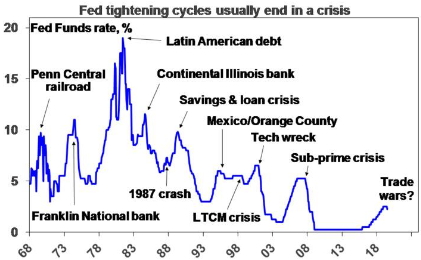
The pattern of the past 50 years or so is for the Fed to cut rates after some form of crisis threatens the economic outlook. See the next chart. In 2001 it was the tech wreck and in 2007 it was the sub-prime mortgage crisis. This time around there is nothing on that scale although it may be argued that the trade wars are providing the biggest single threat.


Source: Thomson Financial, AMP Capital Investors

This year’s fall in core private final consumption inflation back below the Fed’s 2% target provided the Fed with the scope to move.

Further easing is likely, but it’s likely to be limited

It’s rare for the Fed to just cut once. In the insurance cuts of 1998 through the LTCM crisis it eased 3 times by 0.25%. Given that the risks to the growth outlook – particularly on trade – won’t go away quickly and that the Fed appears to have taken the decision that it’s easier to control a rise in inflation than a further slide or deflation, it’s likely to cut rates further and we are allowing for another cut in September.

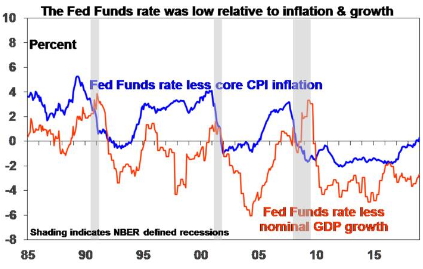
However, we remain of the view that a US recession is not imminent (see The longest US economic expansion ever). While the yield curve is flashing warning signs, the excesses that normally precede US recessions are not present. In particular: the US has not seen a spending boom with cyclical spending on consumer goods, investment and housing running around average as a share of GDP; private debt growth has been moderate; and inflation has been low. Consequently, there is no boom to go bust. Moreover, monetary policy had not become tight with the Fed Funds rate never having reached the high levels that normally precede recessions. See the next chart.


Source: NBER, Bloomberg, AMP Capital

As a result, we see this easing cycle by the Fed as being limited to around 2 or 3 rate cuts with the next likely coming in September as opposed to the 4 or so that the money market has factored in.

Of course, the main threats to this relate to US trade wars and tensions with Iran.

The Fed and shares

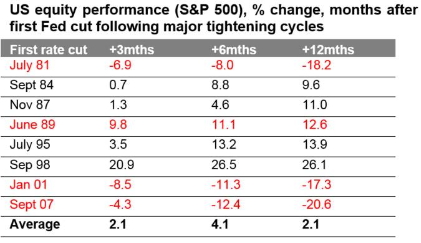
Falling interest rates are generally positive for shares. They help boost economic and profit growth and make shares relatively more attractive than cash and hence are usually associated with a higher price to earnings multiples. The table below shows the US share market’s response after the first-rate cut following major tightening cycles.  


US recession highlighted in red. Source: Thomson Reuters, AMP Capital

The US share market rose over the subsequent 3, 6 and 12 months after the commencement of 5 of the last 8 Fed easing cycles. The exceptions were after the rate cuts in 1981, 2001 and 2007 which were associated with recessions.

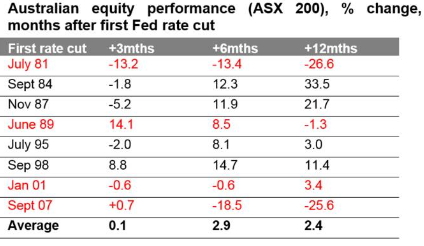
The reaction by the Australian share market is similar, except the Australian share market wasn’t greatly affected by the post-2000 bursting of the tech bubble.


US recessions highlighted in red. Source: Thomson Reuters, AMP Capital

So if we are right and the US avoids a recession in the next year or so then US interest rate cuts should be positive for shares beyond any near term uncertainty (and the initial reaction which has seen US shares fall as the Fed wasn’t as dovish as hoped) and are likely to be higher on a 6-12 month horizon. It is worth repeating the old saying “don’t fight the Fed”. While scepticism is high that central banks with low-interest rates and QE will spur growth, an investor would have made a huge mistake over the past decade betting against them. The key though is that global economic indicators need to start improving in the months ahead.

Implications for Australian interest rates

The directional relationship between the US and Australian interest rates weakened long ago. The RBA started raising rates in 2009 when the Fed held at zero, it was easing in 2016 when the Fed was hiking and this year it started cutting ahead of the Fed. So just because the Fed moves doesn’t mean the RBA will as well! On the one hand the Fed’s easing along with stimulus elsewhere globally should help support global growth which is good for Australia. But it’s probably not enough to change the outlook for the RBA. Our view remains that it’s on track to cut the cash rate to 0.5% by early next year and to some degree the Fed cutting too reinforces that to the extent that the RBA would like to keep the Australian dollar down.

What about the role of President Trump?

President Trump has been highly critical of Fed rate hikes over the past year and has been saying they should be cutting in recent times. Of course, presidents and prime ministers usually prefer lower than higher rates but the issue, in this case, has been more around whether his comments represent a threat to the Fed’s independence, which is necessary to ensure sensible monetary policy as opposed to politically driven moves. In a world of increasing populism, this could become more of an issue. In terms of the role he may have played in the Fed’s latest decision it’s likely that the Fed has made up its own mind but it’s also interesting to note that President Trump’s huge fiscal easing last year likely played a role in Fed hikes last year and now his escalating trade war has played a role in its easing! So, one way or another he had an impact.

If you would like to discuss any of the issues raised by Dr Oliver, please call on Phone: 07 5641 4134 or email martin@wtfp.com.au


Author: Dr Shane Oliver, Head of Investment Strategy and Chief Economist

Source: AMP Capital 01 August 2019

Important notes: While every care has been taken in the preparation of this article, AMP Capital Investors Limited (ABN 59 001 777 591, AFSL 232497) and AMP Capital Funds Management Limited (ABN 15 159 557 721, AFSL 426455)  (AMP Capital) makes no representations or warranties as to the accuracy or completeness of any statement in it including, without limitation, any forecasts. Past performance is not a reliable indicator of future performance. This article has been prepared for the purpose of providing general information, without taking account of any particular investor’s objectives, financial situation or needs. An investor should, before making any investment decisions, consider the appropriateness of the information in this article, and seek professional advice, having regard to the investor’s objectives, financial situation and needs. This article is solely for the use of the party to whom it is provided and must not be provided to any other person or entity without the express written consent of AMP Capital.

Even when they’re truly detrimental to your health, certain activities can be difficult to give up. Whether it’s smoking, regularly indulging in sugary beverages, or binge drinking, there are a handful of practices that experts have linked to an early death.

Before suggesting that these activities were harmful, researchers studied big groups of people over long periods of time.

In one of those studies, published this week in the American Heart Association journal Circulation, scientists found troubling links between high intakes of soda and early death. And in a large review of two studies published in the same journal last year, researchers pinpointed five habits that appeared to be tied with a significantly shorter lifespan.

Here’s an overall look at what scientists have concluded are the most harmful habits for your health:

1. Drinking Sugary Beverages and Eating Processed Foods

Drinking soda, juice, and other heavily sweetened beverages appear to take a heavy toll on our bodies.

In fact, a new 34-year study of more than 118,000 people suggested that the more sugar people drank, the more likely they were to die from problems such as heart trouble. However, as with many nutrition studies, this one merely involved observing people over time. That means the research could not definitively conclude that sugary drinks are bad – it could suggest only that they might be.

If you’re worried about your drinking and eating habits, there’s plenty you can do to counteract the problems tied with sugary drinks. Aside from simply avoiding soda and juice, a growing body of research suggests that a meal plan focusing on vegetables, protein, and healthy fats has key benefits. Those include losing weight, keeping the mind sharp, and protecting the heart and brain as you age.

The best diets (and the ones linked with the longest life) involved high intakes of vegetables, nuts, whole grains, healthy fats (such as those from fish and olive oil), and low intakes of sugary beverages, such as soda and juice, processed sweets and breads, red and processed meats, and trans fats and salt.

2. Smoking

Smoking kills. No other habit has been so strongly tied to death.

In addition to cancer, smoking causes heart disease, stroke, lung diseases, diabetes, and chronic obstructive pulmonary disease, which includes emphysema and chronic bronchitis, according to the Centres for Disease Control and Prevention (CDC).

Smokers inhale burned tobacco and tar along with toxic metals, such as cadmium and beryllium, and elements such as nickel and chromium – all of which accumulate naturally in the leaves of the tobacco plant.

So it’s no surprise that studies find that abstaining from cigarette smoking for life is linked with living longer. If you’ve already smoked, the research still has good news: Both quitting and cutting back have also been linked with positive outcomes related to life expectancy.

“Smoking is a strong independent risk factor of cancer, diabetes, cardiovascular diseases, and mortality,” researchers wrote in one study. “And smoking cessation has been associated with a reduction of these excess risks.”

3. Sitting For Long Periods of Time

In general, staying sedentary for lengthy periods of time seems to be awful for your health.

But getting up every once in a while to do regular cardio exercise is an all-natural way to lift your mood, improve your memory, and protect your brain against age-related cognitive decline. In other words, it’s the closest thing to a miracle drug that we have.

A wealth of recent research suggests that cardio – any type of exercise that raises your heart rate and gets you moving and sweating for a sustained period of time – has a significant and beneficial effect on the brain.

“Aerobic exercise is the key for your head, just as it is for your heart,” according to a recent article in the Harvard Medical School blog Mind and Mood.

Most research suggests that the best type of aerobic exercise for your mind is anything you can do consistently for 30 to 45 minutes at a time.

4. Being Overweight or Underweight

People who weigh above or below average appear to face a slightly higher risk of death from a range of causes, according to a large recent study that assessed peoples’ weight using a measure called the body mass index (BMI).

Researchers like to use BMI for quick assessments of large groups of people. Generally speaking, a BMI of between 18.5 and 24.9 is considered within the “healthy range” for adults over age 20, according to CDC.

And people who fell within that BMI range tended to outlive their peers who fell outside it, the study found. In other words, people who had BMIs that were either above or below the “healthy range” lived shorter lives than people with BMIs that fell within that range.

That said, BMI is far from a perfect means of gauging your overall health.

The 1830s-era measure does not take into account a number of key health factors, including overall body fat, gender, muscle composition, or the amount of fat you’re carrying around your middle.

This measure, also known as abdominal fat, is emerging as a key alternative to BMI because of its strong links with heart health and diabetes.

5. Drinking Heavily

It’s been tough to pin down the precise relationship between drinking and overall health. A little bit of alcohol (such as one or two drinks per day) seems to be OK. More than that, however, and the benefits appear to vanish.

The most dangerous types of drinking are heavy drinking and binge drinking.

Defined by the CDC as eight drinks or more per week for women and 15 drinks or more per week for men, heavy drinking has been tied to a host of negative outcomes, including an overall shorter life expectancy.

Binge drinking, or having four drinks if you’re a woman and five drinks if you’re a man within two hours, may be equally or even more harmful, studies suggest.

Other problems tied to heavy drinking and binge drinking include cancer, heart disease, respiratory disease, and injury.

Source : FoodMatters April 2019 

Reproduced with the permission of the Food Matters team. This article by Erin Bodwin was originally published at https://www.foodmatters.com/article/5-deadliest-habits-avoid-you-get-older

Important:
This provides general information and hasn’t taken your circumstances into account.  It’s important to consider your particular circumstances before deciding what’s right for you. Although the information is from sources considered reliable, we do not guarantee that it is accurate or complete. You should not rely upon it and should seek qualified advice before making any investment decision. Except where liability under any statute cannot be excluded, we do not accept any liability (whether under contract, tort or otherwise) for any resulting loss or damage of the reader or any other person. 

Any information provided by the author detailed above is separate and external to our business and our Licensee. Neither our business, nor our Licensee take any responsibility for any action or any service provided by the author.

Any links have been provided with permission for information purposes only and will take you to external websites, which are not connected to our company in any way. Note: Our company does not endorse and is not responsible for the accuracy of the contents/information contained within the linked site(s) accessible from this page.

At its meeting today, the Board decided to lower the cash rate by 25 basis points to 1.00 per cent. This follows a similar reduction at the Board’s June meeting. This easing of monetary policy will support employment growth and provide greater confidence that inflation will be consistent with the medium-term target.

The outlook for the global economy remains reasonable. However, the uncertainty generated by the trade and technology disputes is affecting investment and means that the risks to the global economy are tilted to the downside. In most advanced economies, inflation remains subdued, unemployment rates are low and wages growth has picked up. The slowdown in global trade has contributed to slower growth in Asia. In China, the authorities have taken steps to support the economy, while continuing to address risks in the financial system.

Global financial conditions remain accommodative. The persistent downside risks to the global economy combined with subdued inflation have led to expectations of easing of monetary policy by the major central banks. Long-term government bond yields have declined further and are at record lows in a number of countries, including Australia. Bank funding costs in Australia have also declined, with money-market spreads having fully reversed the increases that took place last year. Borrowing rates for both businesses and households are at historically low levels. The Australian dollar is at the low end of its narrow range of recent times.

Over the year to the March quarter, the Australian economy grew at a below-trend 1.8 per cent. Consumption growth has been subdued, weighed down by a protracted period of low income growth and declining housing prices. Increased investment in infrastructure is providing an offset and a pick-up in activity in the resources sector is expected, partly in response to an increase in the prices of Australia’s exports. The central scenario for the Australian economy remains reasonable, with growth around trend expected. The main domestic uncertainty continues to be the outlook for consumption, although a pick-up in growth in household disposable income is expected to support spending.

Employment growth has continued to be strong. Labour force participation is at a record level, the vacancy rate remains high and there are reports of skills shortages in some areas. There has, however, been little inroad into the spare capacity in the labour market recently, with the unemployment rate having risen slightly to 5.2 per cent. The strong employment growth over the past year or so has led to a pick-up in wages growth in the private sector, although overall wages growth remains low. A further gradual lift in wages growth is still expected and this would be a welcome development. Taken together, these labour market outcomes suggest that the Australian economy can sustain lower rates of unemployment and underemployment.

Inflation pressures remain subdued across much of the economy. Inflation is still, however, anticipated to pick up, and will be boosted in the June quarter by increases in petrol prices. The central scenario remains for underlying inflation to be around 2 per cent in 2020 and a little higher after that.

Conditions in most housing markets remain soft, although there are some tentative signs that prices are now stabilising in Sydney and Melbourne. Growth in housing credit has also stabilised recently. Demand for credit by investors continues to be subdued and credit conditions, especially for small and medium-sized businesses, remain tight. Mortgage rates are at record lows and there is strong competition for borrowers of high credit quality.

Today’s decision to lower the cash rate will help make further inroads into the spare capacity in the economy. It will assist with faster progress in reducing unemployment and achieve more assured progress towards the inflation target. The Board will continue to monitor developments in the labour market closely and adjust monetary policy if needed to support sustainable growth in the economy and the achievement of the inflation target over time.

Source: Reserve Bank of Australia, July 2nd, 2019

Enquiries

Media and Communications
Secretary’s Department
Reserve Bank of Australia
SYDNEY

Phone: +61 2 9551 9720
Fax: +61 2 9551 8033

Email: rbainfo@rba.gov.au

A common concern ever since the Global Financial Crisis (GFC) ended a decade ago is that the next recession is imminent. This concern has become more pronounced recently as yield curves – ie the gap between long-term bond yields and short-term borrowing rates – have inverted (or gone negative) as in the US. This concern has taken on added currency now that the US economic expansion is the longest on record. Surely it must be living on borrowed time?


This matters a lot. The US is the world’s biggest economy in US dollar terms (at 24% of world GDP), its share market is around 56% of global share market capitalisation and being central to the world’s financial system it sets the direction for global share markets, including Australia’s. What’s more, while share corrections (say falls of 5-15%) and even mild bear markets (with say a 20% decline that turns around quickly) are common, the key driver of whether they turn into a major bear market (where shares fall 20% and a year later are down another 20% or so like in the GFC) is whether we see a recession or not – notably in the US (see the table in Correction time for shares?). So, whether a US recession is imminent or not is critically important in terms of whether a major bear market is imminent.

Longest but not the strongest

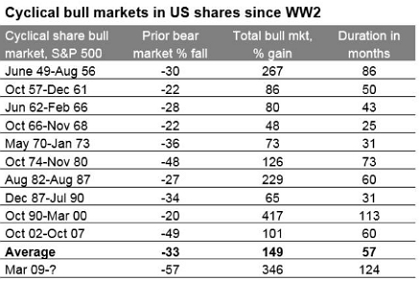
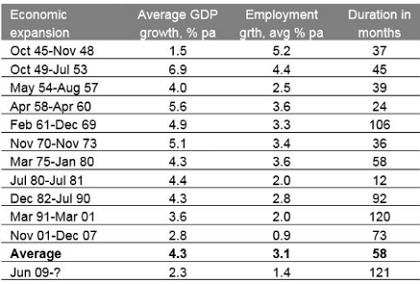
The cyclical bull market in US shares is now over ten years old. This makes it the longest since WW2 and the second strongest in terms of percentage gain. And according to the US National Bureau of Economic Research the current US economic expansion that started in June 2009 is now 121 months old and compares to an average expansion of 58 months since 1945. This makes it the longest on record (since 1854). See the next two tables. But it’s noteworthy that it’s not the strongest. In fact, GDP and employment growth through this expansion have averaged around half that seen in the average post war expansion. Both have been the second weakest. 


Data is for the S&P 500. A cyclical bull market is defined as a rising trend in shares that ends when shares have a 20% or more fall. It could be argued that the 20% fall in July to October 1990 was not really a bear market as it was too short & shares surpassed their prior highs within a year. If it was not really a bear then the latest bull market becomes the second longest. Source: Bloomberg, AMP Capital.


Source: National Bureau of Economic Research, AMP Capital

Absence of excess

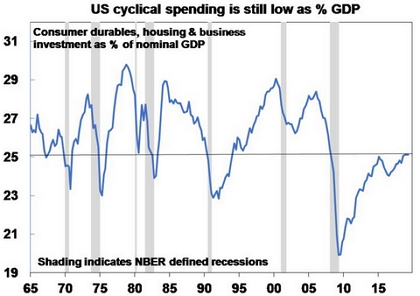
Numerous growth slowdowns and recession scares – notably around 2011-12, 2015-16 and since last year – and post GFC caution have kept this expansion slow. A key lesson of past economic expansions is that “they do not die of old age, but of exhaustion”. The length of economic expansions depends on how quickly recovery proceeds, excess builds up, inflation rises and the central bank tightens. The current US economic expansion may be long, but it has been slow. As a result, it’s been taking longer than normal for excesses that precede recessions – around cyclical spending, debt and inflation – to build up. First, cyclical spending in the US as a share of GDP remains low. In particular, there has been no “boom” in spending on consumer durables, business or housing investment resulting in a glut that needs to be worked off as occurred prior to all of the recessions in the last 50 years. All are around or below long-term averages as a share of GDP, in contrast to highs seen prior to past recessions. Basically, no boom = no bust!  


Source: NBER, Bloomberg, AMP Capital

Second, growth in private sector debt has been modest and well below the surge seen prior to the recessions of the early 1990s, early 2000s and 2008-09 as household debt growth has been weak. While corporate debt is up, the ratio of profits to interest payments is well above average and the ratio of corporate debt to assets is low. (Yes, public debt to GDP in the US is a concern but high public debt has not been a precursor to recession and the public sector’s taxing and money printing abilities mean it’s a totally different risk to excessive private debt.)

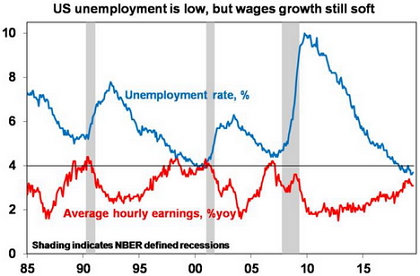
Finally, there is no sign of the surge in inflation that traditionally precedes recessions. Sure, the labour market has been flashing warning signs with unemployment and underemployment having fallen sharply, warning of a wages breakout and inflation pressure.


Source: NBER, Bloomberg, AMP Capital

However, there is arguably still spare capacity in the US labour market (the participation rate has yet to see a normal cyclical rise) and wages growth around 3% remains very low. The last three recessions were preceded by wages growth above 4%. And industrial capacity utilisation at 78% is well below levels that in the past have shown excess and preceded recessions. Reflecting this, along with intense competition which has been accentuated by technological innovation, core inflation has fallen below target.


Source: NBER, Bloomberg, AMP Capital

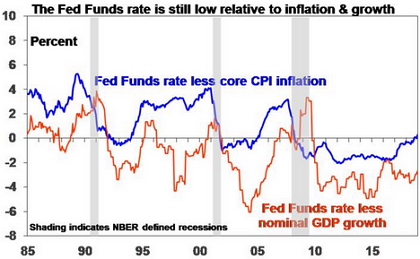
So, while the Fed has raised interest rates since late 2015 it has not slammed the brakes on with tight monetary policy. Past US recessions have been preceded by the Fed Funds rates being well above inflation and nominal growth, whereas that’s not the case now. See the last chart. And given perceived risks to growth and the concern that it will be easier to deal with a rise in inflation than deflation, the Fed is now moving to cut rates again anyway.

The bottom line is that the excesses that normally precede US recessions – a spending boom, surging private debt and/or rising inflation/tight monetary policy – are absent. So while US economic expansion may be long in the tooth it’s far from exhausted.

But what about the inverted yield curve?

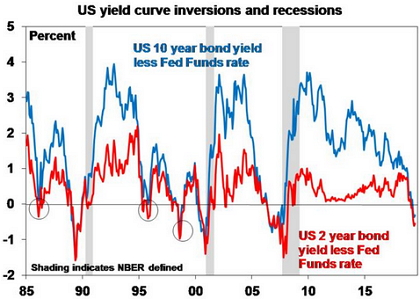
The inverted US yield curve that started in the last few months is certainly a concern as they have preceded past US recessions.


Source: NBER, Bloomberg, AMP Capital

However, there are several reasons not to be too concerned. First, the lag from yield curve inversion to recession averages around 15 months (which takes us to second half next year), there have been numerous false signals and following yield curve inversions in 1989, 1998 and 2006 shares actually rallied. Second, various factors may be inverting the yield curve unrelated to growth expectations including still falling long-term inflation expectations, low German and Japanese bond yields and higher levels of investor demand for bonds post the GFC as they have proven to be a good diversifier to shares in times of crisis. Third, the retreat from monetary tightening has been a factor behind the rally in bonds but this is positive for growth. Finally, other indicators are not pointing to imminent recession – as noted above we have not seen the sort of excess that normally precedes recession.

The bottom line

Issues around the trade war and tensions with Iran certainly pose a risk to US growth and could drive short term volatility in share markets. But the combination of easing monetary conditions globally, the removal of caps on US Government spending for next year (which threatened a mini “fiscal cliff”) as part of a deal to suspend the debt ceiling and the absence of the excesses that contribute to recessions would suggest that US – and hence global and Australian – shares are likely to be higher in 6-12 months’ time.

Shares up and bond yields down – which is right?

This brings us back a puzzle that has worried some this year: share markets are up but bond yields are down…surely one market must be wrong? But this occasionally happens in the investment cycle. Basically, shares having fallen last year on growth fears are looking through short-term growth uncertainties and focusing on lower for longer interest rates and bond yields making shares relatively cheaper and the likelihood that monetary and fiscal stimulus will ultimately boost economic growth. By contrast bonds have been focussing on falling inflation and lower for longer short-term interest rates. So, there is logic behind both shares and bonds rallying at the same time. Ultimately though if global growth picks up over the next 12 months, bond yields will start to rise again – but it’s likely to remain gradual and constrained.

If you would like to discuss any of the issues raised by Dr Oliver, please call on Phone: 07 5641 4134 or email martin@wtfp.com.au.


Source: AMP Capital 23 July 2019

Important notes: While every care has been taken in the preparation of this article, AMP Capital Investors Limited (ABN 59 001 777 591, AFSL 232497) and AMP Capital Funds Management Limited (ABN 15 159 557 721, AFSL 426455) (AMP Capital) makes no representations or warranties as to the accuracy or completeness of any statement in it including, without limitation, any forecasts. Past performance is not a reliable indicator of future performance. This article has been prepared for the purpose of providing general information, without taking account of any particular investor’s objectives, financial situation or needs. An investor should, before making any investment decisions, consider the appropriateness of the information in this article, and seek professional advice, having regard to the investor’s objectives, financial situation and needs. This article is solely for the use of the party to whom it is provided and must not be provided to any other person or entity without the express written consent of AMP Capital.

Decide how you want to be looked after if you can’t make your own decisions and how you want your assets to be distributed after you die.

What is estate planning?

If you’ve got people in your life who you love and want to take care of, it’s wise to build an estate plan. This plan, which you can put together with the help of an estate planning specialist, will make sure loved ones are taken care of in the event of your death.

An estate plan is more than just drawing up a will. It also involves formalising how you want to be looked after (medically and financially) if something happens to you, or if you’re unable to make your own decisions later in life. Your estate plan will also clarify how you want your assets to be protected during your lifetime and distributed after your death.

How does an estate plan help?

You can make your wishes known

One of the benefits of a sound estate plan is the ability to formalise your wishes in writing. This can help if someone contests what you’ve said you want after you’ve passed away, or if you’re unable to speak for yourself.

You could minimise disagreements

Unfortunately, disputes often arise when unsettled assets need to be distributed among others—especially if there are no clear guidelines set. Being prepared with an estate plan could go a long way in preventing disputes should family members need to divide assets among themselves or make other hard decisions on your behalf.

You may improve tax consequences for your heirs

As the distribution of assets (including your income) can come with different tax obligations, a good estate plan might also minimise any tax that your heirs would need to pay. For instance, if they decide to sell something they’ve inherited, depending on the type of asset, they may need to pay capital gains tax. Estate planning, particularly with the guidance of estate planning specialists, could reduce these extra tax costs.

Key points when creating your estate plan

Consider drawing up a will and whether you want something legally binding

A solicitor or estate planning lawyer can help you draw up a will that is legally binding and covers what you’d like to happen with your assets, children (if you have any) and funeral when you die.

It’s important this document is kept up to date, and be sure any changes to your situation (marriage, divorce, separation or otherwise) are accounted for, so those who matter most are taken care of.

While it’s also possible to draw up your own will (there are various kits available online), these may not be adequate in complex situations, which is why engaging a professional is still worthwhile.

A word of warning: if your will is deemed invalid, your estate will be distributed according to the law in your state (which may not align with your wishes), and claims could be made by unintended recipients. This is why it’s a good idea to enlist the services of an estate planning specialist, even if you think your situation is relatively simple.

Review your nominated beneficiaries for any super or insurance you might have

When it comes to your super, you’ll need to do some planning in advance to make sure it’s distributed properly in the event of your passing.

During this process, take the time to nominate your beneficiaries with your super fund, and make sure you’re across how long different nominations are valid for. If you don’t make a nomination, the super fund trustee could use their discretion to determine who your super money goes to.

In addition, if you have insurance outside of super, make sure you’ve listed your beneficiaries on your insurance policy and that those beneficiaries are also kept up to date.

Consider appointing an enduring power of attorney to make decisions if you can’t

There may come a time when you’re unable to make legal or financial decisions on your own because of advanced age or medical issues. Granting power of attorney means you are designating an individual to make these decisions on your behalf if such a scenario arises.

For this reason, it’s important to choose someone you trust, as they’ll be responsible for looking after your bank accounts, ongoing bills, and even selling your house if you need to move into a care facility.

It’s also worth noting that you may be able to appoint a different type of power of attorney depending on what tasks you’d like this person to carry out on your behalf. For example, you may want your son or daughter to make general lifestyle decisions for you, while you appoint a financial adviser to make financial decisions.

Choose an executor to help carry out your wishes when you’re gone

Generally, an executor is the legal individual who manages and distributes the estate with the assistance of a solicitor, according to the terms you’ve set out in your will (which your solicitor should have a copy of).

When you nominate an executor in your will it’s important to let your family know, to avoid disputes after you die. Make sure the executor also has a good understanding of their duties and where your will and other important documents are kept. You may also want to let your family know where this information is stored.

The executor will typically be responsible for things like making funeral arrangements, ensuring your debts are paid and bank accounts closed, and collecting any life insurance.

They will also usually need to apply to the court for a grant of probate, which is a required legal step before your estate can be distributed. A grant of probate certifies that your will is valid.

Do you need help planning your estate?

Estate planning can be a complex process, and there could be legal and tax implications if you don’t set things up correctly and understand the fine print.

For these reasons, it’s very important to speak to a legal professional and your financial adviser before making any decisions and signing on any dotted lines.

For more information speak to us on Phone: 07 5641 4134 .

Source : AMP May 2019 

Important:
This information is provided by AMP Life Limited. It is general information only and hasn’t taken your circumstances into account. It’s important to consider your particular circumstances and the relevant Product Disclosure Statement or Terms and Conditions, available by calling Phone: 07 5641 4134, before deciding what’s right for you.

All information in this article is subject to change without notice. Although the information is from sources considered reliable, AMP and our company do not guarantee that it is accurate or complete. You should not rely upon it and should seek professional advice before making any financial decision. Except where liability under any statute cannot be excluded, AMP and our company do not accept any liability for any resulting loss or damage of the reader or any other person.

Do you feel like ‘stressed’ is your new normal state of being? Can you remember the last time you went to bed without a care in your mind and woke up the next morning energized and excited for the day? Our modern lives, though full of opportunity, have us anxious, stressed and exhausted, and it’s almost at the point where if you’re not constantly stressed about work, finances or relationships, you might just stress about not being stressed enough!  

While a stress response is a normal function for our bodies and we definitely do need it in certain circumstances, being constantly stressed is not healthy and it’s making us sick. In fact, according to the World Health Organisation, stress is the health epidemic of the 21st Century. 

How We’re Stressed 

There are three ways our bodies can be stressed:

  1. Physical: this can be a trauma, injury, accident or fall

  2. Chemical: this includes flu, bacterial infection, hangovers, and unbalanced blood sugar levels

  3. Emotional: this is the fear-inducing situations, perceived pressure at work or financially, family tragedies. 

Joe Dispenza explains that when our bodies experience physical, chemical or emotional stress, it knocks the brain and body out of balance and activates the Sympathetic Nervous System. This is the fight or flight system that helps us deal with perceived threats in our external environment. When this system is activated, other systems in the body are affected, including the way in which the body sources and burns energy to give the body a rush of adrenaline. 

This activation and mobilization of energy and particular body function are great in situations where we need to be able to react quickly – jump out of the way of speeding car or falling object – situations that are short-lived but require an immediate response. However, when the perceived threat to us is ongoing – say mortgage and financial stress – the body stays on high alert for prolonged periods, using up enormous amounts of energy and leaving the body unable to return to its normal state.  

What’s The Problem With Prolonged Stressed?

“Over 90% of disease and illness today is based on lifestyle and stress, not genetics,” – Bruce Lipton 

Stress hormones shut down the immune system making us vulnerable to disease, infection, and cancer. 

What does that mean for the average person living with constant stress? Bruce explains that by always being stressed “we are inhibiting our immune system every day.” This creates an environment for disease to develop… and that’s serious.  

Consider this: people produce cancer cells every day, but healthy immune systems can get rid of it. If you’re constantly stressed, creating a weakened immune system, your body will be less likely to protect you against cancer cells.  

Additionally, Dr. Josh Axe has shared that our emotions can impact our health with specific feelings driving disease in specific organs. He believes that managing our emotions is just as, if not more, important than fixing your diet for your health.  

The impact of emotions on the organs:

  • Fear: reproductive organs, kidneys, and adrenals

  • Frustration: liver

  • Grief, sadness, depression: colon, lungs, immune function

  • Anxiety: heart, small intestines

  • Worry: spleen, pancreas, stomach

Techniques Proven to Reduce Stress 

By acknowledging your stress you can start to reverse its presence and impact on your life. There are a number of techniques you can implement to reduce stress and improve your health, and it starts with making a commitment to change your lifestyle.

Dr. Libby says that ‘stressed’ is the busy person’s word for fear. She shared with us that most of the time, people who are stressed at work have a fear of disappointing others or letting down the team, or a fear of failure. If you can understand the source of your fear, you can start to overcome the issue and reduce the stress.  

Dr. Libby also explains that it takes time to change the way we respond to stressful events. “We understand that for physical fitness, we need to train our body – we can’t just get up one day and run a marathon. The same is true for our mind – it requires a daily practice of ‘training’.” 

8 Ways to Reduce Stress 

  1. Reducing your caffeine consumption

  2. Talking to yourself about the source of your stress, try to change fear into fascination and learn more about yourself. Catch negative thoughts as they appear and replace them with thoughts of gratitude and positivity.

  3. Considering your perceived pressure – most of the time we’re putting deadlines and pressure on ourselves that aren’t necessary.

  4. Meditating to calm your mind and bring your thoughts internal, rather than being worried about everything external. If you like guided meditations, we’ve got plenty!

  5. Working on improving your diet. We know that when people are stressed their diet decisions are generally very poor and limited to things that are convenient. Make healthy food a priority and read our article 9 Foods You Should Eat The Moment You Feel Stressed.

  6. Reducing your technology use… and turning those email notifications off when you finish your work day!

  7. Conscious breathing. Yes, we all breathe, but being conscious about your breath and making time to take nice deep breathes will change your mood and your body’s interpretation of what’s happening in your environment.

  8. Finding a practice that relaxes you and do it often. Whether it’s yoga, surfing, painting or running, whatever it is that you enjoy and enables you to take your mind off things that stress you, make it a priority and enjoy it often. 


Source : Food Matters June 2019 

Reproduced with the permission of the Food Matters team. This article by JAMES COLQUHOUN  was originally published at www.foodmatters.com/article/stress-epidemic

Important:
This provides general information and hasn’t taken your circumstances into account.  It’s important to consider your particular circumstances before deciding what’s right for you. Although the information is from sources considered reliable, we do not guarantee that it is accurate or complete. You should not rely upon it and should seek qualified advice before making any investment decision. Except where liability under any statute cannot be excluded, we do not accept any liability (whether under contract, tort or otherwise) for any resulting loss or damage of the reader or any other person. 

Any information provided by the author detailed above is separate and external to our business and our Licensee. Neither our business nor our Licensee takes any responsibility for any action or any service provided by the author.

Any links have been provided with permission for information purposes only and will take you to external websites, which are not connected to our company in any way. Note: Our company does not endorse and is not responsible for the accuracy of the contents/information contained within the linked site(s) accessible from this page.

In a low-interest, lower-return, more-volatile investment environment, investors have an even greater incentive to keep wealth-damaging behavioural traits or biases under control.


Individual investors have no control, of course, on the emotions of other investors or the overall state of investment markets. However, you can try to keep your emotions in check when making investment decisions.

And it is under your control to create and stick to an appropriately-diversified portfolio, set achievable long-term goals and have realistic expectations for returns. A disciplined investor guided by a solid financial plan is less likely to allow emotions to get in the way of investment success.

Here are seven of the undesirable traits that behavioural economists generally say investors should avoid:

Overconfidence

Many investors have an unjustifiable confidence in their ability to make smart investment decisions. Overconfident investors often believe they can pick future winning investments and somehow beat the market.

This overconfidence typically leads to frequently buying and selling shares in a chase for winners and being overly optimistic about the future performance of chosen investments.

Loss aversion

An excessive aversion to loss can make investors unreasonably sensitive to investment losses. Such investors tend to sell their winning investments while holding on to losers that are unlikely to recover.

And loss aversion can lead to investors being unwilling to take appropriate investment risks – potentially lowering long-term returns.

Regret

Excessively dwelling on past losses can lead to investors focusing too much on part of their portfolio rather than the portfolio as a whole. This trait, also known as “narrow framing”, can hinder an investor’s efforts to have a properly-diversified, long-term portfolio and make them more sensitive to short-term market movements.

Inertia

Inertia tends to get in the way of beginning to seriously save, saving more whenever possible and developing a long-term financial plan.

Fear and greed

These are the terrible twins of becoming fearful when markets are falling and becoming greedy when markets are rising. Fear and greed often lead to selling shares after prices have sharply fallen, only to buy after prices have sharply risen.

Comfort in crowd-following

Investors often gain a false sense of security by following the investment crowd. As with fear and greed, this usually results in jumping in and out of the markets at the wrong times.

Confirmation bias

This involves deciding on a course of action and then looking around for evidence to support that action while blocking out contrary opinions and research.

As part of your efforts to keep damaging traits or biases in check, try to block out investment “noise” – the abundance of often-conflicting and misleading information facing investors.

Make the most of investment compounding to magnify your long-term returns. (Compounding occurs as returns are earned on past returns as well as your original investment.) Recognising the rewards of compounding can help investors to stay focussed on the long term.

And think about ways to beat investment inertia including putting yourself into a form of saving “autopilot” by making higher salary-sacrificed super contributions.

 Please contact us on Phone: 07 5641 4134 if you seek further assistance on this topic.

Source : Vanguard June 2019 

By Robin Bowerman, Head of Corporate Affairs at Vanguard

Reproduced with permission of Vanguard Investments Australia Ltd

Vanguard Investments Australia Ltd (ABN 72 072 881 086 / AFS Licence 227263) is the product issuer. We have not taken yours and your clients’ circumstances into account when preparing this material so it may not be applicable to the particular situation you are considering. You should consider your circumstances and our Product Disclosure Statement (PDS) or Prospectus before making any investment decision. You can access our PDS or Prospectus online or by calling us. This material was prepared in good faith and we accept no liability for any errors or omissions. Past performance is not an indication of future performance.

© 2019 Vanguard Investments Australia Ltd. All rights reserved.

Important:
Any information provided by the author detailed above is separate and external to our business and our Licensee. Neither our business nor our Licensee takes any responsibility for any action or any service provided by the author.

Any links have been provided with permission for information purposes only and will take you to external websites, which are not connected to our company in any way. Note: Our company does not endorse and is not responsible for the accuracy of the contents/information contained within the linked site(s) accessible from this page.