Disruption is a term that is used widely. But what does it really mean when it comes to investing?

This is the first in a series of articles that explores what disruption really means, exploring examples of leading disruptive companies, and implications for investors.

It’s easy to assume disruption is just another business buzzword. But the notion of disruption really speaks to ongoing economic evolution. It’s at the heart of human nature and has been around for centuries.

Importantly, disruption benefits the economy because it leads to efficiencies by reducing costs, introducing new goods and services, as well as fast-tracking and improving business outcomes. Historically it has also been a net creator of jobs rather than a job killer.

Additionally, disruption is usually a positive force in society. Lower costs lead to higher living standards and supports economic development. It’s also not new. The long transition from manual to machine-led agriculture is a good example.

In 1837 John Deere invented the steel plow, which transformed farming as we know it. There have subsequently been scores of disruptive technologies in agriculture including combine harvesters and tractors. Today, the use of drones and data continues to transform agriculture, leading to massive improvements in productivity and efficiency. This process will only continue over time.

However, innovations stemming from disruption can take time to take hold. The automobile is an example. Invented in 1885, for many decades it remained an unaffordable luxury. Now, cars are ubiquitous. Cost is a major reason innovations such as the car take time to become widespread. Initially, a car cost many times the average person’s annual income. Now, the cost of a car is a fraction of this amount and affordable for many.

Now, the pace of disruption is increasing thanks to technology. The music industry is a good example. Vinyl records were the dominant music delivery mechanism for many years. Then, cassettes were invented, and the two co-existed for some time. Along came CDs and rendered cassettes and records largely obsolete. Mini discs improved on CDs, until the invention of the iPod transformed music once more. We now stream music from our smartphones, demonstrating how technology can accelerate the pace of disruption and transform an industry and competitive landscape.

So, music is a great example of how the pace of disruption has accelerated, particularly when it involves technology. Technology makes acceleration possible because it has increased the speed and reduced the cost of innovation in many industries through the ever-reducing cost of processing power that has facilitated and enabled more digital disruption. This explains why the nature of a company’s competitive advantage and the pace of disruption has changed over time. In the digital revolution, core assets are more often than not intangible in nature such as Intellectual Property and network effects as opposed to the physical assets such as plant and machinery that dominated the non-digital era.

Ultimately this has important ramifications for long-term investing, which we will explore in future articles, including the nature and durability of competitive advantage, identification of sustainable long-term growth trends, and corporate capital allocation.


Source: AMP Capital 18 Septemebr 2018

Author: Simon Steele, Head of Global Equities London, United Kingdom 

Important notes: While every care has been taken in the preparation of this article, AMP Capital Investors Limited (ABN 59 001 777 591, AFSL 232497) and AMP Capital Funds Management Limited (ABN 15 159 557 721, AFSL 426455) makes no representations or warranties as to the accuracy or completeness of any statement in it including, without limitation, any forecasts. Past performance is not a reliable indicator of future performance. This article has been prepared for the purpose of providing general information, without taking account of any particular investor’s objectives, financial situation or needs. An investor should, before making any investment decisions, consider the appropriateness of the information in this article, and seek professional advice, having regard to the investor’s objectives, financial situation and needs. This article is solely for the use of the party to whom it is provided.


https://vimeo.com/289814747

Investors may be eyeing off value in emerging markets after the recent sell-off triggered by concerns about the Turkish economy.

Emerging market (EM) shares in local currency terms are down around 14% from their January high, and emerging market currencies are down 16% since their February high.

Emerging markets are now trading on a forward PE of around 11 times, making them quite cheap, as are their currencies.

But the troubles in Turkey, which have prompted its equity markets and currencies to tumble, are likely to continue as the underlying problems in its economy persist.

Turkey is experiencing very high rates of inflation and its central bank is probably going to have to raise rates further to combat that. So, the volatility and uncertainty around Turkey will continue.

Contagion

The real problem is the contagion effect those concerns have on other emerging market countries. As we have seen in the past, when one emerging market gets into trouble, investors look around for others that might be in trouble too.

The concerns around Turkey have already spread to Argentina; investors are worried the problems will also spread to Brazil and other emerging markets, which is weighing on their shares and currencies.

Foreign investors are happy to put money into emerging markets during good times but they’re now fretting those countries may not be able to service their loans, particularly if they have borrowed in $US.

The US is raising rates, which continues to put upward pressure on the $US, making it more expensive to service loans in that currency.
Investors have other concerns too around emerging countries’ vulnerability to the threat to global trade, and uncertainty around slowing growth in the Chinese economy.

Good value

When you throw in worries about specific countries like Turkey it creates ongoing issues around emerging markets. This means that worries about emerging markets will probably continue for a little while yet.

There is good value in emerging markets if you take a longer-term, say a five-year, view. But investors need to be aware that we may see some more downside in the short term before we ultimately bottom out in these markets.

From a historical perspective, the declines we are currently seeing in emerging markets are mild. They crashed 27% in 2015-16 and they could fall further now if the $US continues to rise, making debt servicing harder in the emerging world.


Soucre: AMP Capital 18 Septemebr 2018

Author: Dr Shane Oliver, Head of Investment Strategy and Economics and Chief Economist, AMP Capital

Important notes: While every care has been taken in the preparation of this article, AMP Capital Investors Limited (ABN 59 001 777 591, AFSL 232497) and AMP Capital Funds Management Limited (ABN 15 159 557 721, AFSL 426455) makes no representations or warranties as to the accuracy or completeness of any statement in it including, without limitation, any forecasts. Past performance is not a reliable indicator of future performance. This article has been prepared for the purpose of providing general information, without taking account of any particular investor’s objectives, financial situation or needs. An investor should, before making any investment decisions, consider the appropriateness of the information in this article, and seek professional advice, having regard to the investor’s objectives, financial situation and needs. This article is solely for the use of the party to whom it is provided.

By Laurentine Ten Bosch, Food Matters

Aging is an inevitable process that happens gradually over time. Though this often begins as an external process, as we mature we begin to notice internal changes as well. How fast we age, however, is a variable that is strongly influenced by belief, lifestyle, diet and nutritional supplements.


Accelerated aging is often the result of nutritional deficiencies, excessive stress and poor lifestyle choices. We’re exposed to free radicals (or oxidative stress) from both internal and external toxins on a daily basis, and this takes a toll on the body over the years, eventually beginning to wear away at external and internal cellular processes. Lack of circulation is also a contributing factor to premature aging, as movement has a rejuvenating effect on the entire body. Daily exercise is imperative for clearing stagnation from the body and for moving qi.

Our concept of aging and beliefs about the process also affect whether we age prematurely or not. Women who believe they are forever young tend to always look vibrant and radiant. Attitude is incredibly important, and being young at heart often translates into youthfulness in all areas of our lives, from the amount of joy and fun we experience daily, to how fulfilling our sex lives are, to the number of wrinkles on our faces. Instead of stressing about the inevitable process of getting older, focus on the benefits of age, such as increased resilience, security, good relationships and a strong sense of self. 

The Anti-Aging Lifestyle – 9 Tips To Live By! 

The endocrine system regulates all body systems and helps to balance hormones. Our organs and cells use hormones as messengers to communicate with the rest of the body. A balanced endocrine system supports synergy and internal harmony.

The following glands produce hormones, which work to regulate everything from our metabolism to our digestion. These systems are directed by our circadian rhythm, which is maintained by the nightly production of melatonin, making sleep an essential element for anti-aging.

  • The pineal gland (supports circadian rhythm)

  • The thyroid (regulates metabolism)

  • The pancreas (aids in digestion and blood sugar regulation)

  • The ovaries and testes (produce sex hormones: estrogen, progesterone and testosterone)

  • The adrenal glands (produce cortisol to maintain homeostasis through emotional and physiological stress)

The following lifestyle recommendations support endocrine balance and restoration and serve as preventative measures for maintaining that youthful glow.

1. SLEEP

Sleep is vital for recuperating and rebuilding and repairing the body. Every bit of our being benefits from regular, restorative sleep. Setting a routine that includes seven to nine hours of sleep nightly and getting to bed before midnight are critical steps for restoring harmony.

2. DOWNTIME/MEDITATION 

Downtime and meditation is incredibly revitalizing and restorative. Be still or take a walk in nature, listen to soft music and unplug for at least a short time every day. Disconnecting is absolutely essential for our happiness and well-being. Take time away from technology as often as possible. Capture every moment with your heart and mind and allow yourself to sink into the moments. This unplugged time may be one of the best ways to reset our nervous systems and to support endocrine harmony.

3. DRINK WATER! 

Every cell, tissue, and organ in the body needs water to work efficiently. Without enough water, poor health is quickly on the horizon. There are a number of functions that water performs for the body: regulating body temperature, transporting nutrients and electrical signals to cells, lubricating the joints and flushing out toxins and waste. A mere five percent drop in the body’s water levels can cause a 30% loss of energy. Aim for half your body weight in ounces of water daily (so a 140-pound woman should consume 70 ounces of water every day), and drink filtered or spring water that is free of chlorine, fluoride and aluminum, as these are neurotoxins that have detrimental effects on the brain and overall health.

4. REGULAR EXERCISE 

Exercise is an integral part of preventing premature aging, as it stimulates lymphatic drainage, tones the muscles, eases stress, stimulates internal organs, relieves depression, promotes sleep, reduces cholesterol and facilitates clear thinking. It also releases endorphins, which will naturally lift your mood. Moderate exercise three to four times a week, to start, is ideal. Regular movement is the single most important thing you can do to support your longevity.

5. LYMPHATIC DRAINAGE MASSAGE 

Massage is a great way to support the lymphatic system, on top of regular exercise. The lymphatic system is spread throughout the whole body and is responsible for filtering and removing toxins using a network of fluid-filled nodes, glands and organs. When this system is not functioning at its optimal potential, toxins can get trapped and deposited throughout the body. Lymphatic drainage massage is a gentle massage along the lymphatic system pathways that helps to release any blockages and get the system flowing. Because of the sensitivity of this system, it’s recommended to go to a professional for this sort of treatment.

6. EXERCISE THE BRAIN 

Exercise the brain to keep the neurons firing and to strengthen brain function. Do activities that are mentally challenging, such as puzzles, crosswords and learning new things. You can also keep your mind active through reading, writing and engaging in interesting discussions and debates. Other ways to support brain health and to strengthen neural pathways are to adopt brain plasticity exercises, such as switching from the dominant hand you use for everyday activities (so for example, using your non-dominant hand to brush your teeth, dial the phone or write a grocery list), performing multiple sensory activities (essentially doing two things at once that engage the senses, such as watching a sunset while doing a craft with your hands, or listening to music and smelling flowers simultaneously) and changing up regular routines (for example, taking a new route on a daily commute or jog, or using new machines at the gym). New experiences and difficult mental activities challenge your brain to adapt, which keeps it strong – it essentially exercises your brain!

7. MANAGING STRESS LEVELS 

Managing stress is crucial for slowing the aging process. Stress causes a consistent rise in cortisol from the adrenals, and when cortisol levels are chronically high, they can rob the body of nutrients that are essential for healthy glowing skin. Chronic stress alters neurotransmitter production (affecting your emotions) and depletes the nutrients needed to balance hormones. Stress also increases silent inflammation and can contribute to intestinal permeability – enhancing the aging affect. To keep stress levels low, allow yourself to have alone time every day to meditate, exercise or relax doing something you enjoy.

8. REDUCE BLUE LIGHT EXPOSURE

High-energy visible (HEG) light, also known as blue light, is emitted by our computers, cell phones and other technological devices. This type of light generates free radicals, causing collagen and elastin in our bodies to weaken and die, which increases the signs of aging. Using screens at night before bed also disrupts our circadian rhythms, which has a negative impact on sleep. Cellular repair is most significant at night, and we need quality sleep to support the skin’s regeneration processes. Avoid excessive screen time and make sure to switch off all screens at least an hour before going to bed.

9. SOCIAL CONNECTION 

Social connection is key to healthy aging. Strong relationships offer the experience of feeling supported, which assists in an overall sense of being loved, esteemed and cared for. Plan daily and weekly activities with friends and family members, take classes and make efforts to talk to new people.

Source : Foodmatters July 2018

Author: Laurentine Ten Bosch, Food Matters

Reproduced with the permission of the Food Matters team. This article by The chalkboard mag was originally published at www.foodmatters.com/article/9-anti-aging-tips-to-start-living-by

Important:
This provides general information and hasn’t taken your circumstances into account.  It’s important to consider your particular circumstances before deciding what’s right for you. Although the information is from sources considered reliable, we do not guarantee that it is accurate or complete. You should not rely upon it and should seek qualified advice before making any investment decision. Except where liability under any statute cannot be excluded, we do not accept any liability (whether under contract, tort or otherwise) for any resulting loss or damage of the reader or any other person. 

Any information provided by the author detailed above is separate and external to our business and our Licensee. Neither our business, nor our Licensee take any responsibility for any action or any service provided by the author.

Any links have been provided with permission for information purposes only and will take you to external websites, which are not connected to our company in any way. Note: Our company does not endorse and is not responsible for the accuracy of the contents/information contained within the linked site(s) accessible from this page.


See how you can work around common money traps so you’ve got cash today, tomorrow and in the future.

In your 20s, you might be saving for an overseas trip, eyeing a new car, looking for your own pad, or simply trying to keep your wardrobe up-to-date, and have cash left over for Saturday night.


While you mull things over, it’s worth giving some thought to how what you spend today could also impact you later on—especially with one in four Aussie households experiencing financial stress.1

Misdemeanours worth avoiding

Going without a budget

Budgeting might sound too much like hard work, but knowing what you earn, owe and spend can give you control over your money, and let you quickly identify areas where you could be saving.

Using your credit card for everything

Credit cards can be convenient but they’re often more expensive than other forms of credit as they usually have higher interest rates2. Plus, people tend to spend more than if they’re just taking out cash.

Whenever you don’t pay your balance in full for the month, interest is also payable—and that includes when you only pay the minimum amount owing. For more info, check out our article – Are hefty interest charges costing you your social life?

Keeping up with the Joneses

The pressure to stay up-to-date with your peers and even celebrity icons can be a subconscious motivation behind a number of poor financial decisions.

Try to live within your means and stick to realistic goals.

Borrowing money from friends and family

When you’re in a bind, while you may be tempted to ask for a hand-out, it can put strain on relationships, particularly if it becomes a regular occurrence.

The person may need the money back quickly, begin judging your spending habits, or worse—end the friendship if they don’t get the money back.

Buying an expensive car

The average household in Australia is currently juggling car debt of $19,500.3 The purchase price of a new car is one thing, but the added costs are another.

ASIC’s new mobile phone app MoneySmart Cars can help you work out the overall costs.

Pursuing higher education without a plan

According to AMP.NATSEM research, estimated lifetime earnings for those with degrees are, on average, higher than those who don’t go beyond year 11.

However, if you’re considering further education, ask yourself whether the field you want to enter is the right one for you. The average debt for a tertiary student in Australia is about $19,100.4

Quitting your job on a whim

You may not like where you work but if you’re planning your exit march, it’s wise to have another gig lined up as it could be months before you find another opportunity and have cash coming in.

If it’s your current pay cheque that’s got you twisted, consider whether you’ve earned a pay rise and how you might go about asking for one.

Not prioritising your goals                                                                          

The benefits of thinking long term when it comes to your goals are pretty clear. For instance, buying a car, going on holiday and moving into a new apartment all within a six month period mightn’t be financially viable. Our online tool can help you prioritise and create your own goals timeline so you can map things out accordingly.

Foregoing an emergency fund

One in eight Australians don’t have enough money set aside to cover even a $100 emergency.5 And, you don’t want a busted phone or car tyre leaving you financially stranded.

An emergency fund can give you peace of mind and reduce the need to rely on high interest borrowing options. See our pointers on how to set one up.

Avoiding the money talk with your partner

It’s not nice to think about, but disagreements about money is a major cause of divorce in Australia.6

So, before you set up joint accounts or move in together, address how you’ll both contribute. If you are moving in together, it’s also worth knowing what happens to your finances if you split with a de facto.

Spending a fortune on the wedding

The average Australian wedding today costs around $36,200, and 35% blow their budget.7

To avoid a wedding budget blowout, start saving, talk to your partner—and parents if they’re involved—write down what you can afford, get quotes, and look at how many and who’ll be on your guest list early on.

Being blasé about insurance

It’s estimated that at least one in five Australian families will suffer from an insurable event.8

While you may choose to go without insurance to save money, for many Australians insurance is affordable and can be paid via monthly premiums or your super, which is where more than 70% of Australian life insurance policies are held.9

Choosing a property that’s not within your means

Whether you’re renting or buying it’s important to think about the upfront and ongoing costs involved, and the location you’re looking at as different suburbs come with different price tags.

If home ownership is on the cards, get a full run-down of the costs you’re likely to come across.

Not caring about your super

It might seem like a lifetime away but with many Australians looking at a retirement of 30 years or more—and the Age Pension alone unlikely to be enough10, putting money into super is worth thinking about while you still have time on your side.

More information

There’s a lot to think about when it comes to the short and long term, but the good thing is doing a little bit now can make a big difference down the track. 

For further assistance please contact us on Phone: 07 5641 4134 to discuss .

Source : AMP September 2018

This article provides general information and hasn’t taken your circumstances into account. It’s important to consider your particular circumstances before deciding what’s right for you. Although the information is from sources considered reliable, we do not guarantee that it is accurate or complete. You should not rely upon it and should seek qualified advice before making any investment decision. Except where liability under any statute cannot be excluded, we do not accept any liability (whether under contract, tort or otherwise) for any resulting loss or damage of the reader or any other person.

AMP.NATSEM – Buy now, pay later: Household debt in Australia
MoneySmart – Credit cards 
ASIC – Consumer watchdog launches new mobile app to highlight the real cost of buying a car
Australian Government – Higher Education Loan Program and other student loans: a quick guide
5 Finder – How a $500 emergency could spell financial ruin for millions of cash-strapped Aussies
Relationships Australia – Impact of financial problems on relationships 
MoneySmart – How much can a wedding cost 
8 Finder – The impact of underinsurance in Australia
Rice Warner – Insurance through superannuation
10 ASFA – Retirement Standard

The period August to October is a time for anniversaries of financial market crises – the 1929 share crash, the 1974 bear market low, the 1987 share crash, the Emerging market/LTCM crisis in 1998, and of course the worst of the Global Financial Crisis in 2008. The GFC started in 2007 but it was the collapse of Lehman Brothers on 15 September 2008 and the events around it which saw it turn into a major existential crisis for the global financial system. Naturally each anniversary begs the question of can it happen again and what are the key lessons. And so it is with the tenth anniversary of the worst of the GFC.

A brief history of the GFC

The events around the failure of Lehman Brothers and the GFC have been done to death. But here’s a brief history. It was the worst financial crisis since the Great Depression. It saw the freezing up of lending between banks, multiple financial institutions needing to be rescued, 50% plus share market falls and the worst post-war global economic contraction. Basically, the environment of low interest rates prior to the GFC saw too many loans made to US homebuyers that set off a housing boom that went bust when rates rose and supply surged.

  • 40% or so of loans went to people with a poor ability to service them – sub-prime and low doc borrowers. And many were non-recourse loans – so borrowers could just hand over the keys to the house if its value fell – “jingle mail”!

  • This was encouraged by public policy aimed at boosting home ownership and ending discrimination in lending. Some extolled the “democratisation of finance”!

  • It was made possible by a huge easing in lending standards and financial innovation that packaged the sub-prime loans into securities, which were then given AAA ratings on the basis that while some loans may default the risk will be offset by the broad exposure. These securities were then leveraged, sold globally and given names like Collateralised Debt Obligations (CDOs). But after securitization there was no “bank manager” looking after the loans.

  • This all came as banks were sourcing an increasing amount of the money they were lending from global money markets.

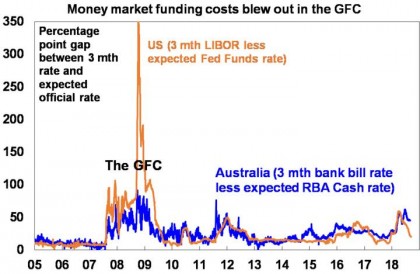
This stopped in 2006 when poor affordability, an oversupply of homes and 17 Fed interest rates hikes saw US house prices start to slide. This made it harder for sub-prime borrowers to refinance their loans after their initial “teaser” rates. So they started defaulting, causing losses for investors. This caught the attention of global investors in August 2007 after BNP froze redemptions from three funds because it couldn’t value the CDOs within them, triggering a credit crunch with sharp rises in the cost of funding for banks – evident in a surge in short term borrowing rates relative to official rates (see next chart) – and a reduction in its availability causing sharp falls in share markets.


Source: Bloomberg, AMP Capital

Shares rebounded but peaked around late October 2007 before commencing roughly 55% falls as the credit crunch worsened, the global economy fell into recession, mortgage defaults escalated, and many banks failed with a big one being Lehman.

The crisis went global as losses magnified by gearing mounted, forcing investment banks and hedge funds to sell sound investments to meet redemptions which spread the crisis to other assets. The wide global distribution of investors in US sub-prime debt led to greater worries about who was at risk, with the loss of trust resulting in a freezing up of lending between banks and sky-high borrowing costs (see the previous chart). All of which affected confidence and economic activity.

The cause of the GFC lay with home borrowers, the US Government, lenders, ratings agencies, regulators, investors and financial organisations for taking on too much risk. It ended in 2009 after massive monetary and fiscal stimulus along with government rescues of banks. But aftershocks continued for years with sub-par growth and low inflation into this decade. From an economic perspective the GFC highlighted that:

  • Fiscal and monetary policy work. There is a role for government, central banks and global cooperation in putting free market economies back on track when they get into a downward spiral. (While some have argued that easy money just benefitted the rich, doing nothing would have likely ended with 20% plus unemployment and worse inequality.) Hopefully there will be the same common sense ‘do whatever it takes’ approach again if the need arises.

  • The return to normal from major financial crises can take time – in fact a decade or so according to a study by Kenneth Rogoff and Carmen Reinhart – as the blow to confidence depresses lending and borrowing and hence consumer spending and investment for years afterwards. The key is to allow for this and not turn off the policy stimulus prematurely, but also to avoid thinking it is permanent as the muscle memory does eventually fade.

  • “Stuff happens” – while after each economic crisis there is a desire to “make sure it never happens again”, history tells us that manias, panics and crashes are part and parcel of the process of “creative destruction” that has led to an exponential increase in material prosperity in capitalist countries. The trick is to ensure that the regulation of financial markets minimises the economic fallout that can occur when free markets go astray but doesn’t stop the dynamism necessary for economic prosperity.

Will it happen again?

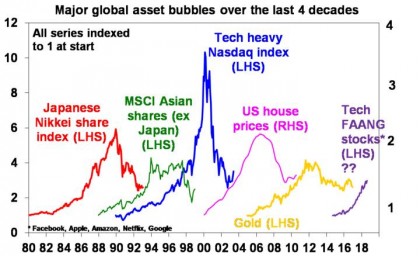
History is replete with bubbles and crashes and tells us it’s inevitable that they will happen again as each generation forgets and must relearn the lessons of the past through another bubble based on collective euphoria about some new innovation. Often the seeds for each bubble are sown in the ashes of the former. Fortunately, in the post-GFC environment seen so far there has been an absence of broad-based bubbles on the scale of the tech boom or US housing/credit boom. There was a brief surge in gold and some commodity prices early this decade but it did not get that big before bursting. Bitcoin and other cryptos were another example but they blew up before sucking in enough investors to have a meaningful global impact. E-commerce stocks like Facebook and Amazon are candidates for the next bust but they have seen nowhere near the gains or infinite PEs seen in the late 1990s tech boom.


Source: Thomson Reuters, Bloomberg, AMP Capital

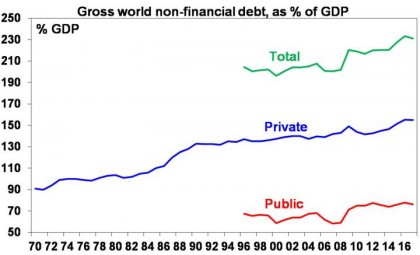
Post a GFC related pull back, global debt has grown to an all-time high relative to global GDP posing an obvious concern. However, this alone does not mean another GFC is upon us. The ratio of global debt to GDP has been trending up forever, much of the growth in debt in developed countries post the GFC has been in public debt and debt interest burdens are low thanks to still low interest rates in contrast to the pre-GFC period. Furthermore, the other signs of excess that normally set the scene for recessions and associated deep bear markets in shares like that seen in the GFC are not yet present on a widespread basis. Inflation is low, monetary policy globally remains easy, there has been no widespread overinvestment in technology or housing, and bank lending standards have not been relaxed as much as prior to the GFC.


Source: IMF, Haver Analytics, BIS, Ned Davis Research, AMP Capital

Moreover, financial regulations have tightened with banks required to have higher capital ratios and get more funds from their depositors. Much of the surge in debt post the GFC has been in private emerging market debt rather than in developed countries suggesting emerging markets are at greater risk.

Another economic crisis is inevitable at some point, but it will likely be very different to the GFC.

Seven lessons for investors from the GFC

The key lessons for investors from the GFC are as follows:

  1. There is always a cycle. Talk of a “great moderation” was all the rage prior to the GFC but the GFC reminded us that long periods of good growth, low inflation and great returns are invariably followed by something going wrong. If returns are too good to be sustainable they probably are. 

  2. While each boom bust cycle is different, markets are pushed to extremes – with the asset at the centre of the upswing overvalued and over-loved at the top and undervalued and under-loved at the bottom, which for credit investments and shares was in first half 2009. This provides opportunities for patient contrarian investors to profit from.

  3. High returns come with higher risk. While risk may not be apparent for years, at some point when everyone is totally relaxed it turns up with a vengeance as seen in the GFC. Backward-looking measures of volatility are no better than attempting to drive while just looking at the rear-view mirror. 

  4. Be sceptical of financial engineering or hard-to-understand products. The biggest losses for investors in the GFC were generally in products that relied heavily on financial alchemy purporting to turn junk into AAA investments that no one understood. 

  5. Avoid too much gearing and gearing or the wrong sort. Gearing is fine when all is well. But it magnifies losses when things reverse and can force the closure of positions at a loss when the lenders lose their confidence and refuse to roll over maturing debt or when a margin call occurs forcing an investor to sell just when they should be buying.

  6. The importance of true diversification. While listed property trusts and hedge funds were popular alternatives to low-yielding government bonds prior to the GFC, through the crisis they ran into big trouble (in fact Australian Real Estate Investment Trusts (REITs) fell 79%), whereas government bonds were the star performers. In a crisis, “correlations go to one” – except for true safe havens.

  7. The importance of asset allocation. The GFC reminded us that what matters most for your investments is your asset mix – shares, bonds, cash, property, etc. Exposure to particular shares or fund managers is second order.


Source: AMP Capital 12 September 2018

Important notes: While every care has been taken in the preparation of this article, AMP Capital Investors Limited (ABN 59 001 777 591, AFSL 232497) and AMP Capital Funds Management Limited (ABN 15 159 557 721, AFSL 426455) makes no representations or warranties as to the accuracy or completeness of any statement in it including, without limitation, any forecasts. Past performance is not a reliable indicator of future performance. This article has been prepared for the purpose of providing general information, without taking account of any particular investor’s objectives, financial situation or needs. An investor should, before making any investment decisions, consider the appropriateness of the information in this article, and seek professional advice, having regard to the investor’s objectives, financial situation and needs. This article is solely for the use of the party to whom it is provided.

A way to help efficiently plan for your financial future is to focus on how  best to handle what are sometimes called life’s financial turning points.

These might typically include getting your first job, buying your first home, raising a family and eventually retiring.

While any financial planning should take careful account of our unique circumstances, it should not be overlooked that many of us have the same broad financial experiences. Just think about the experiences of your friends of a similar age.

Perhaps open a new document on your computer and jot down 10 or 15 turning points that are ahead of you and think of how to deal with each to your advantage, and allow for some less anticipated or unexpected events along the way; this may convince you of the benefit of setting aside some contingency money if possible.

Being ready for financial turning points can assist you in concentrating on what really matters, like focusing on your long-term goals without the short term distractions of higher share market volatility for example.

Additionally, having financial turning points in mind may encourage you to save and invest in a more disciplined way.

Common turning points

These include earning your first pay, joining your first super fund, entering a personal relationship, buying your first (second or third) home, beginning to seriously invest, creating your first financial plan, raising children and eventually retiring.

Other turning points

These include losing your job, coping with serious illnesses in your family or the death of a spouse, overcoming a marriage breakdown, investing an inheritance, handling a sharp downturn in values of investment assets and perhaps downsizing to a small home after the children have left.


Written by Robin Bowerman, Head of Corporate Affairs at Vanguard.

Source : Vanguard April 2018  

Reproduced with permission of Vanguard Investments Australia Ltd

Vanguard Investments Australia Ltd (ABN 72 072 881 086 / AFS Licence 227263) is the product issuer. We have not taken yours and your clients’ circumstances into account when preparing this material so it may not be applicable to the particular situation you are considering. You should consider your circumstances and our Product Disclosure Statement (PDS) or Prospectus before making any investment decision. You can access our PDS or Prospectus online or by calling us. This material was prepared in good faith and we accept no liability for any errors or omissions. Past performance is not an indication of future performance.

© 2018 Vanguard Investments Australia Ltd. All rights reserved.

Important:
Any information provided by the author detailed above is separate and external to our business and our Licensee. Neither our business, nor our Licensee take any responsibility for any action or any service provided by the author.

Any links have been provided with permission for information purposes only and will take you to external websites, which are not connected to our company in any way. Note: Our company does not endorse and is not responsible for the accuracy of the contents/information contained within the linked site(s) accessible from this page.

Our eyes are pretty amazing organs. We get to witness the outside world with them. Every day they are exposed to constant stimulation yet continue to work efficiently, for most of us.

The thing is, the stimulus that we are exposing our eyes to has changed drastically over the years. We are now in a digital age – A time where our digital screen time and lifestyle is slowing down our eye’s efficiency due to continuous stress on the eyes. One of the most common stressors to eye strain, blue light!

Visible light is defined by how long the wavelengths are and how much energy is produced. The longer the wavelength, the less energy is produced (safer), and the shorter the wavelength, the more energy is produced (potentially dangerous).

Here’s a quick breakdown on red light vs blue light:

  • Red light, like from a heating lamp, is an example of a long-wavelength, low-energy light.

  • Blue light, from digital devices like computer screens, phones, and TVs has the shortest wavelengths and is, therefore, the highest energy. Blue light is damaging to the eyes because, unlike other UV rays that are blocked by the cornea and the lens, virtually all visible blue light passes through and goes straight to the light-sensitive retina, causing damage that can lead to degenerative conditions and vision loss.

Naturally, we are exposed to small amounts of blue light from sunlight during the day, the damage comes when we have excessive exposure in front of electronic devices, especially at nighttime, which emits significant amounts of blue light. Staring at a screen for long periods of time can cause eye fatigue and other symptoms such as eyestrain, dry eyes, headache, fatigue, blurred vision, and difficulty focusing and sleeping.

A Harvard Medical School study found that blue light exposure at night suppressed melatonin production for about twice as long as the green light and shifted circadian rhythms by twice as much.

OK, we get it, there are 101 things you need to remember to do daily to maintain your health, and now you’ve got to think about how much time you’re spending staring at your screens? Before you panic, we want you to know there are some really simple things you can do to prevent the damage. Here’s how you can start:

1. Eat Foods For Eye Health

We love the saying “you are what you eat”! Some of the best foods you can include in your diet for eye health include:

  • Dark Leafy Greens: The carotenoids lutein and zeaxanthin are primarily found in green leafy vegetables, with kale and spinach topping the list of lutein-rich foods. Other healthy options include Swiss chard, collard greens, broccoli, and Brussels sprouts. Lutein and zeaxanthin are both important nutrients for eye health, as both of them are found in high concentrations in your macula — the small central part of your retina responsible for detailed central vision.

  • Orange  Fruit & Vegetables: Think carrots, pumpkin, oranges and sweet potato. Eating a variety of these is going to give your body the nutrients it needs to maintain healthy eyesight. This is largely due to the high amounts of vitamin A, phytonutrients, vitamin C, lutein & zeaxanthin.

  • Healthy Fats: Since many of the vitamins are responsible for eye health are “fat-soluble nutrients” – that are absorbed best when eaten with a source of lipids (fats). Pair these vitamins with something like omega-3 foods (like salmon), coconut oil, olive oil, avocado, nuts and seeds for proper absorption.

2. Hello, New Computer And Phone Habits!

How much time do you spend on your phone, computer, or watching TV per day? Really think about this… It’s probably a lot more than you think. Young adults are spending about five hours per day on their phone, just their phone. If you work in front of a computer for eight hours per day, add that in plus whatever time you spend in front of a TV at night watching Netflix or FMTV 😉 That’s a fair chunk of your day!

Our tips: Take frequent breaks by looking away from the screen for 2 to 3 minutes every 15 to 20 minutes. Glare from digital screens can also have an effect on the eyes, so try to avoid overhead lights and use a desk lamp instead to control the glare that might come in from any nearby windows. Blue light blocker glasses are now widely available that can help filter the blue light coming from digital devices. You can also install blue light filters on most smartphones. Our biggest tip would be to challenge yourself to spend some time off your screen at night, especially 2-3 hours before bed – You may even notice a more restful nights sleep – Winning!

3. Change Up Your Lifestyle Habits

The smallest changes to our daily routine can help take stress off of our eyes. Start thinking about things like:

  • Wear sunglasses: Find yourself outdoors for long periods of time? Wearing sunglasses can help to protect your eyes from excessive exposure to UVA and UVB.

  • Stop smoking: No brainer here, but smoking cigarettes produces cyanide, which is damaging to the eyes.

  • Hydrate your eyeballs: Hold up on the staring competitions and blink – blinking is actually our eyes way of Move Move your body: Turns out, being active isn’t just good for your booty! Although exercise is considered beneficial for overall health, it can also help support healthy vision. Aim to be active for 30 minutes a day to feel the benefits, this will also get you away from the screens!

Source : Foodmatters June 2018

 Reproduced with the permission of the Food Matters team. This article by Rachel Morrow was originally published at www.foodmatters.com/ /article/staring-at-a-screen-all-day-here-are-3-things-you-can-do-to-protect-your-eyes

Important:
This provides general information and hasn’t taken your circumstances into account.  It’s important to consider your particular circumstances before deciding what’s right for you. Although the information is from sources considered reliable, we do not guarantee that it is accurate or complete. You should not rely upon it and should seek qualified advice before making any investment decision. Except where liability under any statute cannot be excluded, we do not accept any liability (whether under contract, tort or otherwise) for any resulting loss or damage of the reader or any other person. 

Any information provided by the author detailed above is separate and external to our business and our Licensee. Neither our business, nor our Licensee take any responsibility for any action or any service provided by the author.

Any links have been provided with permission for information purposes only and will take you to external websites, which are not connected to our company in any way. Note: Our company does not endorse and is not responsible for the accuracy of the contents/information contained within the linked site(s) accessible from this page.

 

Fear is a factor in many of our investment decisions.

Now, that’s not always a bad thing because fear can be an effective motivator that overcomes another great emotional roadblock for investors – procrastination.

Fear can come in many shapes and flavours for investors. There is the fear of not having enough saved for retirement that can provide the positive impetus to put together a long-term savings plan, that means forsaking some short-term spending in the interests of providing a more comfortable lifestyle once the regular salary stops arriving in the bank account.

Then there is the fear of missing out on a great investment opportunity. It’s no secret that Australian’s have long had a well-documented love affair with property, yet fear is still a factor. What is interesting is how the nature of this, in relation to residential property, has shifted significantly in recent months.

If we rewind six to 12 months, the biggest fear investors talked about was the fear of missing out, or rather being locked out, of the property market. A particular concern for younger investors looking to get into the property market was simply affordability.

ASIC last month released a report into the quality of advice given to self-managed super funds (SMSFs). While it was not the main focus of the report, a strong theme that came through from investors who had recently set up their SMSF was that a key motivator was to use the SMSF as a way of accessing their super savings to buy into the property market.

The pitfalls and risks in setting up an SMSF to buy a single investment property is a separate topic for another day. However reading through the case studies in the ASIC report provides a clear narrative of a cohort of investors who are frightened of being locked out of the property market by seemingly ever increasing prices, and are being motivated to use vehicles like an SMSF to get into the game.

The ASIC market research – a combination of qualitative interviews and online surveys – was done mid-2017. If we fast forward to July 2018 a scan of property pages in the mainstream media in Sydney and Melbourne tells a quite different story.

For a start, auction clearance rates are well down on a year ago due to a number of factors including banks tightening lending requirements for investors. In the last quarter of 2017 the auction clearance rate was around 65 per cent. Last week it was in the low 50s – one of the lowest rates for the past decade according to Fairfax Media.

In a relatively short space of time the fear factor has shifted dramatically. From the fear of missing out, potential buyers are now regularly quoted as fearing that they will pay too much and are keeping their hands firmly down, which means auction rates slump further … and so the cycle goes.

For those people who believe that property never goes down in value, now is an interesting time with major capital cities all reporting declines in value. All markets – property included – move in cycles and investor sentiment plays its role in driving that.

Timing markets of any type in the short run is extremely challenging. That’s why one of the best tonics for market-driven fear is having the discipline to do a long-term financial plan that sets out your personal life stage goals, diversifies your investment portfolio across a range of asset classes to offset risk, and gives you the luxury of knowing that when one asset class is pushing your fear button, the others are helping keep you on track and sleep well at night.

Please contact us on Phone: 07 5641 4134 we can assist you plan your financial goals.

 Source : Vanguard July 2018 

Reproduced with permission of Vanguard Investments Australia Ltd

Vanguard Investments Australia Ltd (ABN 72 072 881 086 / AFS Licence 227263) is the product issuer. We have not taken yours and your clients’ circumstances into account when preparing this material so it may not be applicable to the particular situation you are considering. You should consider your circumstances and our Product Disclosure Statement (PDS) or Prospectus before making any investment decision. You can access our PDS or Prospectus online or by calling us. This material was prepared in good faith and we accept no liability for any errors or omissions. Past performance is not an indication of future performance.

© 2018 Vanguard Investments Australia Ltd. All rights reserved. 

Important:
Any information provided by the author detailed above is separate and external to our business and our Licensee. Neither our business, nor our Licensee take any responsibility for any action or any service provided by the author.

Any links have been provided with permission for information purposes only and will take you to external websites, which are not connected to our company in any way. Note: Our company does not endorse and is not responsible for the accuracy of the contents/information contained within the linked site(s) accessible from this page.

 

For years now, many have told us that Australia is heading for an imminent recession. By contrast official forecasts have long been looking for several years of above trend growth. In the event neither has happened and we don’t see them happening anytime soon. Against this backdrop there are five things you should know about the Australian economy.

First – the economy grew solidly over the last year

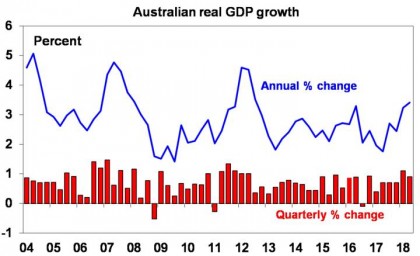
After several years of muddling along the Australian economy actually perked up over the last year with GDP growing a surprisingly strong 3.4% year on year, its fastest since 2012.


Source: ABS, AMP Capital

That growth has been able to range between just below 2% and just above 3% over the last six years despite a large drag on growth from the fall back in mining investment is actually pretty good. But it’s below the norm for Australia, which has averaged around 3% GDP growth per annum over the very long term. It should also be remembered that strong population growth has been one of the reasons for the relative resilience of Australia’s economy, but over the last year per capita GDP growth at 1.8% has been running below that in the US and in line with that in Europe.

Second – growth is likely to slow a bit from here

While economic growth averaged a strong 1% quarterly pace in the first half of the year it’s likely to slow going forward:

  • The housing construction cycle is turning down as approvals trend down and the cranes come down. Falling alterations and additions won’t help. 

  • Growth in consumer spending is likely to slow given weak wages growth, high levels of underemployment and slowing wealth gains as home prices fall. With falling home prices its unlikely that households will be prepared to keep running down the household saving rate – which is now at a 10 year low of just 1% – to make up for weak income growth.

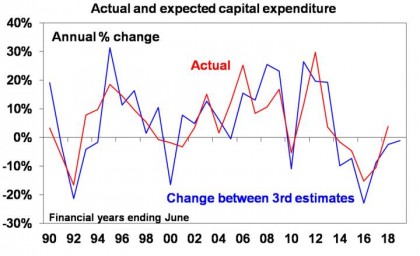
  • Business investment plans for the current financial year are still subdued pointing to roughly flat investment (if plans for this year are compared with those made a year ago) and political uncertainty could start to weigh ahead of a potential change in government.


Source: ABS, AMP Capital

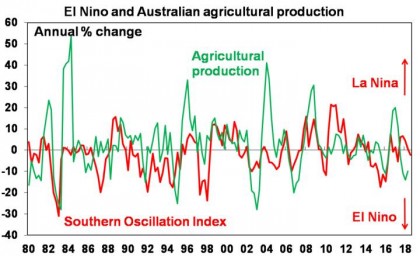
  • Drought could knock 0.5 percentage points off economic growth this year.


Source: ABS, Bureau of Meteorology, AMP Capital

  • While agricultural production as a share of GDP is now just 2.5%, a 20% slump in farm production as seen in past droughts would still knock 0.5% off economic growth. If it turns into an El Nino phenomenon it could be worse.

Third – but it’s not going into recession

Despite these drags, recession will continue to be avoided just as it has been over the past 27 years:

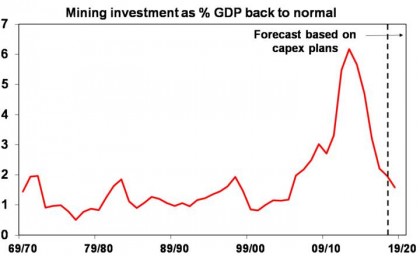
  • Over the past five years or so the slump in mining investment back to more normal levels has knocked around 1.5% per annum from GDP growth. However, mining investment is no longer 7% of the economy and it’s near the bottom so its drag on GDP growth is approaching zero.


Source: ABS, AMP Capital

  • Public infrastructure spending is rising and has further to go.

  • Net exports are likely to add to growth as the completion of resources projects boosts resources export volumes, although a US/China trade war is a threat here.

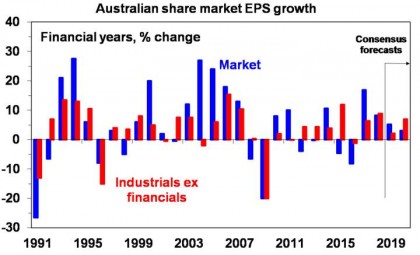
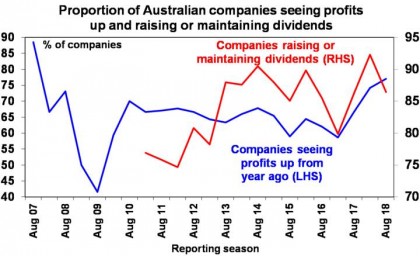
  • Profits for listed companies are rising in contrast to the 2014-16 period. This is a positive for investment.


Source: UBS, AMP Capital

  • While profit growth has slowed from 17% in 2016-17 to around 8% it’s positive and 77% of companies in the recent reporting season (the highest since the GFC) have seen rising profits with 86% of companies raising or maintaining their dividends indicating confidence in the outlook.


Source: AMP Capital

So while housing construction will slow and consumer spending is constrained, a lessening drag from mining investment and slightly stronger non-mining investment along with solid export growth provide an offset and are expected to see growth between 2.5-3% going forward. Down from over the last year and slower than the RBA expects, but stronger than many doomsters see.

Fourth – spare capacity will remain for a while yet

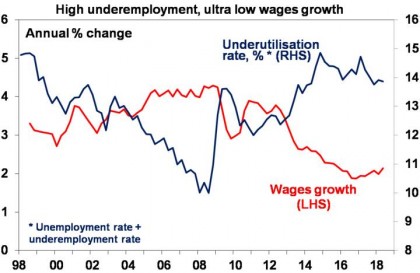
With the economy’s potential (or sustainable) growth rate running around 2.75% and actual economic growth likely to run around this spare capacity in the economy will be with us for a while yet. To use it up we really need a long period of above trend economic growth, but this looks unlikely. Spare capacity remains most obvious in the labour market where the underutilisation rate remains historically high at near 14%. With it likely to remain high for some time to come it’s hard to see much acceleration in wage growth or inflation in the economy.


Source: ABS, AMP Capital

Fifth – which means RBA rate hikes are a long way off

The RBA’s forecasts for continuing solid economic growth and a gradual rise in underlying inflation argue against a rate cut and support the case for an eventual hike. But our more constrained view on growth implying lower for longer wages growth and inflation along with the risks posed by likely further falls in Sydney and Melbourne home prices, tightening bank lending standards and the drought indicate a rate hike is unlikely to be justified any time soon. The next move in rates is probably still up but not until second half 2020 at the earliest and there is a risk that the next move will actually be down if falling home prices pose a significant threat to consumer spending and inflation starts falling again.

Implications for investors

There are several implications for Australian investors.

First, continuing growth should provide support for reasonable returns from Australian growth assets.

Second, bank deposits are likely to provide poor returns for investors for a while yet.

Third, while Australian shares are great for income, global shares are likely to remain outperformers for capital growth.

Finally, the outlook remains for a further fall in the $A. With the RBA comfortably on hold and the Fed raising rates every three months (with the next move coming this month), the interest rate gap between Australia and the US will go further into negative territory making it even more attractive to park money in the US and not Australia which will drag the $A down. Threats to global growth from a trade war and problems in emerging countries will also weigh on the $A.


Source: AMP Capital 6 September 2018

Important notes: While every care has been taken in the preparation of this article, AMP Capital Investors Limited (ABN 59 001 777 591, AFSL 232497) and AMP Capital Funds Management Limited (ABN 15 159 557 721, AFSL 426455) makes no representations or warranties as to the accuracy or completeness of any statement in it including, without limitation, any forecasts. Past performance is not a reliable indicator of future performance. This article has been prepared for the purpose of providing general information, without taking account of any particular investor’s objectives, financial situation or needs. An investor should, before making any investment decisions, consider the appropriateness of the information in this article, and seek professional advice, having regard to the investor’s objectives, financial situation and needs. This article is solely for the use of the party to whom it is provided.

At its meeting today, the Board decided to leave the cash rate unchanged at 1.50 per cent.

The global economic expansion is continuing. A number of advanced economies are growing at an above-trend rate and unemployment rates are low. Growth in China has slowed a little, with the authorities easing policy while continuing to pay close attention to the risks in the financial sector. Globally, inflation remains low, although it has increased in some economies and further increases are expected given the tight labour markets. One ongoing uncertainty regarding the global outlook stems from the direction of international trade policy in the United States.

Financial conditions remain expansionary, although they are gradually becoming less so in some countries. There has been a broad-based appreciation of the US dollar this year. In Australia, money-market interest rates are higher than they were at the start of the year, although they have declined somewhat since the end of June. These higher money-market rates have not fed through into higher interest rates on retail deposits. Some lenders have increased mortgage rates by small amounts, although the average mortgage rate paid is lower than a year ago.

The Bank’s central forecast is for growth of the Australian economy to average a bit above 3 per cent in 2018 and 2019. In the first half of 2018, the economy is estimated to have grown at an above-trend rate. Business conditions are positive and non-mining business investment is expected to increase. Higher levels of public infrastructure investment are also supporting the economy, as is growth in resource exports. One continuing source of uncertainty is the outlook for household consumption. Household income has been growing slowly and debt levels are high. The drought has led to difficult conditions in parts of the farm sector.

Australia’s terms of trade have increased over the past couple of years due to rises in some commodity prices. While the terms of trade are expected to decline over time, they are likely to stay at a relatively high level. The Australian dollar remains within the range that it has been in over the past two years on a trade-weighted basis, but it has depreciated against the US dollar along with most other currencies.

The outlook for the labour market remains positive. The unemployment rate has fallen to 5.3 per cent, the lowest level in almost six years. The vacancy rate is high and there are reports of skills shortages in some areas. A further gradual decline in the unemployment rate is expected over the next couple of years to around 5 per cent. Wages growth remains low, although it has picked up a little recently. The improvement in the economy should see some further lift in wages growth over time, although this is likely to be a gradual process.

Inflation is around 2 per cent. The central forecast is for inflation to be higher in 2019 and 2020 than it is currently. In the interim, once-off declines in some administered prices in the September quarter are expected to result in headline inflation in 2018 being a little lower, at 1¾ per cent.

Conditions in the Sydney and Melbourne housing markets have continued to ease and nationwide measures of rent inflation remain low. Housing credit growth has declined to an annual rate of 5½ per cent. This is largely due to reduced demand by investors as the dynamics of the housing market have changed. Lending standards are also tighter than they were a few years ago, partly reflecting APRA’s earlier supervisory measures to help contain the build-up of risk in household balance sheets. There is competition for borrowers of high credit quality.

The low level of interest rates is continuing to support the Australian economy. Further progress in reducing unemployment and having inflation return to target is expected, although this progress is likely to be gradual. Taking account of the available information, the Board judged that holding the stance of monetary policy unchanged at this meeting would be consistent with sustainable growth in the economy and achieving the inflation target over time.

Source: Reserve Bank of Australia, September 4th, 2018

Enquiries

Media and Communications
Secretary’s Department
Reserve Bank of Australia
SYDNEY

Phone: +61 2 9551 9720
Fax: +61 2 9551 8033

Email: rbainfo@rba.gov.au